Warm Marinated Olives with Orange, Garlic & Rosemary: The 10-Minute Festive Appetiser Everyone Reaches For

There is a moment at every good gathering when someone spots the little bowl of warm, glossy olives, pops one, and goes quiet for a second. That is the dish talking. Warm marinated olives are the fastest, most forgiving appetiser you can put on a festive table — ten minutes of work, no cooking skill required — and yet they taste like you fussed for an hour. The secret is almost embarrassingly simple: good olives, gently warmed in a generous pour of real extra virgin olive oil with orange, garlic and rosemary. Get those two things right and everything else is garnish.
And right there is the catch. Warm a supermarket olive in a cheap, flat oil and you get something oily and dull. Warm a proper Greek olive in a peppery, hand-harvested Peloponnese oil and the whole bowl comes alive — the oil turns fragrant, the olives plump and soften, and the orange and rosemary bloom into the fat. If you want the version people remember, start with the good stuff: grab a jar of our Greek green olives here and you are already most of the way to a showstopper.
Why warm olives beat a cold bowl every single time
Cold olives straight from the fridge are tight, waxy and a little muted — the flavour is locked up. A few minutes of gentle heat changes the physics of the thing. Warmth loosens the olive’s flesh so it turns silky and yielding, and it coaxes the aromatic oils out of the garlic, citrus peel and herbs so they infuse the olive oil rather than just sitting on top. What you end up with is not really “olives in oil” any more; it is a warm, savoury, slightly citrussy dip with olives in it, and the oil left behind is arguably the best part — the bit everyone mops up with bread.
This is also the most generous appetiser in the world for a host. It is made ahead, it sits happily on the table, it needs no plates or cutlery, and it looks far more impressive than the effort it took. For Christmas drinks, a Sunday apéro or a last-minute “people are coming in twenty minutes” panic, it is unbeatable.
The two ingredients that make or break the bowl
Because this dish has almost nothing in it, every ingredient is exposed. There is nowhere for a mediocre olive or a tired oil to hide.
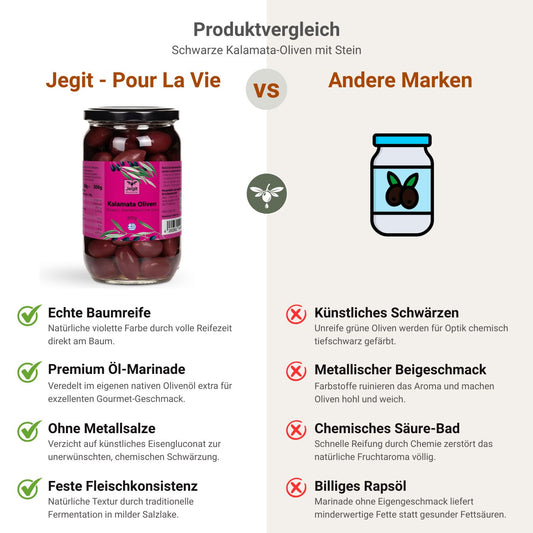
The olives. Reach for firm, characterful Greek table olives rather than the soft, over-brined kind. Our Greek green olives are the naturally fermented Chalkidiki variety — mild, fruity and with a proper bite — cured in nothing but brine and vinegar, so they hold their shape beautifully when warmed. A mix of green and dark Kalamata looks gorgeous in the bowl, so use both if you can.
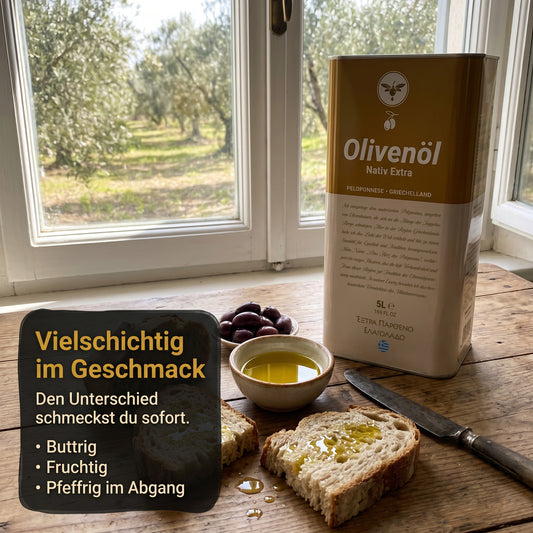
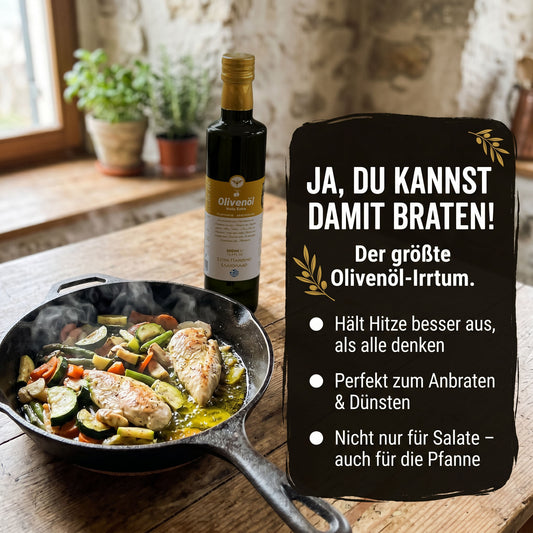
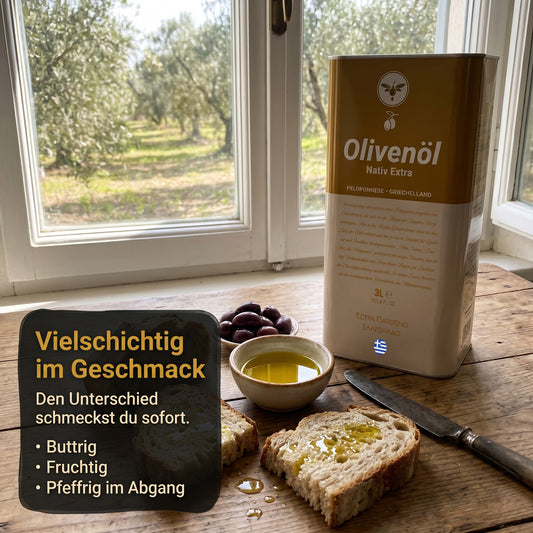
The olive oil. This is the one place not to economise, because the oil is not just the cooking medium — it is half the dish and the thing people scoop up at the end. Our extra virgin olive oil from the Peloponnese is hand-harvested, naturally cloudy and unfiltered, lab-tested for low acidity, rich in polyphenols and free from mineral-oil residues. It carries a spicy, buttery, peppery flavour that a flat refined oil simply cannot, and it stays stable when warmed (it is heat-stable up to 180°C). With an everyday supermarket oil this dish tastes thin; with this one it tastes expensive. Pour yourself a bottle of the good oil here — you will use it long after the olives are gone.
Ingredients (serves 6 as a nibble)
- 300–350 g Greek green olives (a mix of green and Kalamata is ideal), drained
- 120 ml extra virgin olive oil from the Peloponnese
- 2 strips of orange peel (pared with a peeler, pith left behind) plus a squeeze of juice
- 2 fat garlic cloves, lightly smashed
- 2 sprigs of fresh rosemary
- 1 small bay leaf
- ½ tsp fennel seeds, lightly crushed
- A pinch of chilli flakes (optional)
- A twist of black pepper
Method
- Drain and dry. Tip the olives into a sieve, rinse briefly and pat them dry. A little surface moisture is fine, but very wet olives will spit in the oil.
- Warm the oil gently. Pour the olive oil into a small saucepan over the lowest heat. Add the garlic, orange peel, rosemary, bay, fennel seeds and chilli. You are not frying — you want the oil to barely shimmer, never bubble hard. Let it infuse for 4–5 minutes until the kitchen smells of citrus and herbs and the garlic is just golden at the edges.
- Add the olives. Stir in the olives and warm them through for 3–4 minutes, turning them in the oil so every one gets glossy. They should be hot to the touch but nowhere near sizzling.
- Finish. Off the heat, add a small squeeze of orange juice and a twist of pepper. Tip everything — oil, aromatics and all — into a warm bowl.
- Serve warm with plenty of crusty bread for mopping, and a small empty dish on the side for the stones.
That is the whole thing. The quality you taste is coming almost entirely from the two hero ingredients, which is exactly why they are worth buying well. If your cupboard is looking bare, stock up on the Peloponnese oil now so it is ready when guests appear.
Three easy variations
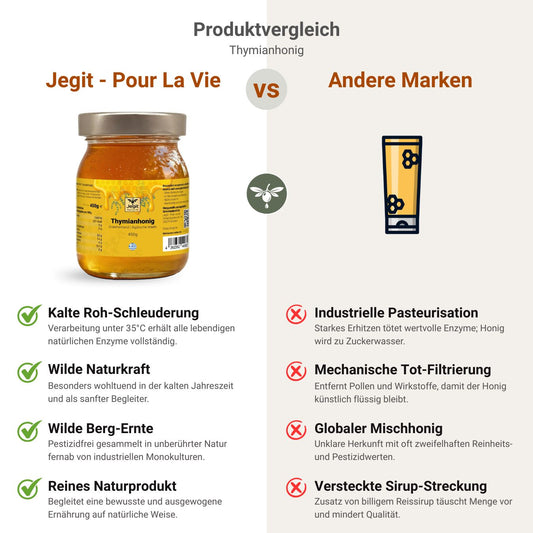
Sweet-and-salty (our favourite). Just before serving, drizzle the warm olives with a teaspoon of Greek thyme honey. The floral, faintly peppery honey against the salty olives and the chilli is addictive — the kind of thing people cannot stop eating. Our thyme honey is cold-extracted and completely natural, with an intense Mediterranean aroma that holds up against bold flavours. Add a jar of thyme honey to your basket and thank us later.
Citrus-herb. Swap orange for lemon and add a strip of its peel plus a few extra rosemary needles and a little chopped thyme for a brighter, greener bowl.
Warm feta & olives. Add a few cubes of feta to the warm oil for the final minute so they soften at the edges without melting away — a heartier version that eats almost like a small meal.
How to serve them (and make it look effortless)
Warm marinated olives want to be the centre of a relaxed spread. Set the bowl on a wooden board with the bread, some cheese and a few slices of cured meat, and let people graze. A rustic olive-wood board does a lot of quiet work here — it keeps the olives warm a touch longer and looks beautifully Mediterranean. Keep the infused oil in the bowl right to the end: it is liquid gold for dunking.
Make-ahead note: you can warm everything an hour before guests arrive, leave it in the pan, and give it 2–3 minutes over a low heat to bring back to temperature just before serving. Leftover olives (if there are any) keep in the oil in the fridge for up to five days and are glorious stirred through warm pasta or spooned over roast chicken.
Frequently asked questions
Can I use pitted olives? You can, and they are easier for guests, but olives with the stone in keep their texture better when warmed and tend to taste fuller. If you use pitted, warm them a minute less so they do not go mushy.
Do I really need good olive oil for this? For this dish, more than almost any other. The oil is not hiding inside a sauce — it is warmed, infused and eaten. A flat, over-refined oil tastes greasy; a proper peppery extra virgin like our Peloponnese oil tastes like the dish was made by someone who knows what they are doing.
Can I make them for a crowd? Easily. The recipe doubles and triples without fuss — just use a wider pan so the olives warm evenly, and keep the heat low so the garlic never burns.
Our product tip
Extra Virgin Olive Oil from the Peloponnese
Hand-harvested, naturally cloudy and unfiltered, lab-tested for low acidity and rich in polyphenols — the peppery, buttery oil that turns a simple bowl of olives into something unforgettable.
Shop the Peloponnese olive oilGreat food does not have to be complicated — it has to be made with ingredients worth tasting. Warm a bowl of real Greek olives in honest, hand-harvested olive oil and you have the most welcoming thing on the table. Treat yourself and your guests to the proper ingredients, and taste the difference for yourself. Shop our Greek olives and our Peloponnese olive oil today — Pour La Vie.

Sicilian Swordfish alla Ghiotta: The 30-Minute Olive Oil Braise Where the Oil and Green Olives Carry the Whole Dish
Sicilian swordfish alla ghiotta: swordfish steaks braised in extra virgin olive oil with green olives, capers and tomato. A 30-minute Mediterranean main.

Danish Honey-Mustard Chicken Traybake (Honningssennep): The 45-Minute Nordic Dinner Where the Thyme Honey Makes the Glaze
A Danish honey-mustard chicken traybake ready in 45 minutes - juicy thighs, roasted roots and a sticky glaze made with raw Greek...

Greek Beef Youvetsi: The Slow-Baked Orzo Main Course Where the Olive Oil Carries the Whole Dish
Greek beef youvetsi: fork-tender beef and orzo slow-baked in a cinnamon-tomato sauce, built on hand-harvested Peloponnese extra virgin olive oil.