Danish Honey-Mustard Chicken Traybake (Honningssennep): The 45-Minute Nordic Dinner Where the Thyme Honey Makes the Glaze

There's a reason honey-mustard chicken never goes out of fashion in Scandinavian kitchens. In Denmark, honningssennep — a glossy sauce of honey and mustard — is the quiet hero of everything from the Christmas table to the simplest weeknight dinner, and this traybake distils that whole tradition into one roasting tin and about 45 minutes. Juicy, golden chicken thighs, sweet roasted roots, and a glaze that turns sticky and lacquered in the heat of the oven. And the one ingredient that decides whether it tastes flat or unforgettable? The honey. Use a cheap, pasteurised squeezy bottle and the glaze tastes one-note and cloying. Use a raw, intensely aromatic Greek thyme honey from Jegit and the whole dish gains a floral, herbal depth that ordinary honey simply can't reach. Secure your jar of thyme honey now and taste the difference in your very first bite.
Why this Nordic honey-mustard traybake works
A traybake is the busy cook's best friend: one tin, one oven, almost no washing up. But the Danish honey-mustard version has an edge over most sheet-pan dinners. The mustard brings a gentle, warming heat and just enough acidity to stop the dish feeling heavy, while the honey balances it with a rounded sweetness and helps the chicken skin caramelise into something genuinely crisp. Roast everything together and the vegetables soak up the rendered chicken juices and the honey-mustard that drips down between them — so every potato and carrot ends up glazed, not plain.
It's also wonderfully forgiving. Chicken thighs stay succulent even if you leave them in a few minutes too long, which makes this a perfect recipe for the darker evenings of early November, when you want a warm, generous dinner without standing over the hob.
The glaze is everything — and the glaze is mostly honey
Here's the honest truth: a honey-mustard glaze is only three or four ingredients, so each one has nowhere to hide. The mustard, the acidity, the fat — and above all the honey — are tasted directly. That's exactly why the honey you choose matters more than any other decision you'll make in this recipe.
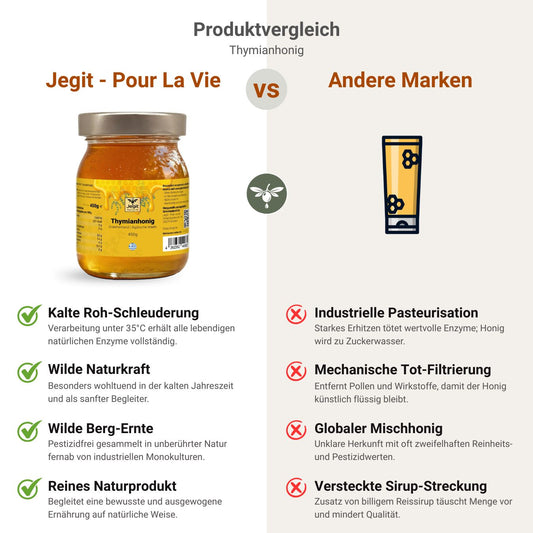
Jegit's thyme honey from Greece is gathered from wild, sun-baked thyme fields on the Mediterranean and spun gently by hand, completely unheated. Because it's never pasteurised, it keeps its natural enzymes and its remarkable, almost savoury aroma — a world away from the flat sweetness of mass-market honey. Stir it into warm mustard and it loosens into a glaze with real character: floral, faintly peppery, deeply fragrant. This is the difference between a chicken dinner that's merely good and one your family asks for again the next week. Treat your kitchen to a jar of real thyme honey here.
Ingredients (serves 4)
For the chicken and vegetables:
- 8 bone-in, skin-on chicken thighs (about 1.2 kg)
- 600 g baby potatoes, halved
- 3 carrots, cut into thick batons
- 2 red onions, cut into wedges
- 2 tbsp extra virgin olive oil
- Salt and freshly ground black pepper
- A few sprigs of fresh thyme
For the honey-mustard glaze:
- 3 tbsp Greek thyme honey
- 2 tbsp Dijon mustard
- 1 tbsp wholegrain mustard
- 1 tbsp extra virgin olive oil
- 1 tbsp white wine vinegar or apple cider vinegar
- 2 garlic cloves, finely grated
A quick word on the two ingredients doing the heavy lifting: the glaze leans on that raw thyme honey, and the vegetables roast in Jegit's extra virgin olive oil from the Peloponnese — hand-harvested, naturally cloudy and heat-stable up to 180°C, so it won't turn bitter in the oven. Stock your pantry with both and every traybake from here on gets better: grab the thyme honey and the olive oil here.
Method
- Heat the oven. Preheat to 200°C (fan 180°C). Pat the chicken thighs thoroughly dry with kitchen paper — dry skin is crisp skin.
- Season the vegetables. Tip the potatoes, carrots and red onion into a large roasting tin. Drizzle with the olive oil, season well with salt and pepper, and toss to coat. Spread them out in a single layer.
- Give the roots a head start. Nestle the chicken thighs on top, skin-side up, season the skin with salt, and roast for 20 minutes.
- Make the glaze. While everything roasts, whisk together the thyme honey, both mustards, olive oil, vinegar and grated garlic until glossy and smooth. Taste it — it should be sweet, tangy and punchy.
- Glaze and finish. Pull the tin out, brush the chicken generously with about two-thirds of the honey-mustard glaze and spoon the rest over the vegetables. Scatter over the thyme sprigs.
- Roast to golden. Return to the oven for a further 20–25 minutes, until the chicken is cooked through (75°C at the thickest part), the skin is deep golden and the glaze is sticky and caramelised at the edges.
- Rest and serve. Let the traybake rest for 5 minutes, then spoon the glaze from the bottom of the tin back over the chicken before serving.
That's it — one tin, barely any effort, and a dinner that looks and tastes like you fussed. The secret, as always, is in the glaze. Make sure your next jar is the real thing.
Tips, swaps and make-it-your-own
Prefer chicken breasts or drumsticks? Both work — just adjust the timing (breasts need less, drumsticks a touch more). For a traditional Danish touch, finish with a scatter of chopped dill. Want more vegetables? Parsnips, wedges of squash or Brussels sprouts all love this glaze. And if you like a little more heat, add a pinch of chilli flakes — the thyme honey will keep everything in balance.
One tip worth repeating: don't crowd the tin. If the vegetables are piled up they'll steam rather than roast, and you'll miss those caramelised, honey-glazed edges. Use two tins if you're cooking for a crowd.
What to serve with honey-mustard chicken
Because the traybake already brings potatoes and roots, you really only need something fresh and green alongside. A crisp leafy salad dressed simply with extra virgin olive oil and a squeeze of lemon is perfect — the peppery oil cuts through the richness of the glaze beautifully. Crusty bread to mop up the honey-mustard pan juices never goes amiss either.
Early November is exactly the season for this kind of cooking — and the honey-mustard flavour only grows more popular as the festive weeks approach. Get ahead now and order your Greek thyme honey before the Christmas rush.
Frequently asked questions
Can I use a different honey for the glaze?
You can, but you'll lose the best part. The glaze tastes of whatever honey you put in it, so a bland, heat-treated supermarket honey gives a flat, sugary result. A raw, aromatic thyme honey adds a floral, herbal complexity that makes the dish. If you only upgrade one ingredient, make it the honey.
Does the thyme honey burn in the oven?
No — because you add the glaze partway through, not at the start. Brushing it on for the final 20–25 minutes gives you that sticky, lacquered finish without scorching. Keep the oven at 200°C and you'll get caramelisation, not bitterness.
Can I prepare this ahead?
Yes. You can whisk the honey-mustard glaze up to three days ahead and keep it in the fridge; bring it back to room temperature and stir before using. You can also chop the vegetables in advance. For the crispest skin, though, roast the chicken fresh rather than reheating.
Our product tip
Greek Thyme Honey 450g from Jegit
Raw and unheated, exceptionally rich in natural enzymes and bursting with an intense Mediterranean aroma — the honey that turns a good glaze into an unforgettable one.
Shop thyme honey nowGreat cooking rarely comes down to complicated technique — far more often, it comes down to the quality of a single, well-chosen ingredient. In this traybake, that ingredient is the honey. Choose Jegit's raw Greek thyme honey and you're not just sweetening a glaze; you're bringing the aroma of sun-warmed Mediterranean hillsides to your table. Order your jar today and taste what honey is meant to be. Pour La Vie.

Greek Beef Youvetsi: The Slow-Baked Orzo Main Course Where the Olive Oil Carries the Whole Dish
Greek beef youvetsi: fork-tender beef and orzo slow-baked in a cinnamon-tomato sauce, built on hand-harvested Peloponnese extra virgin olive oil.

Warm Marinated Olives with Orange, Garlic & Rosemary: The 10-Minute Festive Appetiser Everyone Reaches For
Warm Greek olives in peppery, hand-harvested Peloponnese olive oil with orange, garlic and rosemary — the easy 10-minute festive appetiser everyone loves.

Sticky Thyme Honey–Glazed Christmas Ham (Gammon): The Festive Centrepiece Where the Honey Makes the Glaze
A sticky thyme honey–glazed Christmas ham with orange and cloves — the festive centrepiece where real Greek thyme honey makes the glaze...