Provençal Black Olive Tapenade: The 10-Minute Classic Where the Olives and the Oil Are Everything

Few things taste of the South of France like a bowl of glossy black tapenade with warm bread and something cold to drink. It is the appetiser that turns an ordinary evening into something that feels like a small holiday — and it needs ten minutes, one bowl and a food processor (or a sharp knife and a little patience). But here is the part most recipes quietly skip: tapenade is only ever as good as the two things it is built on. Tired, over-salted supermarket olives and thin, flavourless oil give you a dull, bitter paste. Real Greek Kalamata olives and a peppery, freshly pressed extra virgin olive oil give you something you will happily eat straight off the spoon. The difference between fine and unforgettable is, quite literally, in the oil. Start with our hand-harvested Peloponnese extra virgin olive oil and you are already most of the way there.
What tapenade actually is
Tapenade is a Provençal paste of black olives, capers, garlic and olive oil, traditionally pounded together in a mortar until it is spreadable but still a little rough. The name comes from tapéno, the old Provençal word for capers — a quiet clue that this is a condiment with real backbone, not a bland dip. The classic Marseille version folds in a few anchovies for savoury depth; leave them out and you have a naturally vegan tapenade that leans entirely on the fruit of the olive. Either way, the olives are the star and everything else is there to frame them. If you want to understand the fruit at its heart first, our guide to what Kalamata olives really are is a two-minute read.
Why the olives and the oil make or break it
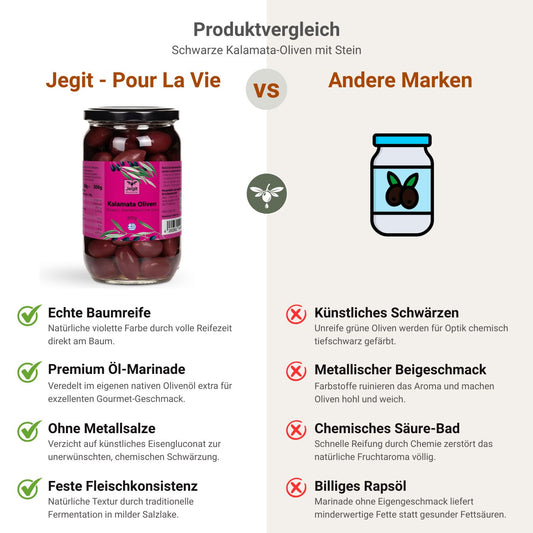
Most disappointing tapenade fails for one of two reasons. First, the olives: cheap pitted black olives are often picked unripe, dyed and over-brined, so they taste of salt and little else. Proper Greek Kalamata olives are naturally cured and ripened on the tree, which gives them that deep, wine-dark, almost fruity flavour that carries the whole paste. Because ours come with the pit, you stone them yourself — a minute of work that rewards you with fresher, firmer flesh.
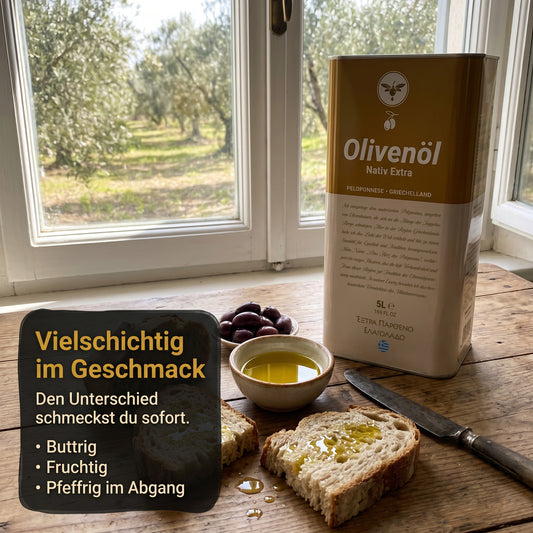
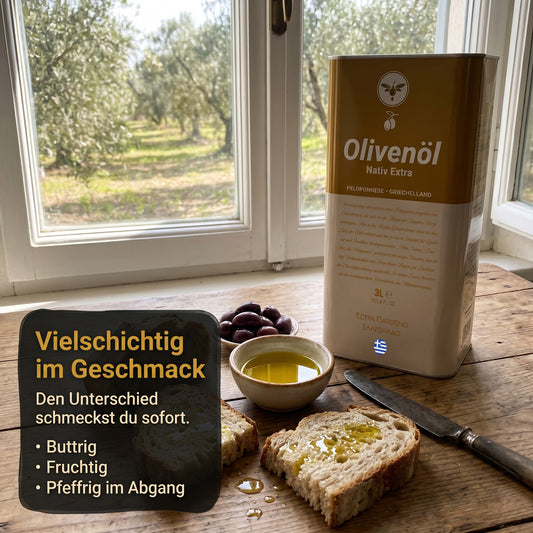
Second, the oil. The olive oil is not a garnish here; it is the binder that emulsifies the paste and carries every aroma to your tongue. Use a flat, refined supermarket oil and the tapenade tastes greasy and muted. Use a living, naturally cloudy and unfiltered extra virgin oil — hand-harvested, low in acidity, rich in polyphenols with that peppery catch at the back of the throat, lab-tested and free of mineral-oil residues — and the whole thing tastes bright, green and alive. Pour in an oil worth pouring; it is the single biggest upgrade you can make to this recipe.
Ingredients (serves 6 as an appetiser)
- 200 g black Kalamata olives, pitted
- 4–5 tbsp extra virgin olive oil, plus a little extra to seal
- 2 tbsp capers, rinsed and drained
- 1 small garlic clove
- 2–3 anchovy fillets in oil (optional — leave out for a vegan tapenade)
- 1 tbsp fresh lemon juice
- 1 tsp Dijon mustard
- Leaves from a few sprigs of fresh thyme (or 1 tsp herbes de Provence)
- Freshly ground black pepper
That is the whole shopping list — no nuts, no fuss, nothing you cannot pronounce. The two ingredients that decide the result are the olives and the oil, so this is exactly the place to use the good stuff. Grab a jar of real Kalamata olives here and you are ready to start.
Method
- Pit the olives. Press each olive with the flat of a knife and lift out the stone. It takes a couple of minutes and gives you far better texture than pre-chopped olives.
- Combine. Put the olives, capers, garlic, anchovies (if using), lemon juice, mustard and thyme into a food processor. Pulse to a coarse paste — you want texture, not a smooth purée.
- Stream in the oil. With the motor running, pour the olive oil in a thin, steady stream until the tapenade turns glossy and spreadable. This is the moment a good oil earns its place: it emulsifies everything into a silky paste.
- Taste before you salt. Olives, capers and anchovies are already salty, so taste first, then adjust with pepper and a little more lemon if it needs lifting.
- Rest and seal. Spoon into a bowl, smooth the top and cover with a thin film of olive oil. Let it sit for 30 minutes so the flavours settle before serving.
How to serve it
Spread it thickly on toasted baguette or warm crostini, pile it onto crudités, stir a spoonful through hot pasta, slide it under a piece of roast fish or chicken, or swirl it into soft goat's cheese. It is one of the easiest, most generous things you can put on a winter table — especially next to a bowl of warm marinated olives and a glass of something chilled.
How long does tapenade keep?
Stored in a jar under a thin layer of olive oil, tapenade keeps in the fridge for up to a week — and the flavour only deepens. It also freezes well in small portions. For more on keeping olives and oil at their best, see our guide to storing olives so they stay fresh.
Our product tip
Black Kalamata Olives with pit
Naturally cured, tree-ripened Greek Kalamata with a deep, wine-dark flavour — the honest heart of a real tapenade.
Try the Kalamata olives nowOur product tip
Peloponnese Extra Virgin Olive Oil (500 ml)
Hand-harvested, naturally cloudy and unfiltered, polyphenol-rich and peppery — the binder that makes tapenade taste alive.
Secure your olive oilFrequently asked questions
Can I make tapenade without a food processor?
Absolutely — in fact the traditional method uses a mortar and pestle. Pound the olives, capers and garlic to a paste, then work in the oil slowly. If you prefer, simply chop everything very finely by hand and stir in the oil for a rustic, chunky tapenade.
Is tapenade vegan?
It can be. The only non-vegan ingredient in the classic recipe is the anchovy, so leave it out and everything else — olives, capers, garlic, lemon and olive oil — is entirely plant-based. A generous splash of extra good olive oil makes up for any lost depth.
Should I use green or black olives?
Classic Provençal tapenade is made with black olives, and ripe Kalamata give the deepest, roundest flavour. Green olives make a sharper, brighter, more herbaceous version — delicious in its own right. When in doubt, start with black Kalamata.
Make it once with olives and oil worth their place on the table and you will understand why this little bowl has survived for centuries. Great tapenade is not clever — it is honest ingredients treated with respect. That is exactly what we bottle and jar: natural, with nothing added, and a story behind every harvest. Secure your Peloponnese extra virgin olive oil now and taste the difference for yourself. Pour La Vie.

Southern Italian Braised Beef with Olives and Red Wine: The Slow Sunday Pot Where the Olives Make the Sauce
Meltingly tender slow-braised beef with green and Kalamata olives, red wine and olive oil — the hearty Southern Italian pot where the...

Sticky Honey-Garlic Chicken Thighs: The 35-Minute Weeknight Dinner Where the Thyme Honey Makes the Glaze
Sticky honey-garlic chicken thighs in 35 minutes. Learn why Greek thyme honey and real extra virgin olive oil turn this easy glaze...

Imam Bayıldı: Turkish Stuffed Aubergines Slow-Braised in Olive Oil (Where the Oil Is the Whole Dish)
Imam bayıldı — Turkish aubergines slow-braised in extra virgin olive oil with onion, garlic and tomato. The vegetarian classic where the oil...