How to Store Olives So They Stay Fresh — And Can You Freeze Them?

You open a jar of really good olives, eat a generous handful, and then… what? Into the fridge they go, and three weeks later you are poking at them wondering whether they are still good. It is one of the most common kitchen questions – and the answer makes a real difference to both flavour and waste. Stored properly, good olives stay plump, glossy and delicious for a remarkably long time. Stored badly, even the finest Kalamata turns soft, dull and salty-stale. This guide walks you through exactly how to keep olives fresh, whether you can freeze them, and the one habit that quietly ruins them – and it starts with choosing olives worth storing in the first place. Our naturally cured Greek Kalamata olives are made to last and made to taste like the real thing.
How long do olives actually last?
It depends on two things: how they were cured, and how you store them after opening. Unopened jars of brine-cured olives keep for many months in a cool, dark cupboard – check the best-before date, but they are famously long-lived. Once opened and kept submerged in their brine in the fridge, most table olives stay in great condition for several weeks, often up to a month or more. Loose olives from a deli counter are more delicate and are best eaten within a week or two. The golden rule across all of them is simple: keep the olives under the liquid.
How to store olives the right way
Unopened: keep the jar somewhere cool and dark, away from direct sunlight and the heat of the hob. A pantry shelf is perfect.
Opened, in brine: this is where most olives are won or lost. Always keep the olives fully submerged in their brine – the salty liquid is what protects them from spoiling and keeps them firm and flavourful. Reseal the jar tightly and return it to the fridge. If you have eaten enough that the remaining olives peek above the liquid, top the jar up with a simple home-made brine (about one teaspoon of salt dissolved in a cup of water) so everything stays covered.
Always use a clean spoon – never fingers – to lift olives out. This keeps bacteria out of the brine and dramatically extends how long the jar stays good. These small habits are the difference between olives that last a month and olives that turn in a week. Start with a jar genuinely worth looking after: treat yourself to our Black Kalamata olives or our fresh Greek green olives.
Can you freeze olives?
Yes, you can freeze olives – with one honest caveat. Because olives have a high water and oil content, freezing can slightly soften their texture, so they are best frozen if you plan to cook with them afterwards rather than eat them straight from the bowl. For a party platter you want them fresh from the fridge; for stews, traybakes, sauces and breads, frozen olives are brilliant and lose nothing that matters.
To freeze them well: drain the olives from their brine, pat them dry, and spread them in a single layer on a tray to freeze until solid. Then transfer to an airtight bag or container, press out the air, label with the date and freeze for up to six months. Defrost in the fridge and pat dry before using. It is the perfect way to make a jar of good Kalamata stretch across months of cooking.
The storage mistake that quietly ruins good olives
The single most common error is pouring away the brine. That cloudy, salty liquid is not waste – it is the preservative that keeps your olives alive. Tip it out “to tidy up” and the olives dry out, oxidise and spoil within days. The second mistake is storing olives somewhere warm, which fast-tracks the same decline. Keep the brine, keep them cold, keep them covered – and they will reward you.
Why the quality of the olive matters most of all
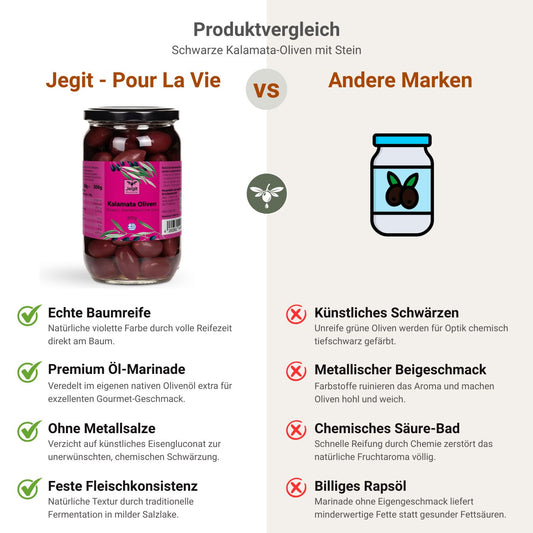
Here is the part no storage trick can fix: a cheap, chemically treated olive was never going to taste good, no matter how carefully you keep it. Many mass-market black olives are actually unripe green olives darkened with additives and iron gluconate – and they taste flat and metallic because of it. Our Black Kalamata olives are the real thing: authentic, hand-picked and naturally cured, completely free from artificial additives and colorants, and naturally rich in antioxidants and iron. Our Greek green Chalkidiki olives are naturally fermented in nothing but brine and vinegar, which keeps their living aroma and firm, fruity bite. Store a great olive well and it stays great; store a poor one perfectly and it is still a poor olive. Begin with quality, and every other step in this guide pays off. Taste the difference for yourself.
Our product tip
Black Kalamata Olives with pit
Authentic, hand-picked and naturally cured – free from artificial additives and colorants, and naturally rich in antioxidants and iron. Real Greek olives worth keeping.
Shop Kalamata Olives nowFrequently asked questions
Do olives need to be refrigerated after opening?
Yes. Once the jar is opened, keep the olives in the fridge and fully submerged in their brine. Sealed tightly and kept cold, they will typically stay in excellent condition for several weeks. If the brine runs low, top it up with a little salt-water so the olives stay covered.
How can I tell if olives have gone off?
Trust your senses. Fresh olives smell clean and briny and feel firm. Throw them out if you notice an unpleasant sour or fermented-off smell, a slimy film, any fuzzy mould, or a mushy texture. Cloudy brine on its own is normal for naturally cured olives and is not a sign of spoilage.
Can I store olives in olive oil instead of brine?
You can, and it makes for a lovely antipasti – drain the olives, add herbs and cover them with good olive oil, then keep refrigerated and use within a week or two. For long-term keeping, though, brine is the safer and more reliable choice.
Keep them well, enjoy them often
Good olives are one of the great Mediterranean pleasures, and keeping them at their best is genuinely easy: cold, covered and in their brine, with a clean spoon every time. Do that with olives that were made properly in the first place, and you will always have something delicious within reach. That is what we mean by Pour La Vie. Order our Greek Kalamata olives today and start with the real thing.

Can You Put Olive Oil on Your Face? Benefits, Who Should Be Careful, and a Lighter Olive-Leaf Alternative
Can you put olive oil on your face? The real skincare benefits, who should be careful, and the lightweight olive-leaf cream that...

Mediterranean Olive Oil Gift Sets: The 2026 Christmas Gift Guide for Food Lovers
Stuck for a Christmas gift? A Mediterranean olive oil gift set is the natural, delicious present that always lands. Our 2026 gift...

Are Olives Healthy? Calories, Nutrition and the Real Benefits of Green and Kalamata Olives
How many calories are in olives, what nutrients they contain, and whether green or Kalamata olives are healthier — plus how quality...