When Are Olives Harvested? Olive Harvest Season and Why Early, Hand-Picked Oil Tastes Better

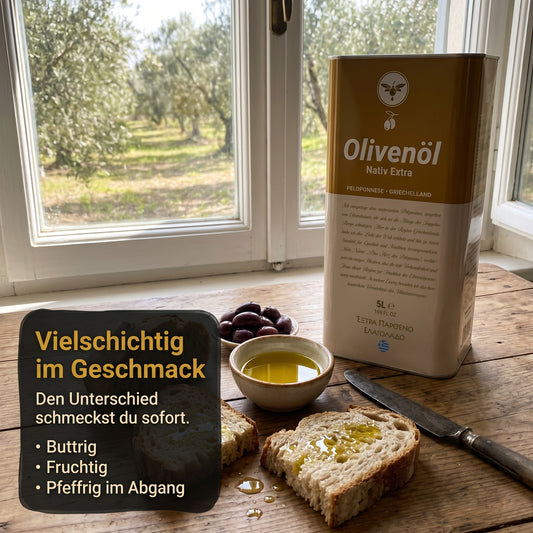
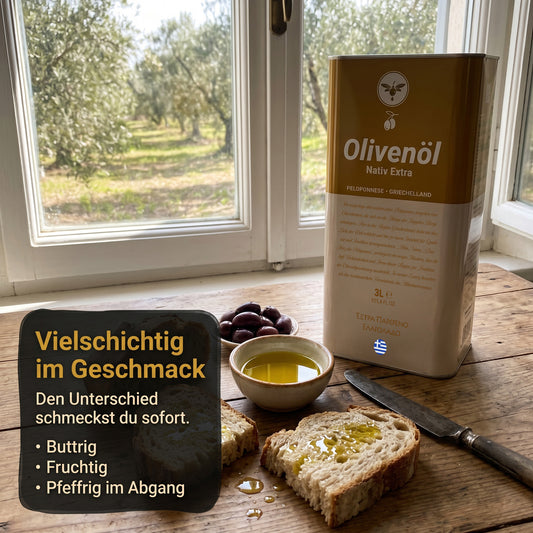
If you have ever wondered when olives are harvested, you are asking the single question that decides how good your olive oil will taste. The olive harvest is not a year-round event — it happens in a short, intense window each autumn and early winter, and the exact moment the fruit is picked shapes the colour, aroma and quality of every bottle that follows. Right now, across Greece and the wider Mediterranean, that harvest is in full swing. Taste this year's spirit in our hand-harvested Peloponnese olive oil and read on to understand what makes early, carefully picked oil worth seeking out.
When is olive harvest season?
In the Northern Hemisphere, olives are harvested roughly from October to January, with the peak across the Mediterranean falling between late October and December. In Greece — including the Peloponnese, where our oil comes from — picking typically begins in October and runs into December, depending on altitude, variety and the weather that year. Groves at higher, cooler elevations are often picked later than those near the coast.
The timing is not arbitrary. Growers watch the fruit change colour from bright green to straw, then purple, then black. Where on that curve they choose to pick is the most important decision of the whole season — and it is exactly where a producer who cares separates itself from one chasing volume.
Green, purple or black: how ripeness changes the oil
A single olive tree can offer very different oils depending on when you pick it:
- Early (green) harvest: picked while the fruit is still green or just turning. The yield per olive is lower, but the oil is greener, more aromatic, pleasantly bitter and peppery, and naturally higher in polyphenols — the antioxidant compounds that also help the oil keep well.
- Mid (purple) harvest: a balance of fruitiness and smoothness, with gentler bitterness.
- Late (black) harvest: the ripest fruit gives the highest yield and a mild, buttery oil, but with less of that lively, grassy character and fewer polyphenols.
Neither extreme is “wrong”, but the finest extra virgin oils tend to come from the earlier end of the window, where flavour and natural stability are at their peak. That peppery tickle at the back of your throat when you taste a fresh early oil? That is the polyphenols talking. Our Peloponnese extra virgin is made in exactly this spirit — lively, spicy and buttery all at once.
Why hand-picking matters
How olives are harvested matters as much as when. There are three broad approaches: hand-picking, hand-held rakes and combs, and large mechanical harvesters that shake whole trees. Mechanisation is fast and cheap, but it bruises fruit, sweeps up leaves and twigs, and often means olives sit around before pressing — all of which can raise acidity and dull the flavour.
We harvest by hand. It is slower and more expensive, but it means only sound, carefully selected fruit goes to the mill, and it goes there quickly. That single choice is one of the biggest reasons a bottle tastes clean, fresh and low in acidity rather than flat or fusty. Choose hand-harvested oil here and taste the difference that care makes.
From branch to bottle: why speed and cold pressing win
Once picked, the clock starts ticking. The faster olives are milled, the fresher and lower in acidity the oil. Our olives are pressed by cold mechanical extraction only — no heat, no chemicals — which protects the delicate aromatics and the polyphenols that early harvesting worked so hard to capture.
We also leave our oil naturally cloudy and unfiltered. Filtering can strip away tiny fruit particles that carry flavour, so a slightly hazy oil is often a sign of a more natural product, not a flaw. The result is an extra virgin that is:
- Hand-harvested from historic Peloponnese groves;
- Cold-extracted, naturally cloudy and unfiltered;
- Lab-tested — low in acidity, rich in polyphenols, with no mineral oil residues detected;
- Heat-stable up to 180°C without forming trans fats, so it is as good for cooking as it is raw;
- Spicy, buttery and peppery — the signature of fruit picked at the right moment.
Secure a bottle of this season's oil now while stock is fresh.
How to taste a fresh-harvest oil
Want to judge an oil the way a producer does? Pour a little into a small glass, warm it in your cupped hand, breathe in, then sip and let it coat your mouth. A good fresh oil smells grassy or fruity, tastes faintly bitter, and finishes with a peppery catch in the throat. Those are the hallmarks of a young, polyphenol-rich oil — and they fade as a bottle ages, which is why buying freshly harvested oil and using it within the year matters.
It is also why autumn is the best time of year to restock your kitchen. Treat yourself to a fresh bottle and keep it away from heat and light to protect all that hard-won flavour.
Our product tip
Extra Virgin Olive Oil from the Peloponnese (500 ml)
Hand-harvested, cold-extracted and naturally cloudy — low in acidity, rich in polyphenols and lab-tested, with no mineral oil residues detected.
Shop this season's oilFrequently asked questions
What month are olives harvested?
In the Northern Hemisphere the main olive harvest runs from October to January, peaking between late October and December. In the Peloponnese, picking usually begins in October and continues into December, depending on variety, altitude and weather.
Are green and black olives from different trees?
No. Green and black olives generally come from the same trees — the colour simply shows how ripe the fruit is. Green olives are picked early, black olives later. The same is true for oil: earlier picking gives a greener, more peppery oil, later picking a milder, buttery one.
How can I tell if an olive oil is fresh and high quality?
Look for a harvest date, an extra virgin grade, low acidity and, ideally, lab testing. A lively, slightly bitter, peppery taste points to a young, polyphenol-rich oil. Our Peloponnese extra virgin is hand-harvested, cold-extracted and lab-tested for exactly these qualities.
Pour La Vie: bottled at the moment that matters
The olive harvest is a reminder that great food is about timing and care, not shortcuts. Picking early and by hand, pressing cold and fast, bottling unfiltered — each step protects the flavour that makes olive oil worth loving. If you want to taste a harvest done properly, there is no better time than now. Bring home our hand-harvested Peloponnese olive oil and make every meal a little more Mediterranean. Pour La Vie.

Does Olive Oil Go Bad? Shelf Life, Rancidity and How to Tell If Your Extra Virgin Has Turned
Does olive oil go bad? How long extra virgin really lasts, how to spot rancid oil, and why freshness is decided long...

Can You Cook and Fry with Extra Virgin Olive Oil? Smoke Point and Heat Explained
Can you fry and cook with extra virgin olive oil? Yes. Here's what smoke point really means and how to use a...

Olive Wood Serving Board: How to Build the Perfect Mediterranean Antipasti Platter
How to build a showstopping Mediterranean antipasti platter on an olive wood serving board: what to pile on, how to arrange it,...