Can You Cook and Fry with Extra Virgin Olive Oil? Smoke Point and Heat Explained
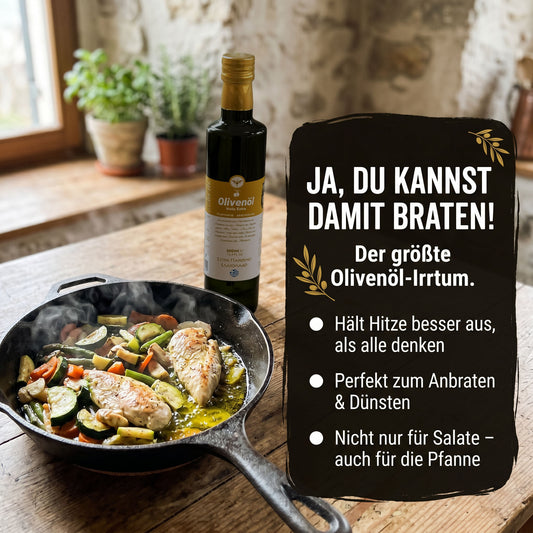
It is one of the most stubborn myths in the kitchen: that you must never heat extra virgin olive oil, and that frying with it is a waste of a good bottle. Walk into most German kitchens and you will find a cheap ‘frying oil’ next to a fancy olive oil kept only for salads. Here is the truth that myth gets wrong — a genuine, low-acidity extra virgin olive oil is one of the most reliable fats you can cook with, and it makes your food taste better while it does it.
Let us clear up smoke point, heat and frying once and for all — and show you why the quality of the oil, not the label ‘extra virgin’, is what really matters. If you already want the short answer, it is this: cook with a real one. Our Peloponnese extra virgin olive oil is made for the pan as much as the plate.
Where the ‘never heat olive oil’ myth comes from
The fear is built around one number: the smoke point, the temperature at which an oil starts to visibly smoke and break down. People assume extra virgin olive oil has a low smoke point and therefore cannot be used for cooking. In reality, a fresh, properly made extra virgin olive oil smokes somewhere around 190–210°C — comfortably above the temperatures you actually reach when sauteing, roasting or shallow-frying at home.
Most everyday cooking happens between 120°C and 180°C. Roasting vegetables, frying an egg, searing halloumi, softening onions — all of it sits well within range. The myth survives because it was built on refined, low-grade oils and tested on bottles that were already old and oxidised. A living oil behaves very differently.
What smoke point actually depends on
Two things decide how well an olive oil handles heat, and neither of them is the word on the front label:
- Free acidity. The lower the acidity, the higher and more stable the smoke point. Cheap oils with high acidity break down early; a low-acidity oil stays composed.
- Antioxidants and polyphenols. These natural compounds protect the oil from oxidising when it meets heat. An oil rich in polyphenols is, in effect, self-defending in the pan.
This is exactly why a flat, refined supermarket oil struggles while a robust extra virgin oil thrives. The quality you can taste cold is the same quality that protects your food hot.
So — can you fry with extra virgin olive oil?
Yes. For sauteing, pan-frying, roasting and shallow-frying it is an excellent choice, and it seasons the food with flavour as it cooks — something no neutral oil can do. For long, deep, repeated deep-frying at very high temperatures, many cooks still reach for a cheaper oil simply on cost; but for the way most of us actually cook at home, extra virgin olive oil is not only safe, it is the better-tasting option.
The key is to start with an oil that is genuinely built to take heat. That brings us to the bottle in your hand.
What a cooking-grade extra virgin olive oil looks like
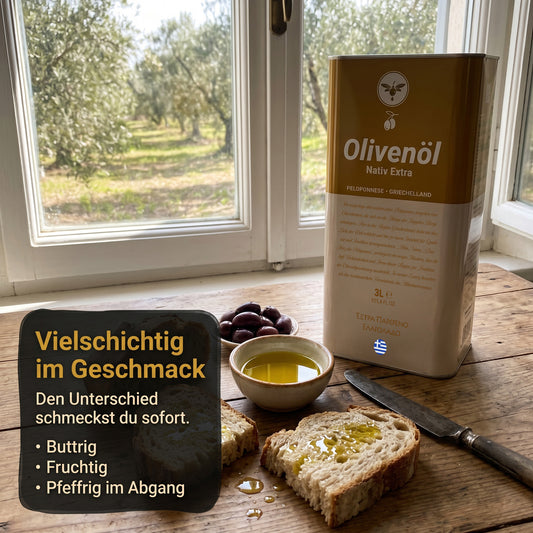
Our extra virgin olive oil from the Peloponnese is made for real cooking, not just drizzling:
- Lab-tested and heat-stable up to 180°C — ideal for everyday roasting and frying, with no trans fats formed
- Low in acidity, which is precisely what keeps it composed over heat
- Rich in polyphenols — natural antioxidants that help it resist oxidation in the pan
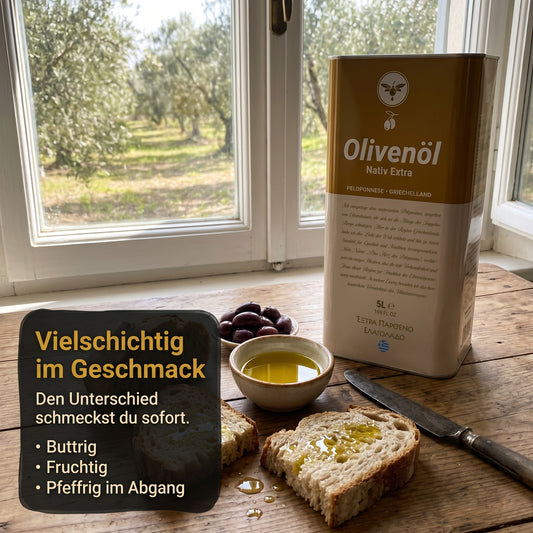
- Hand-harvested and cold mechanically extracted, naturally cloudy and unfiltered
- Free from mineral-oil residues, with a spicy, buttery, peppery flavour that lifts whatever you cook
Cook with a supermarket blend and you taste nothing. Cook with this and your vegetables, eggs and fish taste of the Mediterranean. Bring a real cooking oil into your kitchen and you will stop buying two separate bottles for good.
A simple temperature guide for the pan
- Gentle (120–150°C): softening onions and garlic, slow eggs, confit — perfect territory for extra virgin olive oil.
- Medium (150–180°C): sauteing vegetables, searing halloumi, shallow-frying fritters — exactly where our oil is designed to work.
- Watch the oil, not the clock: if it ever shimmers hard and begins to smoke, it is too hot — simply pull the pan off the heat for a moment. You almost never need to go that high.
If you cook with olive oil daily — and once you taste the difference, you will — buy the size that keeps up. Our 3-litre starter set with a free stoneware bottle keeps a everyday supply fresh and shielded from light. Prefer to start smaller? Grab the 500 ml here.
Frequently asked questions
Does heating extra virgin olive oil destroy its benefits?
Gentle, everyday cooking within the oil's heat-stable range of up to 180°C keeps the vast majority of its character and flavour intact. Some delicate aromatics soften with heat — which is exactly why many cooks fry with it and then add a final raw drizzle at the end for the full fruity hit.
What is the smoke point of your olive oil?
A fresh, low-acidity extra virgin olive oil like ours smokes well above typical cooking temperatures. We cite a tested heat-stability of up to 180°C, which covers virtually all home sauteing, roasting and shallow-frying with room to spare.
Why does cheap olive oil smoke so quickly?
Because it is usually high in acidity and stripped of the antioxidants that protect it from heat. Those are the first things lost in low-grade or refined oils — and the first things we protect through hand-harvesting and cold extraction.
Our product tip
Extra Virgin Olive Oil 500ml from the Peloponnese
Lab-tested, low in acidity and heat-stable to 180°C — the one oil for both your salad bowl and your frying pan.
Cook with the real thingYou do not need a drawer full of different oils. You need one honest, low-acidity extra virgin olive oil that is as happy in a hot pan as it is over a salad. That is exactly what we hand-harvest and cold-extract on the Peloponnese. Order yours today and taste what cooking with a living oil really means — Pour La Vie.