Sun-Dried Tomato & Olive Tapenade: The 10-Minute Mediterranean Spread Everyone's Making Right Now

Some spreads are an afterthought. This one is the reason people linger at the table. Sun-dried tomato and olive tapenade is the rich, glossy, savoury-sweet Mediterranean spread that turns a few slices of bread into something you keep going back for — and right now it is quietly becoming one of the most-searched antipasti ideas in Germany. The best part? It takes about ten minutes, needs no cooking at all, and lives or dies on one ingredient: your olive oil. Start with our Peloponnese extra virgin olive oil and you will taste the difference in the very first spoonful.
Below you will find the full recipe, the tricks that separate a flat tapenade from an unforgettable one, and honest answers to the questions people ask most. Let's make the spread everyone will ask you about.
What is tapenade — and why the tomato version is having a moment
Classic tapenade is a Provençal purée of olives, capers, olive oil and a little garlic, traditionally pounded in a mortar. It is the Mediterranean answer to a dip: concentrated, briny and built to be smeared on warm bread. The sun-dried tomato version keeps that savoury backbone but adds a deep, almost caramel-sweet richness from the tomatoes. The result is softer, rounder and a touch sweeter than a pure black-olive tapenade — which is exactly why it wins over people who think they don't like olives.
It is also endlessly useful. A jar in the fridge becomes an instant starter, a quick pasta sauce, a sandwich upgrade or the centre of a sharing board. Make it once and you will understand why it keeps trending — and why a homemade jar beats anything from a supermarket shelf.
Why your olive oil decides everything
Here is the uncomfortable truth: with a bland supermarket oil, tapenade tastes flat and a little greasy. With a living, aromatic extra virgin olive oil, it tastes layered, bright and genuinely restaurant-worthy. The oil is not a background ingredient here — it binds the paste, carries the aromas and is the single biggest lever you have over the final flavour. The difference between good and unforgettable really does sit in the oil.
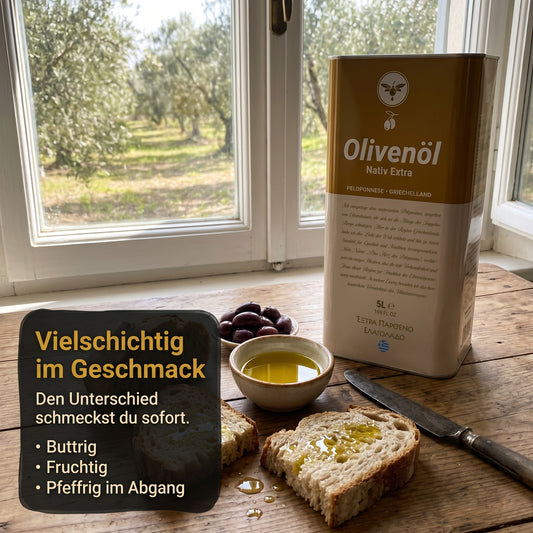
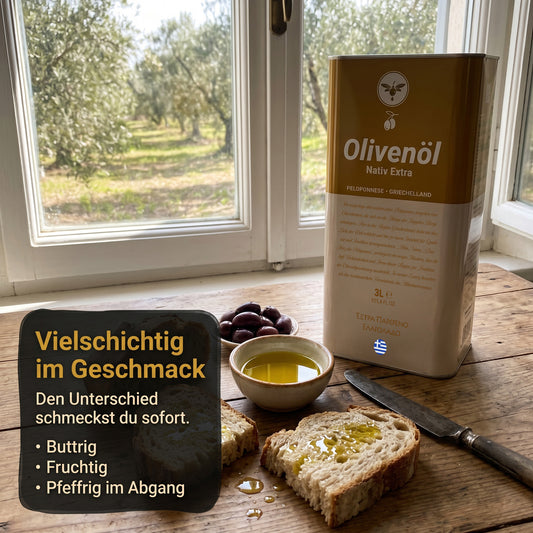
That is why we build this recipe around our extra virgin olive oil from the Peloponnese. It is hand-harvested and extracted purely by cold mechanical pressing, which keeps it naturally cloudy and unfiltered. It is laboratory-tested for low acidity, a high polyphenol content and freedom from mineral-oil residues — and it carries a distinctive spicy, buttery, peppery flavour that gives tapenade its backbone. Secure a bottle here before you start.
Ingredients (makes roughly one small jar)
- 150 g pitted black Kalamata olives, drained
- 120 g sun-dried tomatoes in oil, drained
- 2 tbsp capers, drained
- 1 small garlic clove
- 4–5 tbsp extra virgin olive oil from the Peloponnese, plus extra to seal the jar
- 1 tbsp fresh lemon juice
- A small handful of fresh basil (or flat-leaf parsley)
- Freshly ground black pepper
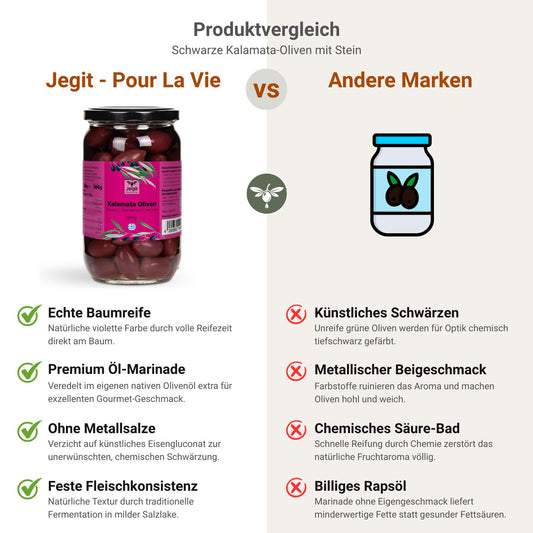
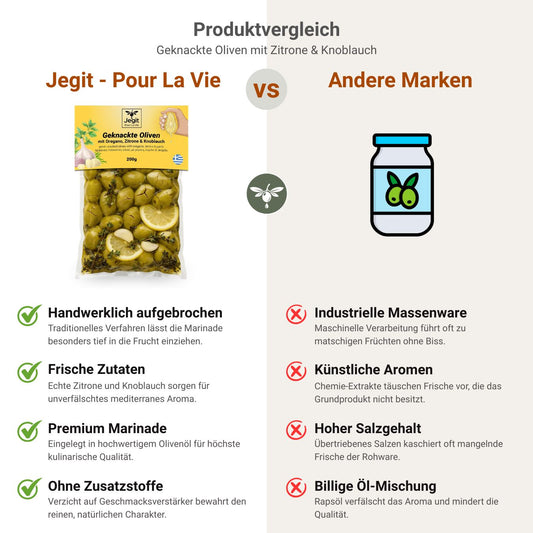
A quick note on quality: real, naturally cured Kalamata olives — rich in antioxidants and free from artificial dyes and additives — give this tapenade its deep, fruity character. Grab a pack of our Kalamata olives and you are most of the way to a perfect spread.
How to make sun-dried tomato & olive tapenade
- Prep the aromatics. Peel the garlic and tear the basil leaves. If your olives still have their stones, pit them now.
- Combine. Add the Kalamata olives, sun-dried tomatoes, capers, garlic and basil to a food processor. For a traditional texture, use a mortar and pestle instead and pound in batches.
- Pulse, don't purée. Blitz in short bursts until you have a coarse, spoonable paste. Tapenade should have texture — you want to see flecks of olive and tomato, not a smooth cream.
- Stream in the oil. With the motor running (or stirring by hand), add the extra virgin olive oil a spoonful at a time until the mixture is glossy and just holds together. This is where the flavour comes alive.
- Season and balance. Stir in the lemon juice and a good grind of black pepper. Taste. It rarely needs salt — the olives and capers bring plenty — but it often wants another drizzle of oil.
- Rest. Spoon into a clean jar, smooth the top and pour a thin layer of olive oil over the surface to seal it. Let it sit for at least 20 minutes so the flavours marry.
Tips for the best tapenade
Keep it coarse. Over-processing turns tapenade into a dull paste. Short pulses protect the texture that makes it special.
Finish with your best oil. Reserve a final tablespoon of extra virgin olive oil to stir through right at the end — raw, unheated oil is where that peppery, polyphenol-rich aroma shines brightest.
Make it your own. A little orange zest, a pinch of chilli or a few extra basil leaves all work beautifully. Leave out the capers for a milder, more tomato-forward spread.
How to serve it
Pile it onto warm, toasted sourdough for an instant starter. Toss a couple of spoonfuls through hot pasta with a splash of the cooking water for a five-minute dinner. Spread it under grilled chicken or roasted vegetables, swirl it into cream cheese for a quick dip, or make it the hero of a Mediterranean antipasti board alongside olives, cheese and more good bread. However you use it, a final drizzle of olive oil over the top makes it look — and taste — like it came straight from a deli counter.
Make it ahead for stress-free entertaining
Tapenade is a host's secret weapon because it is better made in advance. Prepare it the day before a dinner and the flavours deepen overnight in the fridge. All you do before guests arrive is bring it to room temperature, stir in that last spoonful of fresh olive oil, and serve. One small jar stretches across a whole table of toasts and boards — effortless, generous and quietly impressive.
Our Product Tip
Extra Virgin Olive Oil from the Peloponnese (500 ml)
Hand-harvested, naturally cloudy & unfiltered and lab-tested for low acidity and high polyphenols — the buttery, peppery heart of this tapenade.
Shop the olive oil nowFrequently asked questions
How long does tapenade keep? Stored in a sealed jar in the fridge with a layer of olive oil on top, it keeps for up to one week. The oil may firm up when cold — simply let the jar come to room temperature before serving and give it a stir.
Can I make it without a food processor? Absolutely. A mortar and pestle gives the most authentic, rustic texture. Pound the olives, tomatoes, capers and garlic in batches, then work in the olive oil at the end.
Is this tapenade vegan? Yes. By skipping the traditional anchovies and using only olives, capers, tomatoes, garlic and olive oil, this version is completely plant-based — and loses none of its savoury depth.
Great tapenade is proof that a handful of honest ingredients, treated with care, can taste extraordinary — and it all comes back to the oil you pour. Build yours on our hand-harvested, polyphenol-rich Peloponnese olive oil and you will taste why we say Pour La Vie. Order your extra virgin olive oil now and make the spread everyone remembers.

Italian Braised Pork with Olives (Maiale alle Olive): A Slow-Cooked Autumn One-Pot
Fork-tender Italian braised pork with olives, garlic and Peloponnese olive oil — a rustic autumn one-pot that proves great olive oil makes...

Pan-Fried Halloumi with Thyme Honey and Olive Oil (Cypriot-Style Meze)
Learn how to pan-fry halloumi until golden and crisp, then finish it with Greek thyme honey and peppery Peloponnese olive oil —...

Lebanese-Style Roast Chicken with Garlic, Lemon and Olive Oil (One-Pan Traybake)
A one-pan Lebanese roast chicken with garlic, lemon and a river of extra virgin olive oil — the dish lives or dies...