Italian Braised Pork with Olives (Maiale alle Olive): A Slow-Cooked Autumn One-Pot

There is a particular kind of magic that happens when pork is left to braise slowly with olives, garlic and good olive oil until the meat gives way at the touch of a fork. This is maiale alle olive — the Italian Sunday one-pot that turns an affordable cut of pork shoulder into something you will think about for days. It is rustic, deeply savoury and built for cool autumn evenings, and the secret is not a long shopping list. It is the quality of the oil you build it on. Start with our Extra Virgin Olive Oil from the Peloponnese and you are already halfway to a restaurant-worthy result.
Here is the honest truth most recipes skip: with a flat, refined supermarket oil this braise tastes fine — forgettable, but fine. With a living, hand-harvested extra virgin oil, the same pot tastes layered, peppery and alive. The difference between good and unforgettable is in the oil. Secure your bottle of Peloponnese olive oil here and let us build this properly.
Why this braise belongs on your autumn table
Pork shoulder is one of the kindest cuts a cook can buy: inexpensive, forgiving and genuinely better the slower you treat it. Browned in a generous slick of olive oil, then left to simmer with garlic, white wine, tomatoes and a double handful of olives, it rewards you with meltingly tender meat and a glossy, briny sauce you will want to mop up with bread. It is a true one-pot, it loves to be made a day ahead, and it carries the whole room with its smell. Few dishes give back this much for so little effort.
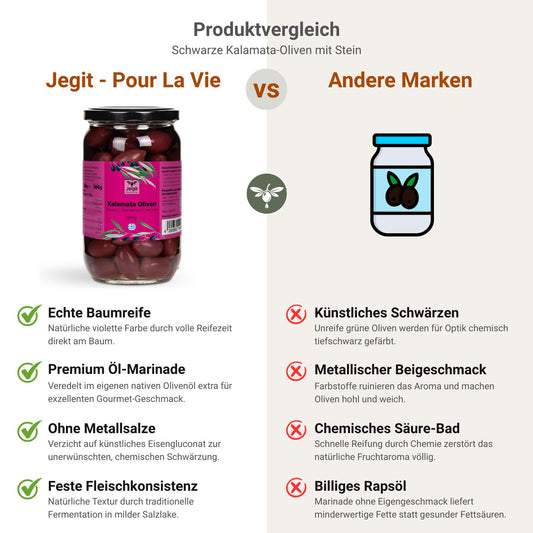
The olives are not a garnish here — they are the backbone. As they warm through, they lend the sauce a savoury, salty depth that balances the richness of the pork. Good Greek Kalamata olives, naturally cured and free from colourants, are exactly what this dish is asking for.
The ingredient that decides everything: your olive oil
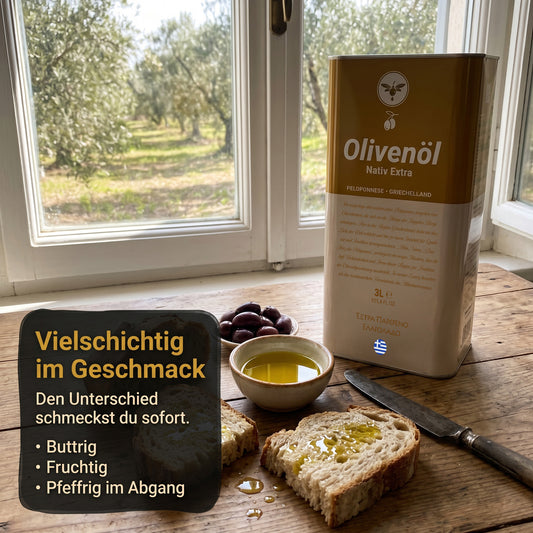
You will use olive oil twice in this recipe — once to sear the pork and build the base, and once raw at the end to finish the sauce. In both moments, the oil is doing the heavy lifting of flavour, which is why we do not compromise on it. Our Peloponnese Extra Virgin Olive Oil is:
- Hand-harvested and cold mechanically extracted, so the fruit's character survives intact.
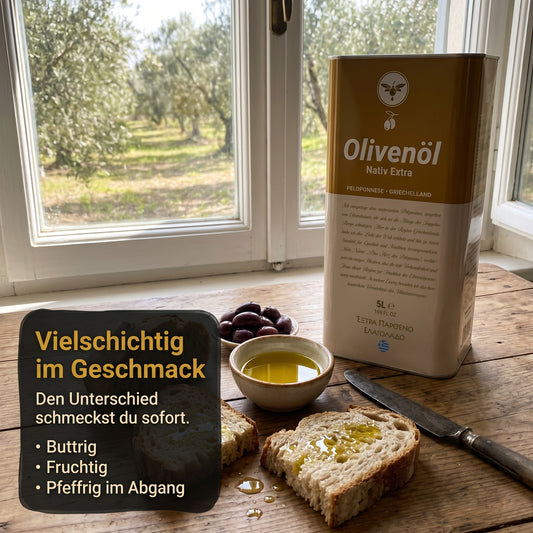
- Naturally cloudy and unfiltered, with a spicy, buttery and peppery flavour that seasons the whole pot.
- Lab-tested: low in acidity, rich in polyphenols, and verified free from mineral-oil residues.
- Heat-stable up to 180°C without forming trans fats — ideal for the initial sear.
- Rich in monounsaturated fats and antioxidants, the heart of the Mediterranean kitchen.
Searing in a lesser oil gives you heat and little else. Searing in this one lays down a peppery, fruity foundation the whole braise is built on. Try it in your next braise — shop the Peloponnese olive oil and taste the difference for yourself.
Ingredients (serves 4 to 6)
- 1.2 kg boneless pork shoulder, cut into large 5 cm chunks
- 4 tbsp Extra Virgin Olive Oil from the Peloponnese, plus extra to finish
- 1 large onion, finely chopped
- 4 garlic cloves, sliced
- 150 ml dry white wine
- 1 x 400 g tin of good chopped tomatoes
- 200 ml chicken or vegetable stock
- 180 g Greek Kalamata olives, pitted (keep a few whole for serving)
- 2 sprigs rosemary and 2 bay leaves
- Zest of 1 unwaxed lemon
- Sea salt and freshly ground black pepper
A quick note on the olives: use naturally cured ones with real flavour, not the rubbery, dyed sort. Our Kalamata olives are hand-picked, additive-free and rich in that deep, winey savouriness this braise lives on.
Method
- Brown the pork. Pat the pork dry and season well. Heat 3 tablespoons of olive oil in a heavy casserole over a medium-high heat and sear the chunks in batches until deeply golden on all sides. Don't crowd the pan. Set the meat aside.
- Build the base. Lower the heat, add the last tablespoon of oil, then the onion. Soften for 6 to 8 minutes until sweet and translucent, then stir in the garlic for a final minute.
- Deglaze. Pour in the white wine, scraping up every sticky brown bit from the bottom — that is pure flavour. Let it bubble and reduce by half.
- Simmer low and slow. Return the pork and its juices, add the tomatoes, stock, rosemary and bay. Bring to a gentle simmer, cover, and cook on the lowest heat (or in a 150°C oven) for 2 to 2.5 hours, until the pork is fork-tender.
- Add the olives. Stir in the Kalamata olives and the lemon zest for the final 20 minutes, so they warm through and release their savour without turning bitter.
- Finish raw. Off the heat, taste for salt, then finish with a generous drizzle of raw extra virgin olive oil. This last cold pour is what makes the sauce sing — never skip it.
Tips, swaps and how to serve
Make it ahead
Like most braises, this one is even better on day two, once the flavours have settled. Cool, refrigerate, and reheat gently — adding a fresh splash of olive oil before serving to wake it back up.
Easy swaps
No pork? The same method works beautifully with chicken thighs (reduce the time to about 45 minutes) or beef shin. Prefer a milder, fruitier olive? Our Greek green olives are a lovely alternative.
Serve it like an Italian
Pile it over soft polenta, buttered pappardelle or simply with torn rustic bread for the sauce. A crisp green salad dressed in nothing but lemon and — of course — your best olive oil completes it. Stock your kitchen with the olive oil that finishes every dish.
Frequently asked questions
Can I use extra virgin olive oil to sear the pork?
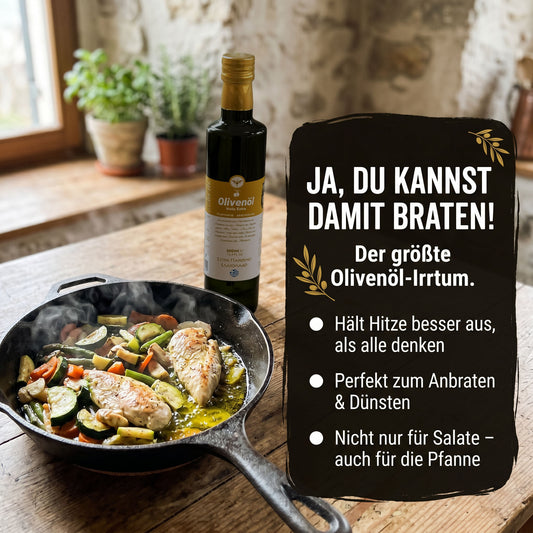
Yes. A common myth says extra virgin oil cannot take the heat. A genuine, high-quality oil like our Peloponnese bottling is heat-stable up to 180°C without forming trans fats, which comfortably covers a proper sear. You get browning and flavour in one step.
Should I pit the olives?
For a braise you will eat with a fork, pitting most of them makes life easier. Leave a few whole for serving — they look beautiful and tend to keep more of their bite. Our Kalamata olives come with the stone in, which is a good sign of natural, minimally processed fruit.
What makes olives taste bitter in a sauce?
Boiling olives hard for too long can draw out a harsh bitterness. The fix is simple: add them near the end, as in this recipe, so they warm through and release their savoury, briny depth rather than turning sharp.
Our Product Tip
Extra Virgin Olive Oil 500ml from the Peloponnese
Hand-harvested, naturally cloudy and lab-tested — low in acidity, rich in polyphenols and heat-stable to 180°C. The oil that turns a good braise into an unforgettable one.
Get the Peloponnese olive oilCook this once and it earns a permanent place in your autumn rotation. Everything rests on two humble heroes — great olives and great oil — so give them the quality they deserve. Order your Peloponnese extra virgin olive oil now and taste what makes it unforgettable. Pour La Vie.

Pan-Fried Halloumi with Thyme Honey and Olive Oil (Cypriot-Style Meze)
Learn how to pan-fry halloumi until golden and crisp, then finish it with Greek thyme honey and peppery Peloponnese olive oil —...

Lebanese-Style Roast Chicken with Garlic, Lemon and Olive Oil (One-Pan Traybake)
A one-pan Lebanese roast chicken with garlic, lemon and a river of extra virgin olive oil — the dish lives or dies...

Honey-Mustard Roast Potatoes with Crispy Bacon (German-Style Sheet-Pan Side)
Crispy German-style honey-mustard roast potatoes with bacon, glazed in real Greek thyme honey. The trending autumn side dish, ready in under an...