Olive Oil for Skin and Face: How to Use Extra Virgin Olive Oil in Natural Skincare

Long before serums and multi-step routines, people around the Mediterranean reached for one simple beauty staple: olive oil. From ancient Greece to modern Crete, a bottle of good extra virgin olive oil has doubled as a kitchen essential and a skincare treasure. Today, as more of us look for natural, single-ingredient care with nothing to hide, olive oil for the skin is quietly having a well-deserved revival.
This guide walks you through why olive oil suits the skin so well, how to use it on your face and body, and how to get the best from it — honestly, without any miracle promises.
Why Olive Oil Belongs in Your Skincare Routine
Olive oil is what beauty editors call an emollient: it softens the skin and helps it feel smooth and supple. Because it is rich and cushioning, it works as a gentle cleanser, a nourishing moisturiser and a comforting treatment for dry patches — all from a single, food-grade ingredient you can actually pronounce.
For anyone drawn to a pared-back, natural routine, that simplicity is the appeal. There are no synthetic fragrances, no fillers and no long ingredient list — just pure oil pressed from olives. It is the same philosophy that runs through the Mediterranean kitchen: the fewer, better ingredients, the more you can trust what you are using.
What Makes Extra Virgin Olive Oil So Good for Skin
Not all fats feel the same on the skin, and extra virgin olive oil owes its reputation to its natural make-up. It is high in oleic acid, a monounsaturated fat that gives the oil its rich, sinks-in quality. It naturally contains squalene, a compound the skin recognises because our own skin produces a close relative of it. And it carries vitamin E and polyphenols, the same antioxidants that make olive oil so valued in food.
These are the qualities that have made olive oil a traditional beauty ingredient for centuries. The key is freshness and grade: the more carefully the oil is made, the more of these natural compounds survive into the bottle.
Which Olive Oil to Use on Your Skin
For skincare, treat your olive oil the way you would for eating raw — quality is everything. Choose an extra virgin oil, which is cold-extracted and unrefined, so it keeps its natural antioxidants intact. Naturally cloudy, unfiltered oils retain even more of the fruit's character. And because oils are best when fresh, buy a size you will use within a few months and store it away from heat and light.
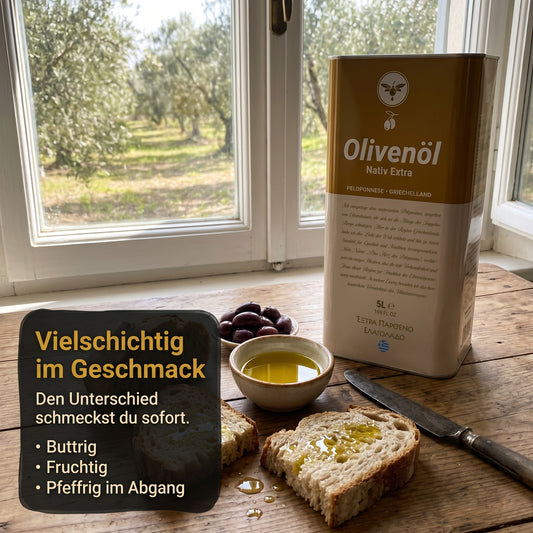
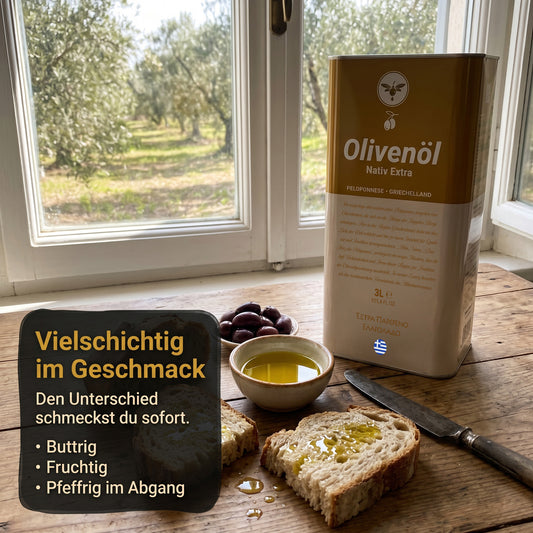
Our extra virgin olive oil from the Peloponnese fits the bill on every count: hand-harvested, lab-tested, low in acidity and rich in polyphenols, with nothing added. The 500 ml bottle is an ideal size to keep on the bathroom shelf as well as in the kitchen.
How to Use Olive Oil on Your Face and Skin
As a gentle cleanser
Oil cleansing is one of the loveliest ways to use olive oil. Massage a few drops into dry skin, including over make-up, for a minute or so, then lay a warm, damp cloth over your face and gently wipe away. The oil loosens grime and make-up while leaving the skin feeling soft rather than tight.
As a night-time moisturiser
After cleansing, warm two or three drops between your palms and press them lightly over slightly damp skin. A little goes a long way — you want a sheen, not a slick. This is especially comforting in winter or for skin that feels dry and dull.
For the body and dry patches
Smooth olive oil onto damp skin straight after a shower to lock in moisture, or work a little into elbows, knees, heels and cuticles where skin tends to get rough. It also makes a simple, nourishing massage oil.
As a soothing balm for lips and hair ends
Dab a tiny amount onto flaky lips, or smooth a drop through the dry ends of your hair to tame frizz and add shine.
A Simple Olive Oil Facial Routine
In the evening, massage a few drops of olive oil into dry skin to melt away the day, then remove with a warm cloth. Press a couple more drops over damp skin as your night treatment. Two or three times a week, mix a teaspoon of oil with a little fine sugar for a quick, gentle body scrub in the shower. That is genuinely all a natural routine needs.
Who Should Take a Little Care
Olive oil suits normal, dry and mature skin beautifully, but it is a rich oil, so a few sensible notes apply. If your skin is very oily or blemish-prone, olive oil can feel heavy — use it sparingly, mainly as a cleanser you fully wipe away, or choose a lighter routine. As with any new product, do a simple patch test on your inner arm first and wait a day, especially if your skin is reactive. And always use a clean, food-grade oil, never one that has been sitting open for a year.
Olive Oil or a Dedicated Olive-Leaf Cream?
Pure olive oil is wonderfully versatile, but sometimes you want a formulated cream that absorbs quickly and layers under other products. That is where olive-based skincare comes in. Our rich antioxidant cream with olive leaf pairs the antioxidant power of the olive tree with a light, fast-absorbing texture made for daily facial care. Many people happily use both: the oil for cleansing and overnight nourishing, the cream for a lighter daytime finish.
Frequently Asked Questions
Can I use cooking olive oil on my face?
Yes — as long as it is a genuine extra virgin olive oil with nothing added, the same bottle you cook with is perfectly suitable for skincare. In fact, a high-quality, fresh extra virgin oil is exactly what you want. Just decant a little into a small clean dish for bathroom use so the main bottle stays uncontaminated.
Will olive oil clog my pores?
Olive oil is a rich, heavier oil, so on very oily or blemish-prone skin it can feel too much if left on. Used as a cleanser that you wipe away, or applied sparingly at night, most people with normal to dry skin find it comfortable. If in doubt, patch test and start with just a couple of drops.
How often should I use olive oil on my skin?
For most people, nightly use as a cleanser or light moisturiser works well. Dry areas of the body can take a daily application, while a gentle olive-oil-and-sugar scrub is best kept to two or three times a week. Listen to your skin and adjust.
Our product tip
Extra Virgin Olive Oil 500 ml from the Peloponnese
Hand-harvested, lab-tested and rich in polyphenols — pure enough for the kitchen and the bathroom shelf alike.
Shop Peloponnese Olive OilNatural skincare rarely gets simpler — or more Mediterranean — than a few drops of good olive oil. Choose an oil pure enough to eat, treat your skin gently, and let one honest ingredient do the work. Pour La Vie.

Can You Wash Your Hair with Aleppo Soap? A Natural Hair-Washing Guide (and How to Avoid the Waxy Feeling)
Yes, you can wash your hair with Aleppo soap. Here's how to do it right, why hair can feel waxy, and the...

Can You Eat Olives Straight From the Tree? Why Raw Olives Are So Bitter — and How They Become the Olives You Love
Can you eat olives straight off the tree? Here is why raw olives are so bitter, whether they are safe, and how...

Thyme Honey vs Manuka Honey: Which Is Really Worth It?
Thyme honey vs manuka honey compared: taste, MGO, purity and price. Why pure Greek thyme honey is the everyday Mediterranean honey worth...