Can You Eat Olives Straight From the Tree? Why Raw Olives Are So Bitter — and How They Become the Olives You Love

It is one of the most searched questions of the autumn olive harvest, and almost everyone who has ever stood under a laden olive tree has wondered it: can you just pick an olive and eat it? The short answer is yes, you physically can — but you will almost certainly spit it straight back out. A raw olive, fresh off the branch, is so overwhelmingly, mouth-puckeringly bitter that it is effectively inedible. That bitterness is not a flaw and it is not dangerous; it is simply the reason that every olive you have ever enjoyed was cured first. If you want olives you can actually eat tonight, the honest shortcut is to skip the months of work entirely: reach for a jar of properly cured Greek olives here and let tradition do the hard part for you.
With the harvest in full swing, let us clear up exactly why raw olives taste the way they do, whether they are safe, and how a bitter green fruit becomes the glossy, savoury olive you love on a mezze board.
Why raw olives are so unbearably bitter
The culprit is a natural compound called oleuropein. It is concentrated throughout the raw fruit and it is astonishingly bitter — bitter enough that a single bite of a fresh olive can make your whole mouth clench. The olive tree produces it for its own protection, to deter insects and animals from eating the fruit before the seed is ready. In other words, the tree really does not want you snacking on its olives, and it has spent millions of years making sure you cannot.
This is true of every olive, green or black, on every variety of tree. A green olive is simply an unripe one; a black or purple olive is the same fruit left to ripen further on the branch. Both are packed with oleuropein when raw, and both need curing before they are pleasant to eat. So if you have ever been handed a “fresh” olive and recoiled, there was nothing wrong with the fruit — it was just doing exactly what nature intended. The olives that taste wonderful are the ones that have been patiently transformed. Taste what properly cured olives are supposed to be — shop ours here.
Are raw olives poisonous?
No. This is the reassuring part: raw olives straight from the tree are not toxic and will not harm you if you bite into one out of curiosity. The problem is purely one of taste. Oleuropein is intensely bitter but it is not a poison, and it breaks down naturally during curing. So the honest answer to “are raw olives dangerous?” is that they are perfectly safe — they are just deeply, memorably unpleasant to eat. The transformation from inedible to irresistible is all about removing that bitterness, not about removing anything harmful.
How a bitter green fruit becomes a table olive
Curing is the craft of drawing out the oleuropein until the olive is mellow, savoury and good to eat. There are several traditional methods, and each takes real time and patience:
- Brine-curing and natural fermentation. The olives are submerged in salted water for weeks or months. Over time the bitterness leaches out and wild fermentation develops the complex, lively, slightly tangy flavour prized in Greek table olives.
- Water-curing. The olives are soaked in fresh water that is changed daily over a long period, gradually rinsing the bitterness away for a cleaner, milder taste.
- Dry salt-curing. Ripe black olives are packed in salt, which pulls out both moisture and bitterness, leaving a concentrated, wrinkled, intensely flavoured olive.
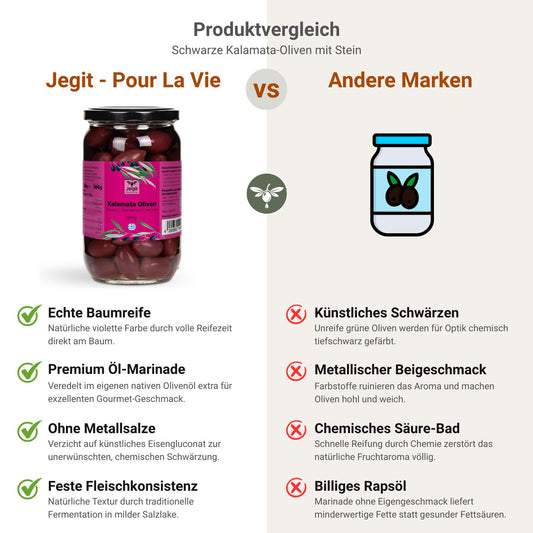
None of these is quick. A proper natural brine cure can take several months before the olive is ready, which is precisely why home-curing is such a committed project — and why most people, quite sensibly, let an expert producer handle it. Our Greek green olives are naturally fermented in the traditional way, using nothing but brine and vinegar, so they arrive at your table with that living, mild-and-fruity flavour already developed. If you prefer a deeper, richer olive, our black Kalamata olives are naturally ripened and cured with no artificial additives or dyes — just the real thing. Skip the months of waiting and order ready-to-eat olives here.
Green or black — which should you choose?
It comes down to taste. Green olives, picked earlier, tend to be firmer with a brighter, milder, more fruity bite — wonderful on an antipasti platter, chopped through a salad or served alongside mild cheese. Black Kalamata olives, left to ripen, are softer, meatier and deeper, with a satisfying savoury intensity that makes them a mezze-table classic. Many people keep both in the fridge. The important thing is that whichever you choose, it should be naturally cured and free from artificial colouring — the hallmark of a real olive rather than a mass-processed one. Compare our green and Kalamata olives here and pick your favourite.
Frequently asked questions
Can you eat olives directly off the tree?
You can bite into one without harm, but you will not want to eat it. Fresh olives are so bitter from their natural oleuropein that they are effectively inedible until they have been cured. Every olive you enjoy has gone through a curing process first.
How long does it take to cure olives at home?
A proper natural brine cure typically takes anywhere from several weeks to several months, depending on the method and the variety. It is a rewarding but slow project that demands patience and the right conditions — which is why most people buy olives that have already been traditionally cured.
Are green and black olives different fruits?
No — they are the same fruit at different stages of ripeness. Green olives are harvested earlier and are firmer and milder; black and purple olives are left longer on the tree to ripen and become softer and richer. Both are bitter when raw and both must be cured.
Our product tip
Greek Green Olives with Pit
Naturally fermented the traditional way in nothing but brine and vinegar — hand-harvested, mild, fruity and ready to eat. All the reward of real cured olives, none of the months of waiting.
Shop the olives nowSo, can you eat olives straight from the tree? Technically yes — but nature designed them to be bitter, and it takes patient, traditional curing to turn them into the olives worth reaching for. Let someone who has done it for generations do the waiting for you. Order our naturally cured Greek olives today and enjoy them the way they were always meant to taste — Pour La Vie.

Thyme Honey vs Manuka Honey: Which Is Really Worth It?
Thyme honey vs manuka honey compared: taste, MGO, purity and price. Why pure Greek thyme honey is the everyday Mediterranean honey worth...

Does Honey Go Bad? Shelf Life, Crystallisation and How to Store Thyme Honey
Does honey go bad? How long thyme honey lasts, why it crystallises, how to store it and gently re-liquify it — plus...

Aleppo Soap vs Curd Soap (Kernseife): Which Natural Bar Is Better for Skin, Hair and Home?
Aleppo soap or curd soap (Kernseife)? Compare how each natural bar cleans skin, hair and laundry — and why an olive-and-laurel Aleppo...