Naturally Cloudy, Unfiltered Olive Oil: What It Means — and Is It Actually Better?

You pour two extra virgin olive oils side by side. One is clear, bright and golden. The other is hazy, green-gold and faintly cloudy, with the faintest sediment settling at the bottom of the bottle. Your instinct says the clear one looks "cleaner" — so it must be better, right? Not quite. That cloudiness is not a flaw. It is a sign of an oil that has been left as close to its natural state as possible. If you have ever searched for what naturally cloudy, unfiltered olive oil actually means — and whether it is worth buying — this guide is for you.
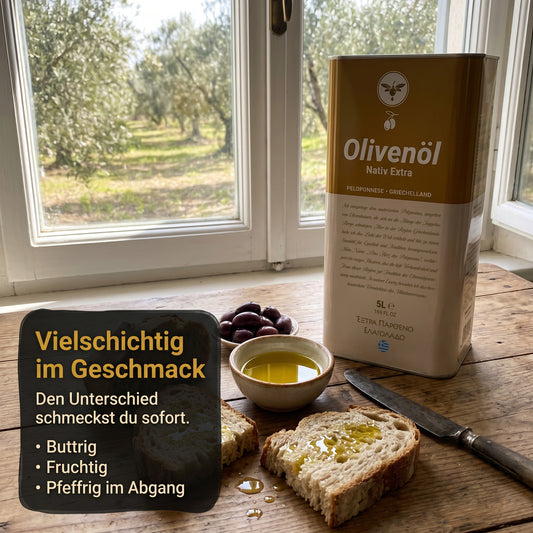
We make this distinction central to everything we sell, because our hand-harvested extra virgin olive oil from the Peloponnese is proudly unfiltered. Here is why that matters for flavour, aroma and quality — and how to judge a great oil for yourself. See the oil we are talking about here.
What does "naturally cloudy, unfiltered" actually mean?
After olives are pressed, the fresh oil contains tiny suspended particles of olive flesh along with microscopic droplets of fruit water. Many large producers then filter the oil to remove all of this, leaving a crystal-clear, shelf-stable product that looks uniform under supermarket lights.
An unfiltered oil skips that step. Instead of being stripped clear, it is simply allowed to settle naturally, so those fine particles stay in the oil. The result is the gentle haze — the "naturtrüb" cloudiness — you see in the bottle. Those particles are not dirt; they are flavour. They carry aromatic compounds and a share of the oil's natural polyphenols, the antioxidant compounds that give a good extra virgin its character and its famous peppery kick at the back of the throat.
In other words: filtering makes an oil look tidier. Not filtering keeps it tasting like the olive it came from. That is the choice we make with our Peloponnese extra virgin, and it is why the flavour is so much bolder than a typical clear supermarket bottle. Taste the unfiltered difference.
Filtered vs unfiltered olive oil: the honest comparison
Appearance. Filtered oil is clear and glossy; unfiltered oil is cloudy, often more intensely green, sometimes with a little sediment at the base. Cloudiness in a fresh extra virgin is a feature, not a fault.
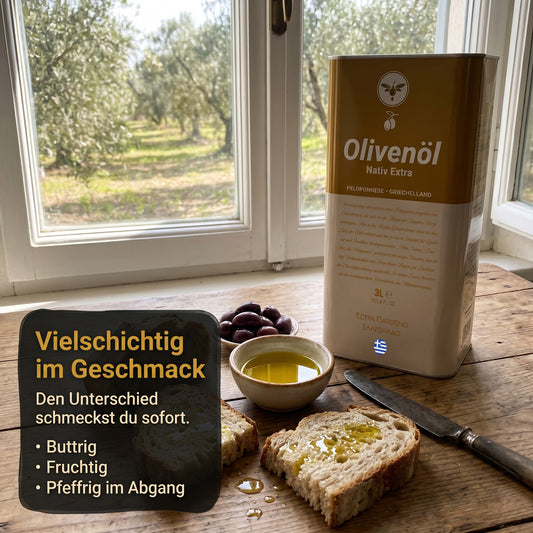
Flavour and aroma. This is where unfiltered oil wins for most food lovers. The retained particles mean more of the grassy, peppery, buttery notes that make a great Greek oil so distinctive. Our oil is described exactly as it tastes: spicy, buttery and peppery, with a naturally cloudy body.
Freshness over time. There is one trade-off worth knowing. Because unfiltered oil holds a little fruit water and sediment, it is at its most spectacular when fresh and is best enjoyed within a reasonable window rather than stored for years. For an oil you actually use — drizzling, dipping, finishing — that is no hardship at all. The reward is maximum flavour while it lasts.
Quality signals. Filtering tells you nothing about quality on its own. What matters is how the olives were grown, how quickly they were pressed, the acidity level and the polyphenol content. Our Peloponnese oil is laboratory-tested, low in acidity, rich in polyphenols and verified free from mineral-oil residues — the numbers that genuinely matter. Check the oil's credentials.
How to tell you are holding a genuinely good oil
Forget the marketing on the front label and look for these signs instead:
- Origin you can name. A single, specific origin — like the Peloponnese — beats a vague "blend of EU oils" every time. Ours comes from historic groves in southern Greece.
- Harvest and pressing method. Hand-harvested, cold mechanically extracted oils protect the delicate aromatics. That is exactly how ours is made.
- Low acidity, high polyphenols. These lab figures are the backbone of real extra virgin quality — and we test for them.
- A peppery, slightly bitter finish. That throat-catch is the taste of polyphenols. A dull, greasy oil with no kick is telling you something.
- Honest appearance. A fresh, naturally cloudy green-gold oil is a reassuring sight, not a worrying one.
If your current kitchen oil fails this checklist, it is quietly letting down every salad, every slice of bread and every roast tray you make. Upgrade to an oil that passes every test.
How to store and use unfiltered olive oil
Treat a good unfiltered oil like the fresh produce it essentially is. Keep it away from light and heat — a cupboard, not the windowsill above the hob — and keep the cap closed between uses, because light and air are the enemies of flavour and polyphenols. A little sediment at the bottom is completely normal; just give the bottle a gentle swirl.
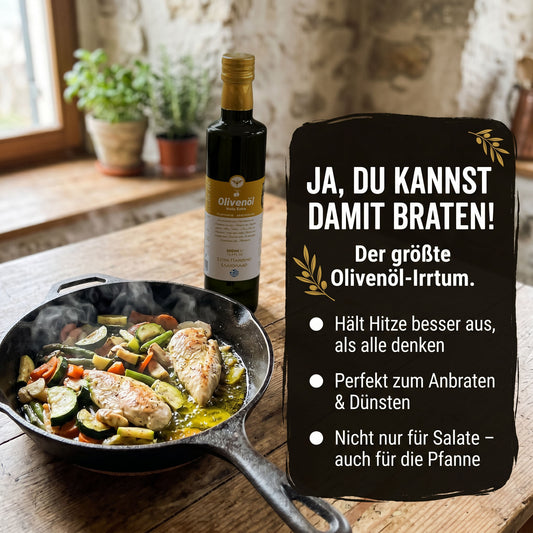
Where does it shine? Everywhere you would taste it raw: drizzled over soups, grilled vegetables and feta, stirred through pasta at the last second, whisked into dressings, or simply with warm bread. It is also a dependable all-rounder for everyday cooking — heat-stable up to 180°C in the pan, so you can sauté and roast with it too, then save the best raw drizzle for the finish. If you cook with olive oil daily, our 3-litre starter set with a free stoneware bottle keeps your reserve fresh while you pour from the bottle, and the larger 5-litre tin is ideal for keen home cooks.
Our Product Tip
Extra Virgin Olive Oil from the Peloponnese
Naturally cloudy and unfiltered, hand-harvested, laboratory-tested, low in acidity and rich in polyphenols — real extra virgin as nature intended.
Shop the unfiltered olive oilFrequently asked questions
Is cloudy olive oil off or spoiled?
No. In a fresh extra virgin oil, cloudiness simply means it has not been filtered and still contains natural olive particles and a little fruit water. It is a sign of a minimally processed oil, not a spoiled one. Spoiled oil announces itself differently — through a stale, rancid, crayon-like smell — regardless of whether it is clear or cloudy. A gentle green-gold haze, as in our Peloponnese oil, is exactly what you want to see.
Is unfiltered olive oil better than filtered?
For flavour, aroma and that characteristic peppery character, most people prefer unfiltered — it keeps more of what makes a great oil taste great. Filtered oil has a slightly longer shelf life and a clearer look, which suits mass production. Neither is automatically "higher quality"; the deciding factors are origin, harvest, acidity and polyphenols. We choose unfiltered because we want you to taste the olive, not a processed version of it.
How long does unfiltered olive oil keep?
Enjoy it while it is fresh for the fullest flavour, and store it cool and dark with the cap closed. Because unfiltered oil holds a little natural sediment, it rewards being used rather than hoarded — which, given how good it makes everything taste, is easy advice to follow. Buy a size that matches how fast you cook: a 500 ml bottle for finishing, or a larger format if olive oil is your everyday staple.
Cloudy, unfiltered — and worth it
So the next time an oil looks a little hazy in the bottle, take it as a good omen. It usually means you are holding something closer to the grove: fuller in flavour, richer in aroma and made with care rather than stripped clear for the sake of appearances. That is the whole philosophy behind our oil.
Ready to taste what unfiltered really means? Order our naturally cloudy, hand-harvested extra virgin olive oil from the Peloponnese today and bring the true taste of Greece to your table — Pour La Vie.

What Does Greek Thyme Honey Taste Like — and How to Use It
What does Greek thyme honey taste like, how to spot a real unheated jar, and the Mediterranean pairings and uses that make...

Can You Fry With Olive Oil? The Truth About Heat, Smoke Point and Extra Virgin
Can you fry with extra virgin olive oil? The truth about smoke point, heat stability and why a quality Peloponnese oil belongs...

Koroneiki Olives: The Greek Variety Behind Your Extra Virgin Olive Oil
What are Koroneiki olives, why do they make Greece's finest extra virgin olive oil, and how do you buy the real thing?...