Koroneiki Olives: The Greek Variety Behind Your Extra Virgin Olive Oil

If you have ever wondered why one bottle of Greek olive oil tastes peppery, green and alive while another tastes of almost nothing, the answer usually comes down to a single word you'll rarely see on the front label: Koroneiki. It's a small, unassuming olive variety from southern Greece - and it's the quiet reason the best extra virgin olive oils taste the way they do. Right now, searches for olive varieties and new-season Greek oil are climbing fast as the autumn harvest gets under way, so there's no better moment to understand what you're actually buying.
This guide explains what Koroneiki olives are, why they punch so far above their weight, and how to make sure the oil in your kitchen is the real thing. Spoiler: our Extra Virgin Olive Oil from the Peloponnese is pressed from exactly these olives - so if you want to taste what this article describes, you can start here.
What are Koroneiki olives?
Koroneiki is a native Greek olive cultivar, named after the town of Koroni in the southern Peloponnese. The fruit itself is tiny - often no bigger than a fingernail - which is why you'll almost never see Koroneiki sold as a table olive. Its genius lies elsewhere: it is an oil olive, prized for an exceptionally high yield of intensely flavoured, stable oil.
Grown across the sun-drenched hills of the Peloponnese, Koroneiki trees are famously hardy and drought-resistant. They ripen from green to purple-black through autumn, and the most sought-after oils are pressed from olives picked early, while they are still green. That early, hand-done harvest is more work and gives less oil per tree - but it is the secret behind the fresh, peppery character that serious cooks chase.
Why Koroneiki makes such good oil
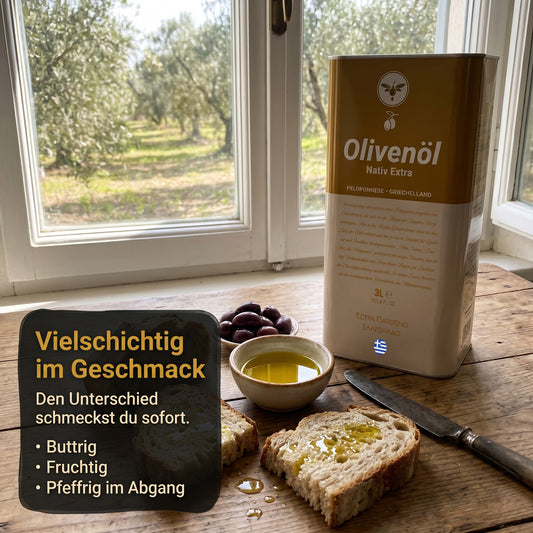
Three things set Koroneiki apart. First, flavour: expect a grassy, green aroma, a buttery body and that signature peppery tickle at the back of the throat - a classic sign of a fresh, high-quality oil. Second, polyphenols: early-harvest Koroneiki is naturally rich in these plant compounds, which also help the oil stay fresher for longer. Third, stability: a robust oil like this stands up to heat in the kitchen far better than a thin, over-refined one.
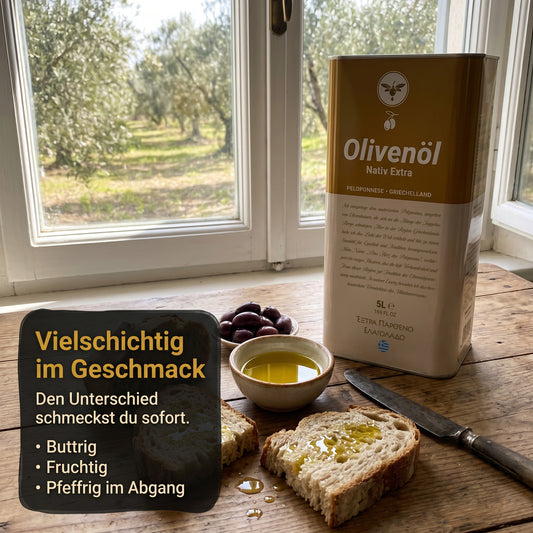
Our Peloponnese extra virgin olive oil captures all three. It is hand-harvested, lab-tested, low in acidity and rich in polyphenols, with no detectable mineral-oil residues - and because it is naturally cloudy and unfiltered, none of that character is stripped away in processing. See it for yourself here.
Koroneiki vs table olives: what's the difference?
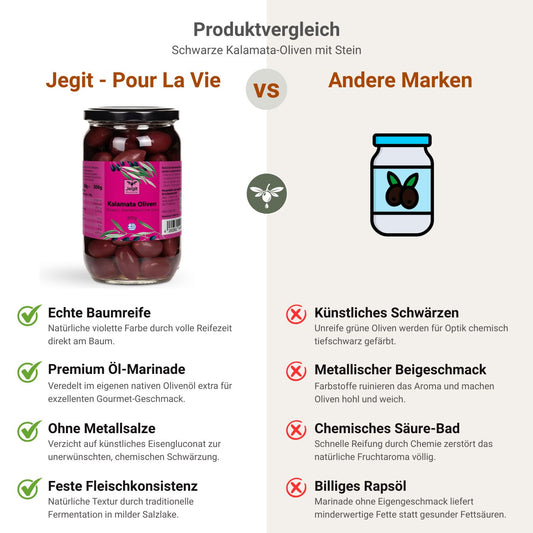
This is where a lot of shoppers get confused. The big, meaty olives you eat from a bowl - like our black Kalamata olives - are different varieties altogether, bred for a plump, fleshy bite. Koroneiki is too small and too oily to enjoy whole; its entire purpose is the press. So if you love Greek food, you'll typically want both in your kitchen: great table olives for snacking and salads, and a great Koroneiki oil for cooking and drizzling. They are two different pleasures from the same sunlit landscape.
Naturally cloudy and unfiltered - why it matters
Many mass-market oils are heavily filtered to look crystal-clear on the shelf. That clarity comes at a price: filtering can strip out some of the tiny fruit particles that carry aroma and polyphenols. A naturally cloudy, unfiltered Koroneiki oil keeps those particles - and with them, more of the flavour and freshness the olives gave it. A faint haze isn't a flaw; on a genuine early-harvest oil, it's a badge of honour. Try a naturally unfiltered Peloponnese oil and you'll taste the difference against a supermarket bottle immediately.
How to buy the real thing
When you're shopping for a true Koroneiki extra virgin olive oil, look for:
- A named origin - a specific region like the Peloponnese, not a vague "bottled in the EU".
- Extra virgin grade with a genuinely low acidity, ideally backed by lab testing.
- Harvest and freshness cues - this is a seasonal product, and fresher is better.
- A real, peppery taste - that throat-tickle is the oil's polyphenols saying hello.
Our oil ticks every box: single-origin Peloponnese, extra virgin, lab-tested for low acidity and purity, hand-harvested and heat-stable up to 180°C without forming trans fats - so it's as good for roasting and frying as it is raw. Add a bottle to your kitchen today. Cooking for a whole household, or want to keep it at its freshest for longer? Our 3-litre starter set with a free stoneware bottle is the smart way to stock up.
How to use Koroneiki olive oil
Because it's robust and heat-stable, a good Koroneiki oil is wonderfully versatile. Use it to roast autumn vegetables, sear meat and fish, or build the base of a stew. But don't save it only for cooking: its finest moment is raw. Drizzle it over warm bread, a bowl of soup, grilled halloumi or a simple tomato salad, and let that fresh, peppery fruit do the talking. One genuinely good bottle replaces both your "cooking oil" and your "finishing oil".
Frequently asked questions
Can you eat Koroneiki olives whole?
Not really - they're too small and too oily to be enjoyable as table olives, which is why they're grown almost exclusively for oil. For eating, reach for a fleshy table variety such as Kalamata or green Chalkidiki olives instead.
Is Koroneiki olive oil good for cooking or only for drizzling?
Both. A quality Koroneiki extra virgin oil is naturally stable and, in our case, heat-safe up to 180°C without forming trans fats - so you can cook, roast and fry with it, then use the same bottle raw as a finishing oil.
Why is my olive oil cloudy?
If it's a naturally unfiltered extra virgin oil, a slight cloudiness is completely normal and actually desirable - it means the tiny fruit particles that carry flavour and polyphenols are still in there, rather than being filtered out for the sake of appearance.
Our product tip
Extra Virgin Olive Oil 500ml from the Peloponnese
Pressed from hand-harvested Koroneiki olives, naturally cloudy and unfiltered, lab-tested for low acidity and rich in polyphenols - the real taste of the Peloponnese.
Shop the Peloponnese oilKoroneiki is proof that the best things often come in small packages. This tiny Greek olive is the reason a truly great extra virgin olive oil tastes peppery, fresh and full of life - and once you've tasted the real thing, the pale supermarket stuff never quite satisfies again. Bring home a bottle of genuine Peloponnese Koroneiki oil today and taste Greece the way it was meant to be - Pour La Vie.

How to Store Olives So They Stay Fresh — And Can You Freeze Them?
How to store olives so they stay fresh, whether you can freeze them, and how to keep an opened jar at its...

Can You Put Olive Oil on Your Face? Benefits, Who Should Be Careful, and a Lighter Olive-Leaf Alternative
Can you put olive oil on your face? The real skincare benefits, who should be careful, and the lightweight olive-leaf cream that...

Mediterranean Olive Oil Gift Sets: The 2026 Christmas Gift Guide for Food Lovers
Stuck for a Christmas gift? A Mediterranean olive oil gift set is the natural, delicious present that always lands. Our 2026 gift...