How to Store Olives: Shelf Life, Fridge and Freezer (Can You Freeze Olives?)

You open a jar of good olives for a salad or a meze board, use a handful, and then the question arrives: how do you keep the rest fresh? Table olives are a cured, preserved food, so they are more forgiving than most — but how you store them once the jar is open makes a real difference to their taste and texture. Store them well and they will stay plump and flavourful for weeks. Store them badly and they turn soft, dull or overly salty.
This practical guide walks through how long olives last, the best way to keep opened olives, whether you can freeze them, and the simple signs that tell you when a batch is past its best. Whether you have a jar of dark Kalamata olives or a bowl of bright green ones, the principles are the same.
How long do olives last?
Unopened, commercially packed table olives keep for a long time — typically a year or more when stored in a cool, dark cupboard, and they will carry a best-before date on the packaging. That date is about peak quality rather than a hard cut-off, because the brine or vinegar they sit in is doing the preserving work.
Once opened, the clock speeds up. Olives kept properly in their brine in the fridge will generally stay good for around two to three weeks, and often longer. Olives that have been drained, marinated in oil or left sitting out lose their edge much faster. The single most important rule follows from this: keep them submerged, and keep them cold.
The golden rule: keep olives in their brine
The liquid your olives arrive in is not just packing — it is what protects them. Brine (salted water, sometimes with a little vinegar) keeps olives from drying out and slows anything that would spoil them. Whenever you take some olives out, make sure the ones left behind are still fully covered by the liquid.
What to do if you run low on brine
If you have eaten your way down the jar and the remaining olives are poking above the liquid, top it up rather than leaving them exposed. You can make a quick brine at home by dissolving roughly one tablespoon of salt in 250 ml of cooled boiled water and pouring it over until the olives are covered. A splash of vinegar or a little lemon juice helps too. If you prefer, you can instead cover drained olives completely with a good extra virgin olive oil, which seals them from the air and adds flavour — just keep them refrigerated and use them within a week or so.
Storing opened olives in the fridge
The fridge is the right home for opened olives. Keep them in their original jar if it reseals well, or transfer them — brine and all — into a clean glass container with a tight lid. Glass is better than plastic here, as it will not absorb odours or stain. Always use a clean, dry spoon to remove olives rather than your fingers, since introducing crumbs or moisture is what shortens their life.
Avoid storing olives near strongly scented foods, and keep the container sealed, as olives readily take on surrounding smells. Bring them up to room temperature for twenty minutes or so before serving — cold dulls their flavour, and they taste noticeably fuller once they have warmed slightly.
Can you freeze olives?
Yes, you can freeze olives, and it is a genuinely useful way to keep a large batch or a jar you know you will not finish in time. Freezing does slightly soften their texture, so frozen-then-thawed olives are at their best chopped into cooked dishes, sauces, breads or tapenade rather than served whole on a board — but the flavour holds up well.
How to freeze olives step by step
- Drain and rinse. Tip the olives out of their brine and give them a quick rinse to remove excess salt, then pat them thoroughly dry.
- Open-freeze. Spread the olives in a single layer on a tray lined with baking paper and freeze until solid. This stops them clumping into one frozen lump.
- Pack. Transfer the frozen olives to a freezer bag or airtight container, press out the air, label with the date and return to the freezer.
- Use within six months. For the best flavour, use frozen olives within about six months. Thaw them in the fridge overnight before using.
You can freeze both pitted and unpitted olives, though pitted ones are more convenient to cook with later. If you plan to use them in a specific recipe, chopping before freezing saves you a step.
Our product tip
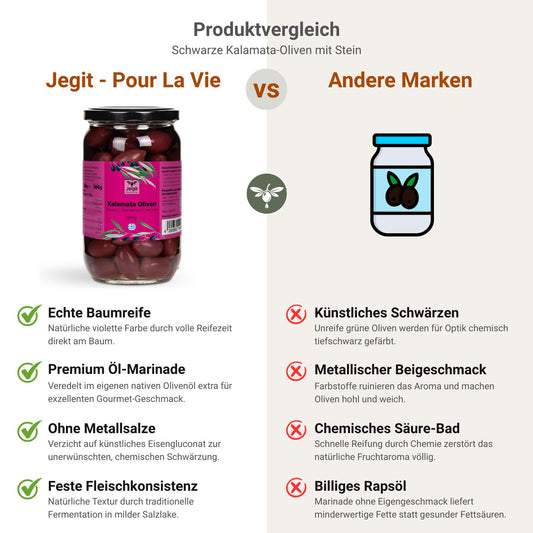
Black Kalamata Olives with Pit
Naturally ripened Greek Kalamata olives in brine — pure, additive-free and packed in the liquid that keeps them at their best.
Shop Kalamata olivesDo different olives need different storage?
Kalamata and other dark olives
Naturally ripened dark olives such as Kalamata are cured in brine and keep exactly as described above — submerged, cold and sealed. Because they are packed without artificial preservatives, keeping them under their brine matters all the more.
Green olives
Fresh, naturally fermented green olives are treated the same way. Ones that have been cracked or marinated with garlic, herbs or citrus tend to have a slightly shorter fridge life once opened, simply because the added fresh ingredients do not keep as long as the olives themselves — so enjoy marinated olives within a week or two.
How to tell if olives have gone off
Well-kept olives last a long time, but trust your senses. Throw them out if you notice an off, sour-beyond-normal or unpleasant smell, any fuzzy mould on the olives or the surface of the brine, a slimy coating, or a fizzy, actively bubbling liquid that was not meant to be fermenting. A little cloudiness in natural brine is normal; visible mould and bad odours are not. When in doubt, it is not worth the risk — start a fresh jar.
Simple habits that make olives last longer
Keep the jar in the coldest part of the fridge, always leave the olives covered in liquid, use clean utensils, and reseal firmly after every use. Buy a size you will realistically get through, or freeze the surplus early rather than letting a half-finished jar linger for months. These small habits are all it takes to keep every olive as good as the first.
Frequently asked questions
How long do opened olives last in the fridge?
Kept in their brine in a sealed container in the fridge, opened table olives generally stay good for around two to three weeks, and often longer. Olives that have been drained or marinated in oil are best eaten within about a week.
Can you freeze olives in brine?
It is better to drain and rinse olives before freezing rather than freezing them in brine, as the salty liquid does not freeze cleanly and can make the texture mushier. Pat them dry, open-freeze on a tray, then pack into an airtight container and use within about six months.
Do olives need to be refrigerated after opening?
Yes. Once a jar is opened, keep the olives in the fridge and submerged in their liquid. At room temperature an opened jar will deteriorate far more quickly, so the fridge is the safest home for them.
Olives are one of the Mediterranean’s great keepers, and with a little care a single jar can brighten meals for weeks. Keep them cold, keep them covered, and freeze what you cannot finish — and there is always a handful of something good waiting. Pour La Vie.

Can You Wash Your Hair with Aleppo Soap? A Natural Hair-Washing Guide (and How to Avoid the Waxy Feeling)
Yes, you can wash your hair with Aleppo soap. Here's how to do it right, why hair can feel waxy, and the...

Can You Eat Olives Straight From the Tree? Why Raw Olives Are So Bitter — and How They Become the Olives You Love
Can you eat olives straight off the tree? Here is why raw olives are so bitter, whether they are safe, and how...

Thyme Honey vs Manuka Honey: Which Is Really Worth It?
Thyme honey vs manuka honey compared: taste, MGO, purity and price. Why pure Greek thyme honey is the everyday Mediterranean honey worth...