Can You Fry With Olive Oil? The Truth About Heat, Smoke Point and Extra Virgin

It's one of the most searched kitchen questions in Germany right now, and the internet is full of bad answers: can you actually fry with olive oil? You've probably heard that extra virgin olive oil is "too delicate" for a hot pan, that it's only for salads, that heating it is somehow dangerous. Most of that is myth — and believing it means missing out on one of the healthiest, most flavourful ways to cook. The short answer is yes, you can fry with olive oil. The longer answer is that which olive oil you use makes all the difference, and the right one gives you a peppery, buttery depth that neutral oils simply can't.
Let's clear up the confusion properly, so you can cook with confidence — and so your pan smells of the Mediterranean instead of nothing at all.
What "smoke point" really means
The smoke point is the temperature at which an oil starts to visibly smoke and break down, producing off-flavours and losing its goodness. It's the number everyone throws around to claim olive oil "can't handle heat." But here's what those warnings leave out: most home frying and roasting happens between 150°C and 180°C. A good extra virgin olive oil has a smoke point comfortably above that — typically around 190–210°C depending on quality and freshness. In other words, for everyday pan-frying, sautéing, roasting and shallow-frying, extra virgin olive oil sits well within its safe range.
Quality is the hidden variable. A fresh, low-acidity, polyphenol-rich oil is far more heat-stable than a tired, over-processed one. That's exactly why we trust Jegit's Peloponnese extra virgin olive oil on the heat: it's lab-tested for low acidity and is rich in antioxidant polyphenols, and it stays stable up to 180°C without forming trans fats — precisely the range your cooking lives in.
Why acidity and polyphenols matter for frying
Two things determine how well an olive oil copes with heat: its free acidity and its antioxidant content. Low acidity means the oil is fresh and well-made, with fewer free fatty acids that degrade quickly when heated. A high polyphenol content means the oil carries its own natural antioxidants, which actually protect it as it cooks and slow down oxidation. Cheap refined oils have had most of these stripped out; a genuine, cold-extracted extra virgin keeps them.
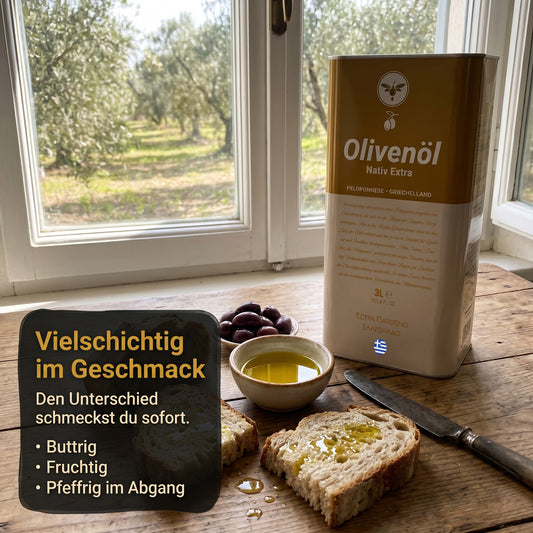
This is where the source of your oil stops being a detail and becomes the whole point. Our hand-harvested Peloponnese oil is produced solely through cold mechanical extraction and is verifiably free from mineral oil residues — so what goes into your pan is pure olive fruit, with its polyphenols and buttery, peppery character intact. Fry with a flat supermarket oil and you taste nothing; fry with this and the oil itself seasons the food.
What you can — and shouldn't — cook with extra virgin olive oil
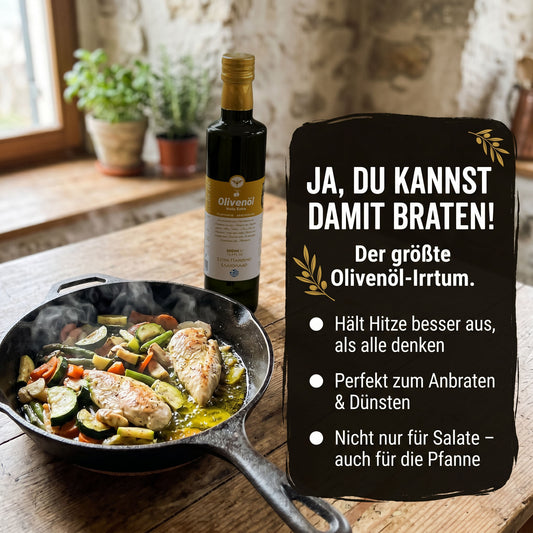
Extra virgin olive oil is ideal for: sautéing vegetables, pan-frying fish and chicken, roasting potatoes and pumpkin, shallow-frying at moderate heat, building the base of a sauce or stew, and of course finishing dishes raw. Where it's genuinely not the best choice is deep-frying at very high temperatures (above 190–200°C) sustained for long periods, where a cheaper high-smoke-point oil is more economical anyway. For the way most of us cook at home, though, a good extra virgin is both the healthier and the tastier option.
Ready to stop keeping your best oil "for salads only"? Put a bottle of real Peloponnese extra virgin next to the stove and start cooking with it every day.
How to fry with olive oil the right way
A few simple habits get the most out of it. Heat the pan first, then add the oil — this shortens the time the oil spends heating up. Don't let it rip to maximum: medium heat is plenty for most things, and you'll know it's ready when the oil shimmers, not smokes. If it smokes, it's too hot; take it off, let it cool, and start again. Don't reuse frying oil endlessly. And buy in sensible quantities so your oil stays fresh — freshness is what keeps it heat-stable. Store it away from light and heat, with the cap on tight.
Our product tip
Extra Virgin Olive Oil from the Peloponnese (500ml)
Hand-harvested, lab-tested for low acidity, rich in polyphenols and heat-stable up to 180°C — the oil that's as good in the pan as it is on a salad.
Secure your Peloponnese olive oilFrequently asked questions
Is it unhealthy to heat extra virgin olive oil?
No — for everyday cooking temperatures (up to around 180°C) a good extra virgin olive oil is one of the most stable and healthiest cooking fats, thanks to its monounsaturated fats and natural antioxidants. The key is not overheating it past its smoke point. A fresh, polyphenol-rich oil like ours stays stable up to 180°C without forming trans fats.
Does frying destroy the health benefits of olive oil?
Gentle to moderate heat preserves most of the benefits. Some polyphenols reduce with heat, but a high-polyphenol oil starts with so many that plenty remain — and the monounsaturated fats stay intact. Using a quality oil simply means you start with more to lose.
Which olive oil is best for cooking?
A fresh, low-acidity extra virgin olive oil from a traceable source. Avoid vague "olive oil" blends and anything that doesn't tell you its acidity or origin. Jegit's Peloponnese extra virgin is lab-tested and cold-extracted, so you know exactly what's in the bottle.
So yes — fry, sauté and roast with extra virgin olive oil, and enjoy the flavour and the health benefits while you do. The only thing that really matters is using an oil good enough to deserve the heat: fresh, low in acidity, rich in polyphenols, and honest about where it comes from. Bring home a bottle of our Peloponnese extra virgin olive oil and taste what cooking the Mediterranean way really means — Pour La Vie.

Koroneiki Olives: The Greek Variety Behind Your Extra Virgin Olive Oil
What are Koroneiki olives, why do they make Greece's finest extra virgin olive oil, and how do you buy the real thing?...

How to Store Olives So They Stay Fresh — And Can You Freeze Them?
How to store olives so they stay fresh, whether you can freeze them, and how to keep an opened jar at its...

Can You Put Olive Oil on Your Face? Benefits, Who Should Be Careful, and a Lighter Olive-Leaf Alternative
Can you put olive oil on your face? The real skincare benefits, who should be careful, and the lightweight olive-leaf cream that...