Best Olive Oil in September 2026

Choosing the best olive oil in September 2026 is easier once you know what genuinely separates an everyday bottle from a truly exceptional one. Extra virgin olive oil is one of the oldest and most rewarding ingredients in the Mediterranean kitchen, yet the shelf can be confusing: the labels look similar, the prices vary wildly, and the marketing rarely tells you what actually matters. This guide cuts through the noise. Rather than comparing names, it explains the objective quality markers – acidity, polyphenols, harvest method, freshness and origin – so you can judge any bottle on its own merits and buy with confidence.
At Jegit – Pour La Vie, we work with hand-harvested olives from the Peloponnese and put our oil through independent laboratory testing. That experience shapes everything below. Use it as a checklist the next time you shop, and September's cooler, produce-rich weeks will taste all the better for it.
What “extra virgin” really means
“Extra virgin” is not a marketing flourish – it is the highest grade an olive oil can earn. To qualify, the oil must be produced purely by mechanical means, without heat that would damage it and without any chemical processing or refining. It must be free of sensory defects when tasted by trained panels, and it must fall below a strict limit for free acidity. In short, extra virgin is simply fresh olive juice, pressed cleanly and left as close to its natural state as possible.
Everything else on the shelf is a step down. “Virgin” olive oil allows more acidity and minor faults; oils labelled simply “olive oil” or “pure” are usually refined and then blended with a little virgin oil to restore some flavour. For raw drizzling, dipping and finishing, extra virgin is the only grade worth your money.
The quality markers that matter most
Once you have narrowed your search to extra virgin, a handful of measurable qualities tell you how good a particular oil really is. These are the details a serious producer will be happy to share.
Acidity: lower is better
Free acidity is the single most useful number on a technical sheet. It measures the proportion of free fatty acids that have broken away from the oil, and it rises when olives are bruised, stored too long before pressing, or handled carelessly. The legal ceiling for extra virgin is 0.8 percent, but the finest oils sit well below that – often around 0.2 to 0.4 percent. A low figure is a direct sign of healthy fruit, quick milling and careful handling.
Polyphenols: the taste of quality
Polyphenols are natural antioxidant compounds that occur in the olive fruit. They are responsible for that pleasant peppery tickle at the back of the throat and the gentle bitterness you notice in a lively young oil – sensations that experienced tasters actively look for. A higher polyphenol content also helps the oil stay fresher for longer. When a producer publishes a polyphenol value, it is usually a sign they are proud of what is in the bottle.
Harvest and cold extraction
How and when olives are picked shapes the final oil more than almost anything else. Fruit that is harvested at the right moment – and milled quickly afterwards – produces brighter, more aromatic oil. Traditional hand-harvesting is gentler on the fruit, reducing bruising before pressing. Look, too, for oil made by cold mechanical extraction: keeping temperatures low during milling protects the delicate aromas and preserves those valuable polyphenols that heat would otherwise strip away.
Naturally cloudy and unfiltered
Most supermarket oils are filtered to a bright, clear gold for a long, tidy shelf life. An unfiltered oil, by contrast, looks naturally cloudy because it still carries tiny fragments of olive pulp. Many enthusiasts prize this style: those fine particles carry extra flavour and aroma, giving the oil a fuller, greener, more characterful taste. A little natural sediment settling at the bottom of the bottle is a feature, not a fault.
Origin and terroir
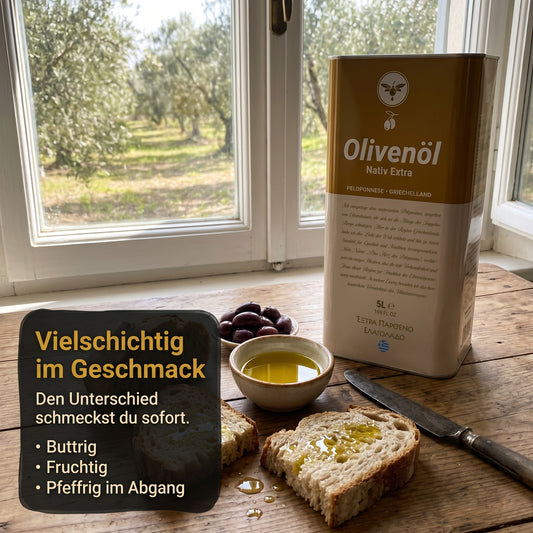
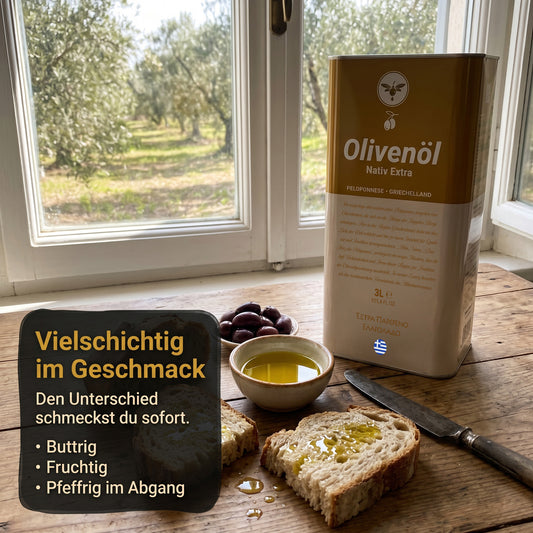
Like wine, olive oil carries the fingerprint of where it grew – the olive variety, the soil, the sunshine and the local tradition. The Peloponnese in southern Greece is one of the Mediterranean's most celebrated olive-growing regions, with groves that have been tended for centuries. Oils from this area are known for a robust, well-balanced character: fruity and buttery on the palate, with a peppery finish. Knowing the specific region an oil comes from tells you far more than a vague “bottled in the EU” statement ever could.
Freshness and the harvest year
Olive oil is a fresh product, not a fine wine – it does not improve with age. The best bottles state a harvest year, and the closer that date is to today, the more vibrant the oil will taste. As a rule, aim to use extra virgin olive oil within about eighteen to twenty-four months of harvest, and enjoy it sooner rather than later once opened. If a bottle hides its harvest date entirely, treat that as a small warning sign.
How to store olive oil so it stays at its best
Even the finest oil will fade if it is stored badly. Its three great enemies are light, heat and air. Keep your bottle in a cool, dark cupboard rather than on a sunny windowsill or right beside the hob. Choose oils sold in dark glass or tin, which shield the contents from light, and always reseal the cap firmly to limit contact with oxygen. Buy a size you will realistically finish within a few months of opening, so every pour tastes as fresh as the first.
Buying olive oil in September 2026: seasonal notes
September is a lovely moment to think about olive oil. In the northern hemisphere the new olive harvest is still a month or two away, which means the oil you buy now is the mature, settled fruit of the previous season – check the harvest date and favour the freshest lot available. It is also the time of year when late-summer produce is at its peak: ripe tomatoes, peppers, courgettes and fresh herbs all beg for a generous drizzle of good extra virgin. A robust, peppery Peloponnese oil is ideal for these dishes, whether you are finishing a warm salad, dressing grilled vegetables or simply dipping fresh bread. As the evenings begin to cool, that same oil moves happily from raw drizzling to gentle cooking, roasting and baking.
Frequently asked questions
How can I tell if an olive oil is genuinely good quality?
Start with the grade – look for “extra virgin” – then check for a stated origin, a harvest date and, ideally, technical figures such as acidity and polyphenol content. On tasting, a fresh, high-quality oil should smell green and fruity and finish with a slight peppery kick at the back of the throat. Flat, greasy or musty flavours are signs of an oil that is old or poorly made.
Can I cook with extra virgin olive oil, or is it only for drizzling?
You can absolutely cook with it. A good extra virgin olive oil is stable enough for everyday sauteing, roasting and baking, and it brings flavour that neutral oils simply cannot. For the most delicate raw uses – dressings and finishing – you will taste its character most clearly, but there is no need to keep it only for cold dishes.
Why is some olive oil cloudy rather than clear?
Cloudiness usually means the oil is unfiltered, so it still contains tiny natural particles of olive fruit. This is a stylistic choice, not a defect: unfiltered oils often taste fuller and greener. A little sediment at the bottom of the bottle is completely normal and nothing to worry about.
The bottom line
The best olive oil in September 2026 is not the one with the loudest label – it is the one that gets the fundamentals right. Choose a genuine extra virgin with low acidity and a healthy polyphenol content, made from hand-harvested fruit by cold extraction, with a clear origin and a recent harvest date. Store it well, use it generously, and it will reward you in every dish. Our own extra virgin olive oil from the Peloponnese is built around exactly these principles: hand-harvested, naturally cloudy, laboratory-tested and full of character.
Our product tip
Olive Oil Extra Virgin 500ml from Peloponnese
Hand-harvested, naturally cloudy and laboratory-tested – low in acidity, rich in polyphenols and full of that signature peppery Peloponnese character.
Shop the olive oilBring a little of Greece to your table this September and taste the difference that real care makes – Pour La Vie.

Can You Wash Your Hair with Aleppo Soap? A Natural Hair-Washing Guide (and How to Avoid the Waxy Feeling)
Yes, you can wash your hair with Aleppo soap. Here's how to do it right, why hair can feel waxy, and the...

Can You Eat Olives Straight From the Tree? Why Raw Olives Are So Bitter — and How They Become the Olives You Love
Can you eat olives straight off the tree? Here is why raw olives are so bitter, whether they are safe, and how...

Thyme Honey vs Manuka Honey: Which Is Really Worth It?
Thyme honey vs manuka honey compared: taste, MGO, purity and price. Why pure Greek thyme honey is the everyday Mediterranean honey worth...