Aleppo Soap for Hair: How to Wash Your Hair with a Natural Olive-and-Laurel Bar

Long before bottled shampoo existed, people across the eastern Mediterranean washed their hair with a single, simple bar: Aleppo soap. Made from just olive oil, laurel (bay) oil and water, it is one of the oldest soaps in the world, and it has quietly become a favourite among people looking to simplify their routine and move away from plastic bottles. If you have wondered whether you can really wash your hair with Aleppo soap, and how to do it well, this guide walks you through everything you need to know.
Can you wash your hair with Aleppo soap?
Yes. Aleppo soap has been used as a hair cleanser for centuries, and it works much like a natural shampoo bar. Because it is a true soap made from olive and laurel oils rather than a blend of synthetic detergents, it cleanses gently and rinses away without the long list of additives found in many liquid shampoos. Many people who prefer a pared-back, natural routine use it as their everyday shampoo; others reach for it now and then as a simple, low-waste alternative.
It is worth being realistic about what a natural bar is and is not. Aleppo soap is a cleanser, not a cosmetic treatment, and it behaves differently from a conditioning shampoo. Understanding how it works, and giving your hair a little time to adjust, makes all the difference to the results.
Why olive and laurel oil suit hair care
The character of Aleppo soap comes from its two oils. Olive oil makes up the bulk of the bar and gives it its mild, creamy lather; it is prized in traditional hair care for leaving strands feeling soft rather than stripped. Laurel oil, pressed from bay laurel berries, is the ingredient that sets Aleppo soap apart. It brings the soap its distinctive earthy, herbal scent and its gently clarifying quality on the scalp.
The proportion of laurel oil is what defines each bar. A soap with around 40% laurel oil, such as the traditional Aleppo soap with 60% olive oil and 40% laurel oil, is a good all-rounder for hair and scalp: rich enough in laurel to feel refreshing, but still mild thanks to its generous share of olive oil. Higher-laurel bars feel more astringent and are often favoured by people with oilier scalps, while lower-laurel bars are milder and creamier.
How to wash your hair with Aleppo soap, step by step
- Wet your hair thoroughly. Warm water helps the soap lather and lets it spread evenly through the hair.
- Build the lather in your hands. Rub the bar between wet palms to work up a creamy lather, then apply that to your scalp. You can also glide the bar gently along the lengths, but working from a hand-lather gives you more control and uses less soap.
- Massage the scalp, not the ends. Use your fingertips to massage the lather into your scalp, where cleansing matters most. The lather will run down the lengths as you rinse, which is usually enough for the mid-lengths and ends.
- Rinse until the water runs clear. Rinse longer than you think you need to. Any soap left behind is the most common reason hair feels heavy or waxy afterwards.
- Follow with an acidic rinse. This is the step that transforms the result (see below).
- Dry and style as usual. Let your hair dry and see how it feels; you will get a sense of whether you want a slightly longer or shorter lather next time.
The acidic rinse: the key to soft, shiny results
Because Aleppo soap is a true soap, it is slightly alkaline, and hard water can leave a faint film on the hair. A simple acidic rinse counteracts this and closes the hair's outer layer so it lies flat and catches the light. Mix one tablespoon of apple cider vinegar or the juice of half a lemon into a large jug of water, pour it over your hair after rinsing out the soap, leave it for a moment, then rinse lightly or leave it in. The vinegar smell disappears completely as your hair dries. Skipping this step is the single most common reason people feel Aleppo soap "didn't work" for their hair.
What to expect in the first few weeks
If you are switching from conventional shampoo, your hair may go through a short adjustment period. Some people notice their hair feels different, or a little heavier, for the first week or two while the scalp settles into a gentler routine. This is temporary and usually passes. Using the acidic rinse from the very first wash, and making sure you rinse the soap out completely, keeps this transition smooth. Give it three or four washes before you judge the results.
Who might particularly enjoy it
Aleppo soap for hair tends to appeal to people who want a genuinely minimal routine: one bar for hair, body and even shaving, with no plastic bottle to recycle. It suits those who like the idea of a fragrance-free, additive-free cleanser, and travellers who would rather pack a solid bar than a leaking bottle. As with any natural product, personal results vary with your hair type and your local water, so it is worth experimenting with lather length and rinse strength to find what works for you.
How to store your bar so it lasts
A single bar can last a remarkably long time when it is looked after. Keep it on a well-draining soap dish, away from the direct stream of the shower, so it can dry fully between uses. A bar left sitting in a puddle will soften and dissolve far more quickly. Stored dry, a good Aleppo soap keeps its shape and lather for months, which makes it excellent value as well as low-waste.
Our product tip
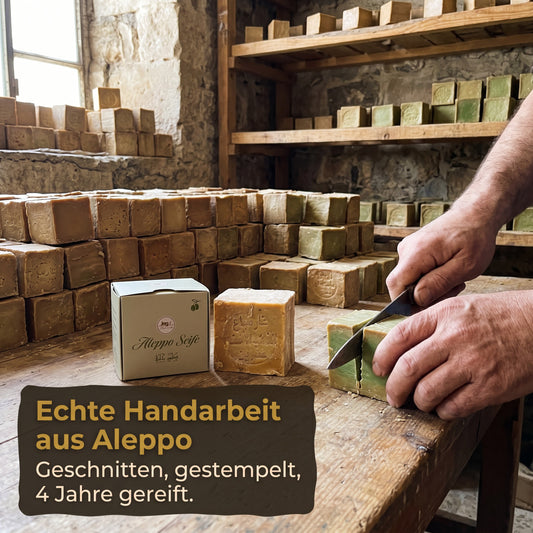
Aleppo Soap — 40% Laurel Oil & 60% Olive Oil
Traditionally hand-cut and matured for at least four years — one natural bar for hair, face and body.
Shop the Aleppo soapFrequently asked questions
Do I still need conditioner?
Many people find the acidic rinse is enough to leave their hair soft and easy to comb, so they skip conditioner entirely. If your ends feel dry, you can smooth a tiny amount of your usual conditioner or a drop of olive oil through the lengths after washing. It comes down to your hair type and preference.
Which laurel oil percentage is best for hair?
A balanced bar of around 40% laurel oil is a great starting point for most people, offering a refreshing feel on the scalp while staying mild. If your scalp is on the oilier side you may prefer a higher-laurel bar, and if it is drier, a lower-laurel, more olive-rich bar will feel creamier. It is easy to try and see what suits you.
Will Aleppo soap work with hard water?
It can, but hard water makes the acidic rinse even more important, because the minerals in the water are what leave hair feeling filmy. A vinegar or lemon rinse after every wash keeps hair feeling clean and light even in hard-water areas.
A simpler, more natural way to wash
Washing your hair with Aleppo soap is a small change with a satisfying payoff: fewer bottles, fewer additives and a routine rooted in centuries of Mediterranean tradition. Give your hair a few washes to settle in, always finish with an acidic rinse, and store your bar somewhere it can dry, and you may find that one honest little bar of olive and laurel is all you need. Pour La Vie.

Are Olives Healthy? Calories, Nutrition and the Real Benefits of Green and Kalamata Olives
How many calories are in olives, what nutrients they contain, and whether green or Kalamata olives are healthier — plus how quality...

Can You Wash Your Hair with Aleppo Soap? A Natural Hair-Washing Guide (and How to Avoid the Waxy Feeling)
Yes, you can wash your hair with Aleppo soap. Here's how to do it right, why hair can feel waxy, and the...

Can You Eat Olives Straight From the Tree? Why Raw Olives Are So Bitter — and How They Become the Olives You Love
Can you eat olives straight off the tree? Here is why raw olives are so bitter, whether they are safe, and how...