Horiatiki: The Authentic Greek Village Salad (No Lettuce, No Fuss)
Order a salad in a Greek taverna and what arrives is not what most people outside Greece call a "Greek salad". There is no lettuce. There is no bottled dressing. There is no pile of crumbled cheese. What arrives is horiatiki — literally "village salad" — and it is one of the most confidently simple dishes in the Mediterranean.
Horiatiki is built from six or seven ingredients, cut generously, seasoned honestly, and finished with good extra virgin olive oil. That is the entire trick. When the olives are proper Kalamata olives and the oil is genuinely fresh, this salad tastes like a summer afternoon on the Peloponnese. When they are not, it tastes like a supermarket side dish. The recipe barely changes; the ingredients change everything.
What Makes a Salad Horiatiki?
Villagers made this salad from what grew outside the door: tomatoes, cucumbers, onions, peppers, olives from the family tree, cheese from the neighbour's goats, and oil from the local press. Nothing was imported, nothing was fussy, and nothing was chopped small.
Three rules separate horiatiki from the leafy imitations:
- No lettuce. Ever. Lettuce dilutes the juices and turns limp in olive oil. If a recipe starts with a bed of leaves, it is not horiatiki.
- The feta stays whole. A slab is laid on top, not crumbled through. You break it yourself, at the table, with your fork.
- Olive oil is the dressing. There is no emulsified vinaigrette. Oil, salt, oregano, and the juice the tomatoes release do the work.
Choosing the Ingredients
Tomatoes
Use the ripest tomatoes you can find, at room temperature. Cold tomatoes taste of almost nothing. Vine, beef, or ox-heart varieties all work — the point is ripeness, not shape. Cut them into thick wedges so they hold their shape and release juice slowly.
Olives
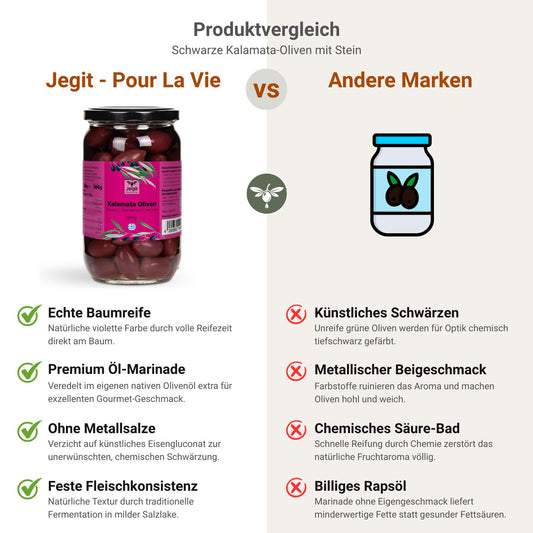
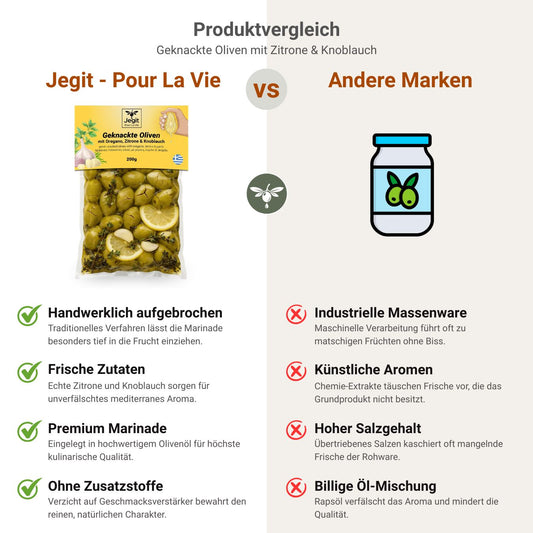
This is where a village salad is won or lost. Proper black Kalamata olives with the stone bring a deep, winey, slightly bitter note that mass-market pitted olives simply cannot. Olives with the stone left in keep their texture and flavour far better — they are firmer, less watery, and taste of the fruit rather than the brine. If you prefer something milder and crunchier, Greek green olives are a lovely alternative, or use a handful of each.
Olive oil
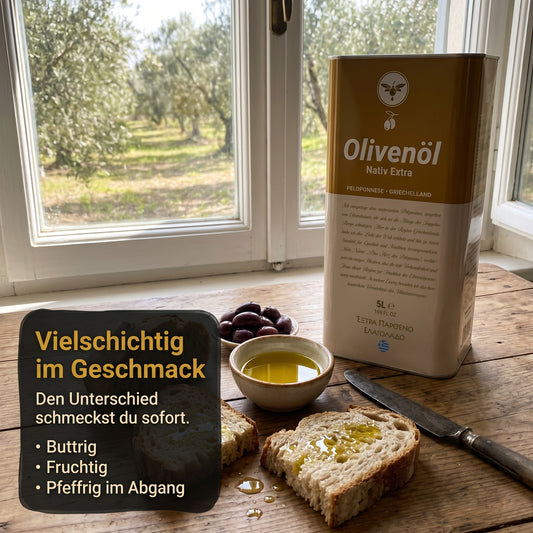
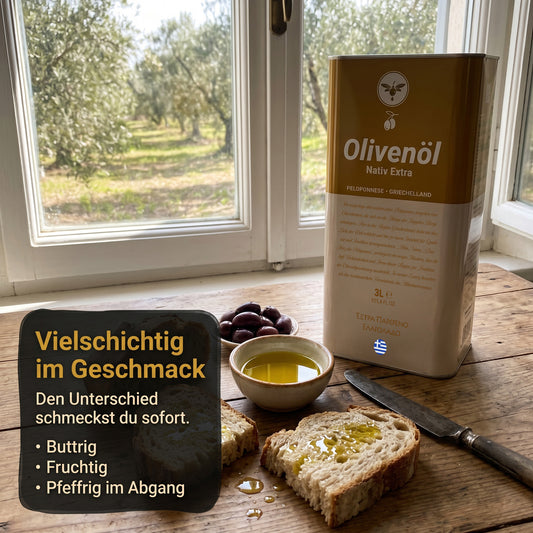
Because the oil is the dressing, it must be worth tasting on its own. A fresh, peppery extra virgin olive oil from the Peloponnese gives horiatiki its backbone: grassy at first, then a gentle pepper at the back of the throat. That peppery catch is a sign of polyphenols, and it is exactly what you want against sweet tomato and salty feta. Be generous — this is not the moment to measure by the teaspoon.
Feta
Buy feta in brine, in a block, and slice it yourself. Pre-crumbled feta dries out and loses its creaminess.
Ingredients (serves 4 as a starter, 2 as a light meal)
- 4 large ripe tomatoes, at room temperature
- 1 cucumber (a short, firm one if possible)
- 1 small red onion
- 1 green bell pepper
- 100 g black Kalamata olives with stone (or a mix with Greek green olives)
- 200 g feta in brine, in one block
- 5–6 tbsp extra virgin olive oil from the Peloponnese
- 1 heaped tsp dried oregano
- Sea salt
- Optional: 1 tsp red wine vinegar, a few capers, a pinch of black pepper
Method
- Cut the tomatoes into thick wedges — sixths or eighths, depending on size. Put them into a wide, shallow bowl and salt them lightly. Leave them for five minutes; they will start to release juice, and that juice becomes part of the dressing.
- Prepare the cucumber. Peel it in stripes (some skin on, some off) and cut it into thick half-moons, roughly 1 cm. Chunky, not thin.
- Slice the red onion into fine rings or half-rings. If your onion is fiery, soak the slices in cold water for ten minutes and pat them dry — they keep their crunch but lose the harsh edge.
- Deseed and slice the green pepper into rings. Raw green pepper adds a grassy bitterness that balances the sweet tomato.
- Combine. Add the cucumber, onion, pepper and olives to the tomatoes. Toss gently with your hands so nothing bruises.
- Lay the feta on top as a single slab. Do not stir it through.
- Season and dress. Sprinkle the oregano over the feta, add a pinch of salt over the vegetables, then pour the olive oil generously over everything — over the feta especially, so it runs down into the bowl. Add the vinegar only if your tomatoes are on the acidic side; often it is not needed.
- Rest for five minutes before serving. Serve with crusty bread — the juices at the bottom of the bowl are the best part, and you will want to mop them up.
Small Details That Make a Difference
Salt the tomatoes, not the salad. Feta is already salty. Salting the tomatoes directly draws out their juice and seasons them from within, while the cheese takes care of the rest.
Dress at the last moment. Horiatiki does not improve by sitting. Twenty minutes in and the cucumber goes soft and the onion takes over. Make it, rest it briefly, eat it.
Serve it in a wide bowl. A deep bowl crushes the bottom layer. A wide, shallow one keeps every piece intact and lets the oil pool where you can reach it.
Leave the stones in. Olives with stones look rustic, but more importantly they taste better and stay firmer. Just warn your guests.
Variations Worth Trying
In the Cyclades, cooks sometimes swap feta for soft, tangy mizithra. On Crete, a handful of barley rusk goes underneath to soak up the juices. In summer, a spoonful of capers makes surprisingly good sense with the salty olives. What never changes is the oil, the olives, and the absence of lettuce.
Frequently Asked Questions
Can I make horiatiki ahead of time?
You can chop the vegetables an hour or two in advance and keep them covered at room temperature, but do not salt, dress, or add the feta until just before serving. Once the oil and salt go on, the clock starts.
Do I really need to leave out the lettuce?
If you want the authentic village salad, yes. Lettuce releases water, wilts in the oil, and blunts the flavours. Greeks eat leafy salads too — they are simply called something else.
Which olives are best for a Greek salad?
Kalamata olives are the classic choice: dark, almond-shaped, with a rich winey depth that stands up to feta and raw onion. Green Chalkidiki olives are milder and crunchier, and a mix of both gives you contrast in every bite. Whichever you choose, olives with the stone kept in have noticeably more character.
Our Product Tip
Black Kalamata Olives with Stone
Naturally harvested, without artificial additives — the deep, winey olive that makes a village salad taste like Greece.
Discover Kalamata OlivesPour La Vie
Horiatiki asks almost nothing of the cook and everything of the ingredients. There is nowhere for a tired olive or a thin oil to hide. That is why we source our olives from Greek groves and our oil from small producers on the Peloponnese — hand-harvested, unfiltered, nothing added. Set a bowl of it on the table with bread and let people help themselves. Pour La Vie.