Greek Moussaka: The Classic Layered Aubergine and Lamb Bake (Authentic Recipe)

Few dishes say Greece like a golden tray of moussaka carried to the table, its béchamel lid burnished and blistered, silky aubergine and spiced lamb waiting in layers beneath. It is the ultimate Sunday bake: generous, comforting, and worth every minute it takes. And while everyone argues about the béchamel, the truth the yiayiás know is quieter than that. Moussaka is built on olive oil. The aubergines drink it, the lamb sauce is started in it, and the depth of the whole dish rises or falls on the quality of the oil you use. Cook it in a flat, refined supermarket oil and it tastes muddy; build it on a vivid, peppery extra virgin olive oil from the Peloponnese and every layer sings.
This is the authentic method, streamlined for a real home kitchen. It takes a little time, but almost none of it is difficult, and the result is the kind of dish people remember.
What is moussaka?
Moussaka (μουσακάς) is a baked Greek casserole of layered aubergine and a richly spiced minced-meat sauce, crowned with a thick, creamy béchamel that sets to a golden top in the oven. The Greek version, made famous in the twentieth century, is defined by warm spices, cinnamon and allspice, a tomato-rich lamb or beef sauce, and that signature custard-like topping. It is hearty winter food at its very best, and it reheats beautifully, which makes it a brilliant dish to cook ahead.
The three elements, aubergine, meat sauce and béchamel, are each simple on their own. What ties them together is olive oil and patience. Get those right and moussaka is genuinely straightforward. Start with an oil worthy of the dish.
Why the olive oil is the secret
Aubergine is a sponge, and what it soaks up is what you taste. Roast or fry those slices in a dull, overheated oil and the whole tray inherits that flatness. Cook them in a fragrant extra virgin olive oil and the aubergine turns silky and savoury, carrying a warm, buttery, peppery note right through the bake.
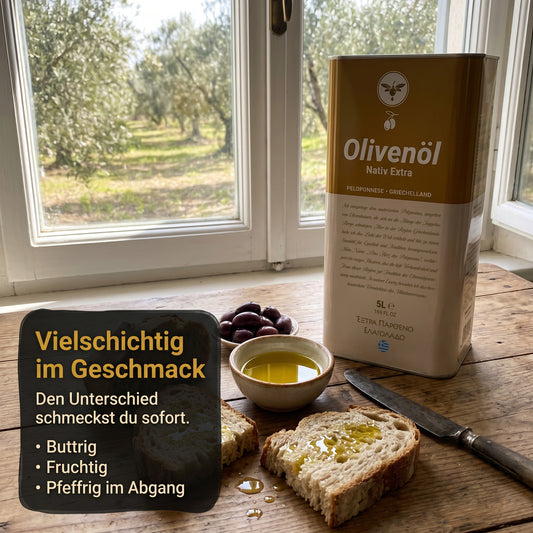
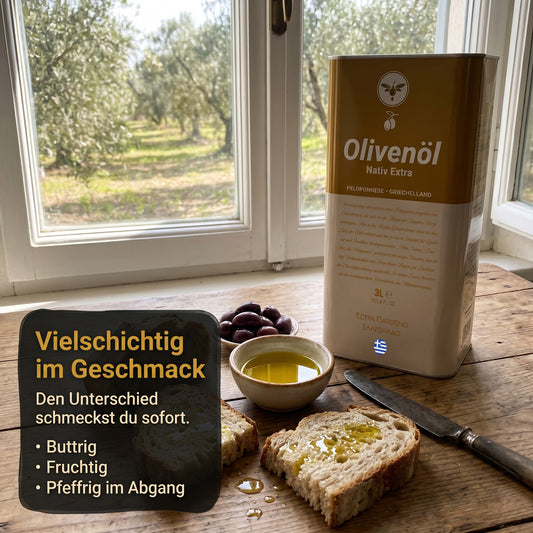
Our Peloponnese Extra Virgin Olive Oil is made for exactly this kind of cooking. It is hand-harvested and cold-extracted, naturally cloudy and unfiltered, lab-tested for low acidity and rich in polyphenols, with no mineral-oil residues. Crucially, it is heat-stable up to 180°C without forming trans fats, so it stands up to roasting the aubergines and building the sauce while keeping its character. This is the difference between a moussaka that tastes fine and one that tastes like a taverna in the Mani. The oil is not a background ingredient here. It is the backbone. To understand why a good extra virgin copes with the heat, see our guide on cooking and frying with extra virgin olive oil.
Ingredients (serves 6)
For the aubergines
- 3 large aubergines, sliced lengthways about 1 cm thick
- 5–6 tbsp Peloponnese extra virgin olive oil, for roasting
- Sea salt
For the lamb sauce
- 3 tbsp extra virgin olive oil
- 700 g lamb mince (or beef)
- 1 large onion, finely chopped
- 3 garlic cloves, crushed
- 400 g chopped tomatoes
- 2 tbsp tomato purée
- 100 ml red wine
- 1 tsp ground cinnamon, ½ tsp ground allspice, 1 bay leaf
- Salt and pepper
For the béchamel
- 80 g butter
- 80 g plain flour
- 750 ml warm milk
- 2 egg yolks
- Pinch of grated nutmeg
- 50 g grated hard cheese (such as kefalotyri or parmesan)
Good olive oil, good lamb, warm spices: nothing exotic, nothing fussy. Make sure the oil is the real thing and the rest looks after itself.
How to make Greek moussaka, step by step
- Roast the aubergines. Heat the oven to 200°C. Lay the aubergine slices on baking trays, brush generously on both sides with olive oil, season with salt, and roast for 20–25 minutes until soft and golden. Roasting (rather than deep-frying) keeps them silky without greasiness.
- Build the lamb sauce. Warm the olive oil in a large pan over medium heat. Brown the lamb well, then add the onion and garlic and soften. Stir in the cinnamon, allspice and bay, then the tomato purée, chopped tomatoes and wine. Season, lower the heat and simmer gently for 25–30 minutes, until thick and glossy with no watery liquid left. A dry, rich sauce is what keeps the finished moussaka from going soggy.
- Make the béchamel. Melt the butter in a saucepan, stir in the flour and cook for a minute. Add the warm milk gradually, whisking, until you have a thick, smooth sauce. Off the heat, stir in the nutmeg, cheese, and finally the egg yolks (off the heat so they do not scramble). It should be thick enough to coat a spoon heavily.
- Layer it up. In a deep baking dish, lay half the aubergines, then all the meat sauce, then the remaining aubergines. Pour the béchamel over the top and spread it level. Dust with a little extra cheese.
- Bake. Bake at 180°C for 45 minutes, until the top is set and deep golden. Here is the hard part: let it rest for at least 20–30 minutes before cutting. This is what gives you clean, standing slices instead of a landslide.
Tips for the best moussaka
- Dry sauce, tidy layers. Simmer the meat until almost no liquid remains. A wet sauce is the single most common cause of a sloppy moussaka.
- Roast, don't drown. Brushing the aubergines with good olive oil and roasting gives you all the silkiness with far less grease than deep-frying.
- Rest before slicing. The béchamel needs time to set. Twenty minutes of patience is the difference between a slice and a scoop.
- Even better tomorrow. Moussaka reheats superbly, so it is perfect for making a day ahead.
What to serve with moussaka
Moussaka is rich, so it loves a sharp, simple counterpoint: a crisp Greek salad dressed in good olive oil and red wine vinegar, or just bread to mop the plate. A glass of robust red is traditional. If you are cooking a whole Greek spread, it sits beautifully next to our Greek beef youvetsi, and for another aubergine classic built entirely on olive oil, try Imam Bayıldı.
Our product tip
Extra Virgin Olive Oil from the Peloponnese 500ml
Hand-harvested, naturally cloudy and unfiltered, lab-tested and heat-stable to 180°C: the peppery Greek oil that gives every moussaka layer its depth. Pour La Vie.
Secure your bottle nowFrequently asked questions
Do I have to fry the aubergines for moussaka?
No, and roasting is better. Brushing the slices with good extra virgin olive oil and roasting them gives you the same silky texture with far less oil soaked up, and a cleaner flavour. Deep-frying is traditional but heavier.
Can I make moussaka ahead of time?
Absolutely. Moussaka is one of those bakes that tastes even better the next day once the layers have settled. Assemble and bake, then cool and refrigerate; reheat in a moderate oven. You can also assemble it a day ahead and bake fresh.
What kind of olive oil should I use for moussaka?
A real extra virgin olive oil that can take the heat. You want flavour and stability, which is why a lab-tested, heat-stable Greek oil like our Peloponnese extra virgin is ideal: it carries the aubergines and the sauce without turning flat.
Pour La Vie: the oil makes the moussaka
Moussaka rewards a little patience and one non-negotiable: real olive oil in every layer. Roast the aubergines in it, build the lamb sauce on it, and taste how a genuine Greek extra virgin lifts the whole dish from good to unforgettable. Order our hand-harvested Peloponnese Extra Virgin Olive Oil and give your moussaka the backbone it deserves. Pour La Vie.

Baked Camembert with Thyme Honey: The 10-Minute Festive Centrepiece Everyone Crowds Around
Molten baked camembert drizzled with Greek thyme honey: a 10-minute festive sharing dish where the honey, not the cheese, steals the show.

Patatas Bravas: The Crispy Spanish Tapas Classic Where the Olive Oil Makes or Breaks It
Crispy Spanish patatas bravas with a smoky brava sauce and quick aioli. The real secret is the olive oil, so here is...

Chicken Cacciatore (Pollo alla Cacciatora): The Rustic Italian Braise Where the Olives Make the Sauce
Chicken cacciatore, the Italian hunter's braise, only sings with real olives and good olive oil. Our easy 40-minute one-pan recipe, and the...