Greek Fava: The Authentic Santorini Yellow Split Pea Purée
If you have ever sat at a taverna table on a Greek island, chances are a small dish of warm, golden purée arrived before anything else — smooth as velvet, crowned with raw onion and a glossy pool of olive oil. That dish is fava, one of the most beloved meze in Greek cooking. Despite the name, it has nothing to do with fava (broad) beans. Greek fava is made from yellow split peas, gently simmered until they collapse into a creamy, comforting spread.
It is naturally vegan, gluten-free and made from a handful of humble ingredients. What lifts it from simple to sublime is the finishing touch: a generous drizzle of good extra virgin olive oil. This guide walks you through the authentic method, the little tricks that guarantee a silky texture, and the classic ways to serve it.
What exactly is Greek fava?
In Greece, "fava" refers to a purée made from yellow split peas (and, on some islands, from the local Lathyrus legume). The peas are boiled with onion until soft, then whipped — traditionally by simply stirring vigorously — into a warm, spoonable cream. Served hot it is soft and pourable; chilled it firms up into something closer to a dip. Both are correct, and both are delicious.
The most famous version comes from Santorini, where volcanic soil gives the local split peas a distinctive sweetness. Santorini fava even carries PDO (Protected Designation of Origin) status. You do not need island-grown peas to make a wonderful fava at home, but you do need patience and a truly good olive oil.
Why the olive oil matters so much
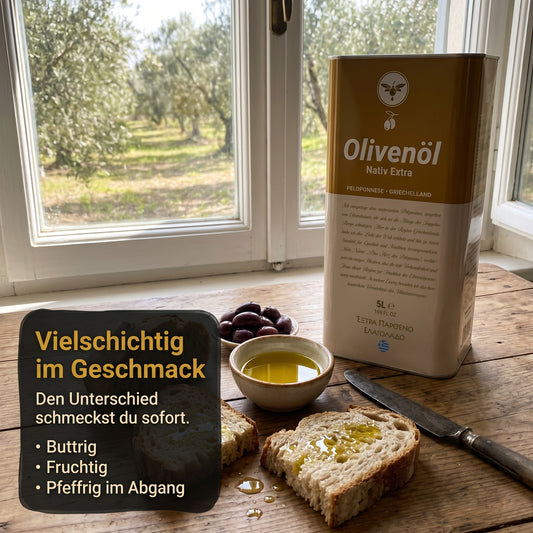
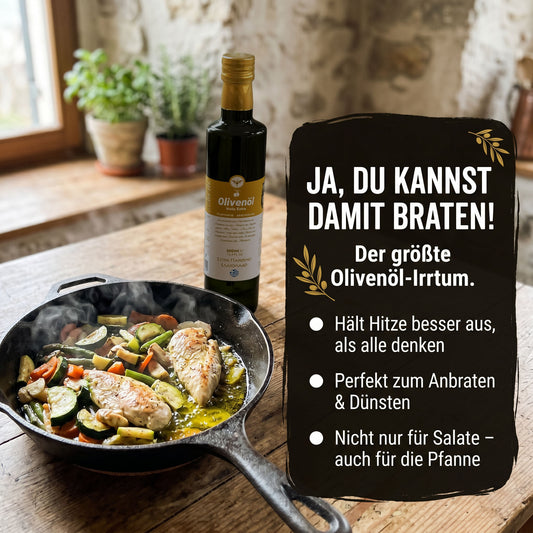
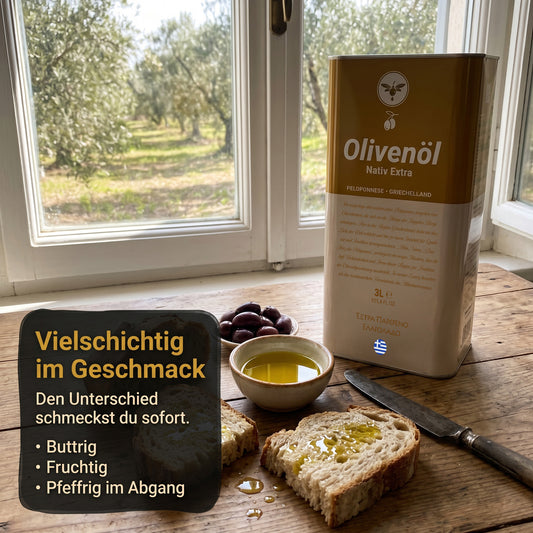
Fava has a mild, earthy, slightly sweet flavour. That gentleness is exactly why the olive oil is not optional — it carries the whole dish. A peppery, fruity, unfiltered oil adds body, a whisper of bitterness and a fragrant finish that turns plain purée into something memorable. We use our hand-harvested extra virgin olive oil from the Peloponnese, which is naturally cloudy and richly peppery — ideal both for cooking the peas and for that final, glorious drizzle on top.
Ingredients
Serves 4 as a meze. You will need:
- 250 g yellow split peas
- 1 medium onion, roughly chopped (plus ½ small onion, finely diced, to serve)
- 1 small clove of garlic (optional)
- 750 ml water, plus more as needed
- 4–5 tablespoons extra virgin olive oil, plus extra for serving
- Juice of ½ lemon
- Sea salt, to taste
- To serve: capers, a little dried oregano, and a handful of Kalamata olives
A note on the split peas
Use yellow split peas, not green ones and not chana dal. Give them a quick rinse under cold water first, but there is no need to soak them overnight — they cook down beautifully in under an hour. Skimming the foam that rises in the first minutes of boiling is the single most important step for a clean, pale, silky result.
How to make Greek fava, step by step
- Rinse the peas. Place the split peas in a sieve and rinse under cold running water until the water runs clear.
- Start the pot. Add the peas to a large saucepan with the chopped onion, optional garlic and the 750 ml of water. Bring to the boil over a high heat.
- Skim carefully. As it comes to the boil, a grey foam will form on the surface. Skim it away with a spoon for the first few minutes — this keeps your fava pale and clean-tasting.
- Simmer low and slow. Reduce the heat, cover partially and let it simmer gently for 40–50 minutes, stirring now and then. Add a splash more hot water if it looks dry. The peas are ready when they have completely broken down into a thick, soft mush.
- Season and blend. Take the pan off the heat. Add salt, the lemon juice and 4–5 tablespoons of olive oil. For the silkiest result, blitz with a stick blender until glossy and smooth. (For a rustic version, simply beat hard with a wooden spoon.)
- Adjust and rest. Taste and add more salt or lemon as needed. The purée thickens as it cools, so loosen it with a little warm water if you prefer it soft. Let it rest for 10 minutes.
- Finish generously. Spoon into a shallow bowl, make a well in the centre and pour in a generous glug of olive oil. Scatter over the finely diced raw onion, capers, a pinch of oregano and a few Kalamata olives.
Tips for the silkiest fava
Three things make the difference between a good fava and an unforgettable one. First, cook the peas until they are truly falling apart — undercooked peas will never turn creamy. Second, blend while everything is still warm, adding the olive oil at this stage so it emulsifies into the purée. Third, be generous and confident with salt, lemon and that final drizzle of oil; fava is bland without them.
How to serve fava
Fava is at its best served warm as part of a meze spread, with warm pita or crusty bread for scooping. The classic garnish is simply raw onion, capers and olive oil, but it also loves a squeeze of lemon and a few Kalamata olives on the side. Leftovers, chilled, become a firmer dip that is wonderful with vegetable crudités. In tavernas you will often meet its playful cousin, "fava me karamelomeno kremmydi" — fava topped with sweet caramelised onions.
Storage
Fava keeps well in an airtight container in the fridge for up to four days. It will set firm when cold; to serve it warm again, reheat gently with a splash of water, stirring until smooth, then finish with fresh olive oil. It also freezes well for up to two months.
Frequently asked questions
Is Greek fava made from fava beans?
No. Despite the name, Greek fava is made from yellow split peas, not broad (fava) beans. The name refers to the dish, not the legume.
Is fava vegan and gluten-free?
Yes. Made purely from split peas, onion, olive oil, lemon and salt, fava is naturally vegan and gluten-free — just serve it with gluten-free bread or vegetables if needed.
Why is my fava not smooth?
The most common reason is undercooked peas. Let them simmer until they collapse entirely, then blend while warm with the olive oil. A stick blender gives the silkiest, most restaurant-like texture.
Our product tip
Extra Virgin Olive Oil from the Peloponnese (500 ml)
Unfiltered, hand-harvested and richly peppery — the finishing drizzle that makes fava sing.
Shop the olive oilFava is proof that the simplest ingredients, treated with care, become something special. Give the peas time, be generous with a truly good olive oil, and you will bring a little corner of a Greek island to your own table. Pour La Vie.