Extra Virgin vs Virgin vs Refined: Olive Oil Grades Explained (and Which One to Buy)

Stand in front of a supermarket shelf and the labels blur together: “extra virgin”, “virgin”, “pure”, “light”, “refined”. They sound like marketing. They're not — they are legally defined grades, and the gap between the top and the bottom is enormous: in taste, in how the oil is made, and in what you actually get for your money. Once you can read the grade, you'll never overpay for a flat, lifeless oil again.
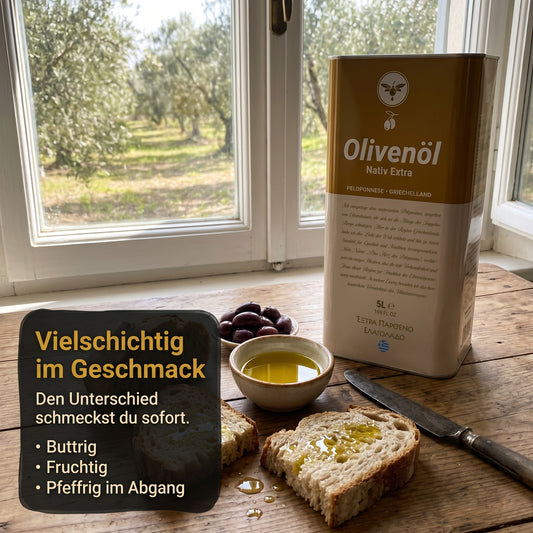
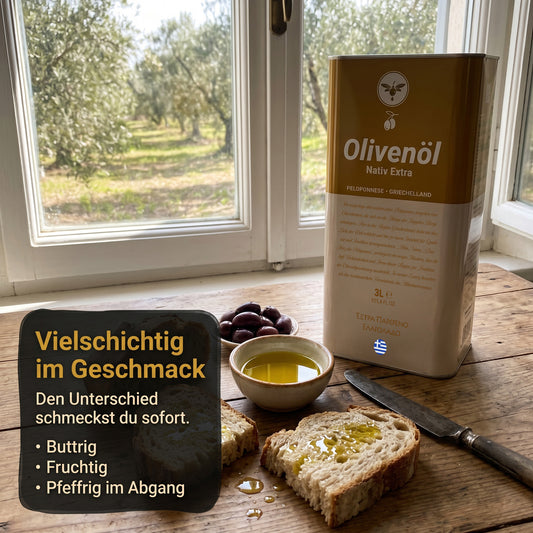
This guide breaks down every grade you'll meet, in plain language, so you know exactly what is in the bottle before you buy. And if you'd rather skip straight to an oil that sits firmly at the top of the scale, Jegit's extra virgin olive oil from the Peloponnese is hand-harvested, lab-tested and naturally unfiltered — the real thing, not a blend. See it here.
The olive oil grades, from top to bottom
Extra virgin olive oil (the top grade)
Extra virgin is the highest grade there is. To earn the name, the oil must be produced purely mechanically — pressed or spun, never with heat or chemical solvents — and it must pass both a lab test (free acidity of 0.8% or lower) and a tasting panel that finds zero defects. In other words, it has to taste clean, fruity and faultless.
This is the only grade worth putting on a salad, dipping bread into, or drizzling over a finished dish, because it is the only one that still carries the full flavour and the natural antioxidants (polyphenols) of the fresh fruit. Our Peloponnese extra virgin is exactly this: low in acidity, rich in polyphenols, cold-extracted and lab-verified free of mineral-oil residues.
Virgin olive oil (a step down)
Virgin olive oil is also made purely mechanically, but it doesn't meet the stricter extra virgin standard — its acidity can be up to 2%, and the tasting panel is allowed to find slight defects. It's drinkable and fine for cooking, but it lacks the clarity and the bright, peppery character of a true extra virgin. You rarely see it sold on its own.
Refined, “pure” and “olive oil” (the processed grades)
Here is where the marketing gets slippery. When a batch of olive oil is too poor to sell as virgin — too acidic, or defective in taste — it's sent to be refined: treated with heat and industrial processing to strip out the faults. What comes out is odourless, colourless and nearly flavourless, with most of the polyphenols gone.
Bottles labelled simply “olive oil”, “pure olive oil” or “classic” are usually this refined oil with a small splash of virgin oil added back for colour and a hint of taste. It's cheaper for a reason. It will fry an egg, but it brings none of the character or the goodness you're paying a premium for when you buy a real extra virgin.
“Light” olive oil
“Light” refers to flavour and colour, not calories — every olive oil has roughly the same fat and energy. It's refined oil by another name. If a label is selling you “light”, it's selling you the processed grade.
Olive pomace oil (the bottom)
Pomace oil is extracted with solvents from the leftover paste — skins, pulp and stones — after the good oil has already been pressed out. It's the lowest grade, used mostly in catering and food manufacturing. Worth knowing it exists; not something you want on your table.
So which grade should you actually buy?
For almost everything — salads, dips, finishing, and yes, even everyday cooking — buy extra virgin. It's the only grade that delivers both the taste and the health benefits that make olive oil worth it in the first place. The small saving on a refined “olive oil” isn't really a saving; flavour for flavour, you're simply buying less oil.
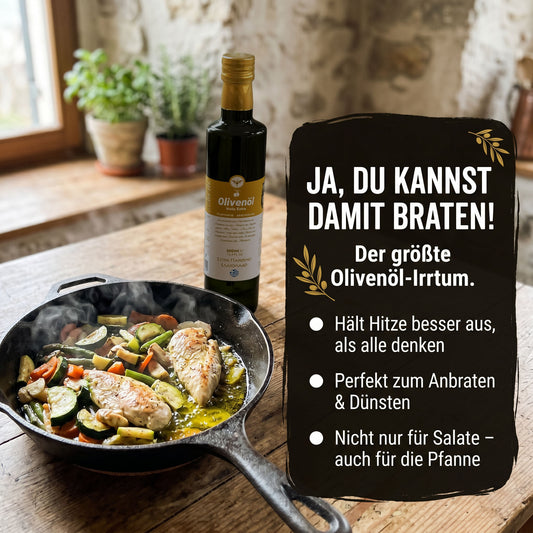
The one myth worth busting: plenty of people reach for a refined oil to cook with, believing extra virgin “can't take the heat”. It can. A good extra virgin is stable for everyday frying, sautéing and roasting. Ours is heat-stable up to 180°C without forming trans fats — so a single good bottle does the whole job, from the pan to the plate. Stock up here.
How to read an olive oil label like a pro
Grade is the first thing to check, but a few more signals separate a genuinely good extra virgin from a box-ticking one:
- “Extra virgin” and nothing less. If the word “extra” is missing, so is the top grade.
- Origin you can point to. “Bottled in the EU” from unnamed oils tells you little. A single, named region — like the Peloponnese — tells you where your oil actually grew.
- A harvest or best-before date. Olive oil is a fresh juice, not a spirit; it's at its best within about 18 months of pressing.
- Dark glass or tin. Light is the enemy of olive oil. Clear bottles under bright shop lights are already losing quality.
- Naturally cloudy is a good sign. An unfiltered, naturally cloudy oil keeps more of its polyphenols and flavour.
Tick those boxes and you've found a real one. Jegit's Peloponnese extra virgin ticks every one of them.
Our product tip
Extra Virgin Olive Oil from the Peloponnese (500 ml)
Hand-harvested, cold-extracted and lab-tested — low in acidity, rich in polyphenols, free of mineral-oil residues and heat-stable to 180°C. A true top-grade oil, not a blend.
Buy the extra virginFrequently asked questions
Is extra virgin olive oil really worth the extra money?
Yes. Extra virgin is the only grade that keeps the fresh fruit's full flavour and its polyphenols — the antioxidants that make olive oil famous. Refined “olive oil” has been stripped of most of both. You're paying a little more for a lot more oil, in every sense that matters. This is the one we'd point you to.
Can I cook and fry with extra virgin olive oil?
Absolutely — the idea that you can't is one of the most persistent myths around. A quality extra virgin is stable for everyday frying, sautéing and roasting; ours holds up to 180°C without forming trans fats. You don't need a separate “cooking” oil.
What does the acidity percentage mean?
Free acidity is a lab measure of how much the oil has broken down — lower is better, and it points to healthy fruit, careful harvesting and quick pressing. Extra virgin must be 0.8% or below; the best oils come in well under that.
Once you can read the grade, the shelf stops being confusing and starts being obvious. Skip the refined blends hiding behind soft words like “pure” and “light”, and buy the one grade that genuinely earns its place in your kitchen. Start with an extra virgin you can trace to a single Greek region — Jegit's hand-harvested Peloponnese olive oil, bottled Pour La Vie.

Is Aleppo Soap Vegan? The Honest Answer — and Why This Olive-and-Laurel Bar Belongs in a Vegan Routine
Is Aleppo soap vegan? Yes — ours is made from just olive oil and laurel oil, with no animal ingredients or additives....

Olive Wood Cooking Utensils: Why an Olive Wood Spatula Belongs in Every Kitchen (and How to Care for It)
Why an olive wood spatula beats metal and plastic, how to choose a good one, and how to care for it so...

Does Olive Oil Go Bad? Shelf Life, Rancidity and How to Tell If Your Extra Virgin Has Turned
Does olive oil go bad? How long extra virgin really lasts, how to spot rancid oil, and why freshness is decided long...