How to Buy Olives: A Buyer's Guide to Choosing Quality Table Olives
Walk past any olive counter and the choice can feel overwhelming: green and black, wrinkled and glossy, plain in brine or marinated with herbs. If you have ever wondered how to buy olives that actually taste of something — firm, fruity and free of harsh additives — this guide is for you. Below you will find everything worth knowing before you fill your basket, from reading a label to storing your olives once they are home.
Green or black: it is really about ripeness
The first thing to understand is that green and black olives are usually the same fruit picked at different stages. Green olives are harvested early, before they ripen, which gives them a firmer bite and a brighter, slightly grassy flavour. Black olives are left on the tree to ripen fully, developing a softer texture and a rounder, mellower taste.
Neither is “better” — it comes down to what you are making. For a crisp, tangy snack or a colourful antipasto, reach for something like our Greek green olives. For deep, savoury character in salads, breads or a meze spread, the black Kalamata olives are hard to beat. If you cannot decide, that is exactly what a tasting selection is for.
What quality olives actually look and taste like
Good table olives share a few tell-tale signs. The flesh should be firm rather than mushy, with an even colour and an unbroken, glossy skin. On tasting, a quality olive is savoury and clean, with a natural fruitiness and only a pleasant hint of bitterness — never a chemical or metallic aftertaste.
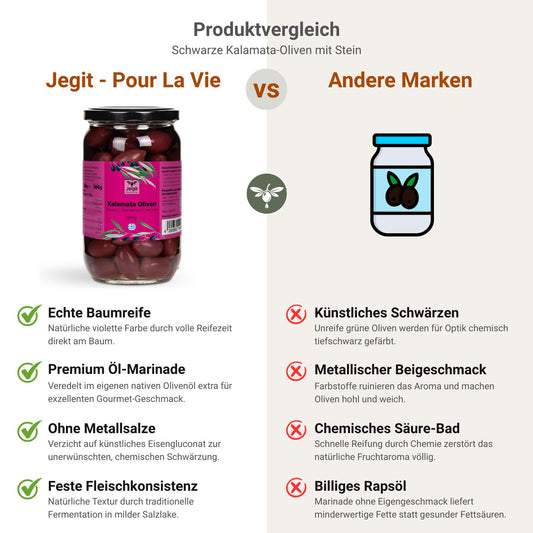
Be a little wary of olives that are jet-black and uniformly matte. Some mass-market black olives are actually green olives that have been oxidised and darkened artificially, then fixed with ferrous gluconate (an iron salt). Naturally ripened black olives, by contrast, vary in shade from deep purple to brownish-black and taste far more interesting.
Read the brine, not just the front of the jar
The single most useful habit when buying olives is to turn the jar around and read the ingredients. The best olives need remarkably little: olives, water, salt, and perhaps vinegar, herbs or olive oil. That is the mark of a product that lets the fruit speak for itself.
Ingredients worth questioning include artificial colourings, flavour enhancers and a long list of preservatives. Our olives, for example, are naturally fermented or cured and packed simply — the green Chalkidiki olives use nothing more than brine and vinegar, so what you taste is the olive itself. As a general rule, the shorter and more recognisable the ingredient list, the better.
With pit or pitted?
Olives with the stone left in tend to keep their texture and flavour better, because the flesh is not cut open to the brine. They are the natural choice for snacking, meze platters and slow enjoyment — just warn your guests to expect a pit. Pitted olives are more convenient for cooking, chopping into tapenade or scattering over a pizza, but they can soften faster. If flavour is your priority, buy them with the pit; if speed in the kitchen matters more, pitted is a fair trade-off.
Plain or marinated?
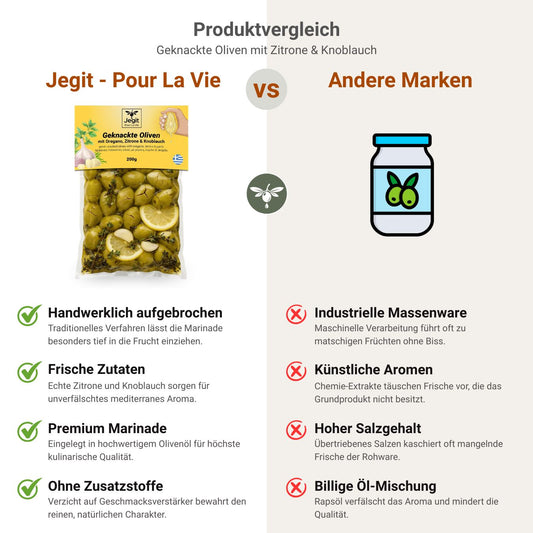
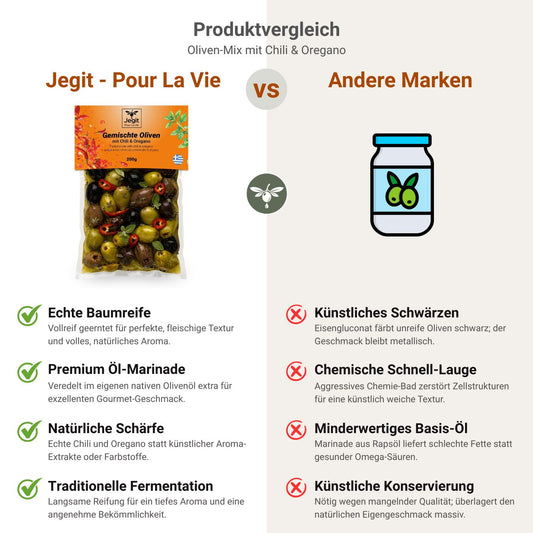
Plain olives in brine are the most versatile — a blank canvas you can dress yourself. Marinated olives, tossed with herbs, garlic, citrus or chilli, are ready to serve straight from the jar and make an effortless appetiser. Buying a marinated selection is also a lovely way to explore different flavour directions without committing to a large tub of one kind. A mixed olive tasting box is perfect here, letting you compare mild and herby against spicy and bold in a single sitting.
How much to buy — and how to store them
Olives keep well, so there is no need to buy tiny quantities. Once opened, keep them submerged in their own brine in a sealed container in the fridge; the liquid protects the fruit and stops it drying out. Stored this way, most olives stay good for several weeks. If the brine runs low, top it up with a simple solution of water and a little salt. Bring olives to room temperature before serving — cold dulls their flavour, and twenty minutes on the counter brings the fruitiness back to life.
Buying olives online
Buying olives online has one clear advantage: you can read the full ingredient list and origin at your leisure, without a busy counter rushing you. Look for a named region and variety rather than a vague “Mediterranean mix”, check that the olives are packed in brine or oil rather than dry-vacuum only, and favour sellers who are transparent about how the fruit is grown and cured. Good origin, honest labelling and simple ingredients are the three things that matter most.
Frequently asked questions
Are green or black olives healthier?
Both are nutritious. Green and black olives are broadly similar in their healthy monounsaturated fats and antioxidants; the differences come mainly from ripeness and curing. The more meaningful health factor is what has been added — choose naturally cured olives with a short ingredient list over heavily processed ones.
Why are some olives so much cheaper?
Very low prices often reflect artificially ripened olives, shortcuts in curing, or added colourings and preservatives that stretch shelf life. Naturally fermented, hand-harvested olives cost a little more because time and care go into them — and you taste the difference.
How can I tell if an olive has been artificially coloured?
Check the label for ferrous gluconate (E579) and look at the olives themselves: a uniform, matte jet-black colour is a hint of artificial darkening, whereas naturally ripened olives show natural variation from purple to brown-black.
Our product tip
Greek Mixed Olives – Tasting Box
Five marinated Greek varieties in one box — the easiest way to find your favourite.
Shop the tasting boxBuying good olives is not complicated once you know what to look for: firm fruit, honest labelling and a named origin. Trust your eyes, read the brine, and let quality olives do what they have done around the Mediterranean for centuries. Pour La Vie.