How Are Olives Harvested? Hand-Picking vs Machine, and Why It Changes What Ends Up in Your Bottle and Jar

Every autumn, across the Mediterranean, the olive harvest begins, and it is one of the oldest and most beautiful rituals in food. But here is something most people never think about: how an olive is harvested quietly decides how good your olive oil and your table olives will be. The same tree, picked two different ways, can give you a bright, peppery, polyphenol-rich oil or a dull, tired one. So if you have ever wondered how olives actually get from the branch to your bottle and jar, this is the story, and it is also the reason a hand-harvested oil like our Peloponnese extra virgin tastes the way it does. Taste what careful harvesting delivers here.
When is the olive harvest?
In the northern Mediterranean, the olive harvest usually runs from late October through December, though the exact timing depends on the region, the variety and the weather. The single biggest decision a grower makes is when to pick. Harvest early, while the olives are still green to purple, and you get a lower yield of oil but a greener, more intense, more peppery and polyphenol-rich result. Wait until the olives are fully black and ripe, and you get more oil, but milder, gentler, less robust. Great producers pick at exactly the right moment for the style they want, and they do not let the fruit over-ripen or drop. Timing, in other words, is everything, and it is the first mark of a carefully made oil.
Hand-picking vs machine harvesting
There are really two worlds of olive harvesting, and the difference shows up in the glass.
Hand-harvesting: the gentle, traditional way
Hand-harvesting means picking the olives by hand, or combing them gently from the branches onto nets spread below. It is slow, labour-intensive work, often on steep terraces a machine could never reach. But it is also wonderfully gentle. The fruit is not bruised or split, only the best olives are taken, and because skilled pickers work fast, the olives can be pressed quickly while they are still fresh. That gentleness protects the delicate aromas and the polyphenols that give a great extra virgin its peppery kick and its keeping power. It is the method behind the finest oils and the best table olives, and it is exactly how our olives are harvested.
Machine harvesting: fast, but harder on the fruit
On large, flat estates, machines do the work: mechanical shakers grip the trunk and vibrate the olives off, or straddle harvesters sweep whole rows at speed. It is efficient and keeps costs down, which is why so much supermarket oil is made this way. The trade-off is that machines can bruise and split the fruit, they pick ripe and underripe olives together, and the olives often sit longer before pressing. Every one of those things nudges the quality down: more bruising means more oxidation, and more time before pressing means a flatter, less fresh oil. It is not that machine-harvested oil is bad, it is that the very best oils rarely come from the roughest, fastest methods.
Why the harvest method ends up in your glass
Here is the chain that connects a hillside in Greece to your kitchen. Gentle picking plus fast pressing equals fresh, unbruised fruit turned to oil before it can oxidise. That freshness is what preserves the polyphenols, the natural antioxidants responsible for an extra virgin's peppery, slightly bitter finish and its longer shelf life. Rough handling and delay do the opposite: oxidation sets in, the fragile aromas fade, and the oil loses both flavour and health-giving compounds. So when you taste a vivid, grassy, peppery oil, you are tasting careful harvesting. When you taste a flat, greasy one, you are often tasting a rushed one. If you want to go deeper on why those polyphenols matter, our guide to high-polyphenol olive oil is the perfect next read, and our piece on new-harvest olive oil explains why this season's freshly pressed oil is the best you can buy.
What hand-harvesting means for our oil and olives
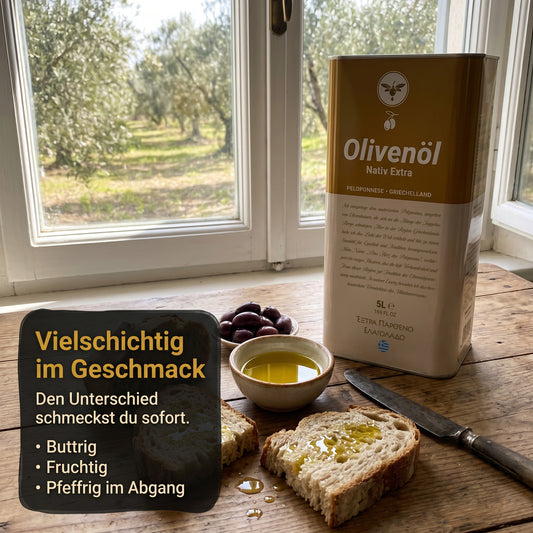
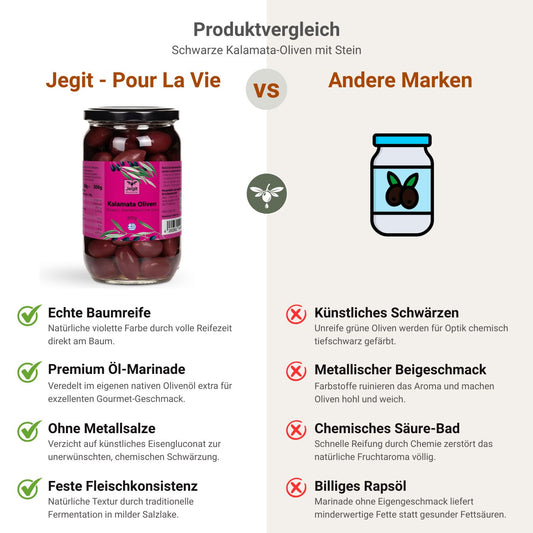
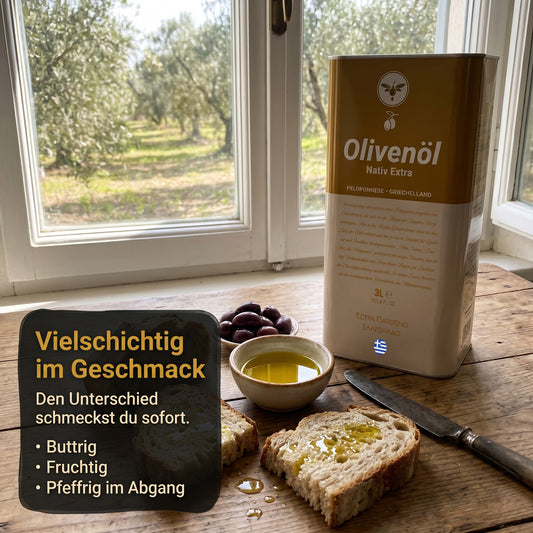
This is not theory for us, it is how we work. Our Extra Virgin Olive Oil from the Peloponnese is hand-harvested and then cold-extracted by mechanical means alone, so it stays low in acidity and rich in polyphenols, with that signature spicy, buttery, peppery character. It is lab-tested, free of mineral oil residues and naturally cloudy and unfiltered, because we do not strip out the very things that make it taste alive. Curious what that cloudiness tells you? Our guide on naturally cloudy, unfiltered olive oil explains. The same care goes into our table olives: our Black Kalamata Olives are traditionally hand-picked and naturally ripened, so only the best fruit makes it into the jar. Taste the difference careful harvesting makes, bring home our Peloponnese oil here.
Our Product Pick
Extra Virgin Olive Oil from the Peloponnese (500 ml)
Hand-harvested and cold-extracted, lab-tested and low in acidity, rich in polyphenols and naturally cloudy. The peppery, buttery oil that proves careful harvesting pays off.
Shop Peloponnese Olive OilFrequently asked questions
When are olives harvested?
Mostly from late October to December in the northern Mediterranean, depending on region, variety and weather. Growers pick earlier for a greener, more peppery, polyphenol-rich oil, or later for a milder oil and a higher yield. Picking at the right moment is one of the clearest signs of a carefully made oil.
Is hand-picked olive oil really better than machine-harvested?
Generally, yes, when it comes to the finest extra virgin oils. Hand-harvesting is gentler, avoids bruising, selects only the best fruit and allows faster pressing, all of which protect flavour and polyphenols. Machine harvesting is efficient and fine for everyday oils, but the very best oils almost always come from careful, often hand-led harvesting.
Does the harvest method affect table olives too?
Yes. Gentle hand-picking means the olives are not bruised or split, so they cure cleanly and keep their firm texture and good looks. That is why quality table olives, like our hand-picked Kalamata, start with careful harvesting just as good oil does.
Pour La Vie
The next time you pour a bright, peppery olive oil or open a jar of glossy, firm olives, remember that it all began on a hillside, with a choice about how to pick. Careful, gentle, well-timed harvesting is the quiet reason some oils taste alive and some olives taste like the real Mediterranean. It is slower and it is harder, and it is exactly why we insist on it. That is the Jegit way: natural, honest and made for the good life. Bring home our hand-harvested Peloponnese olive oil today and taste what the harvest makes possible. Pour La Vie.

Cooking with Thyme Honey: In Your Tea, as a Sugar Swap and for Baking
How to cook with thyme honey: stirring it into tea, swapping it for sugar and baking with it. Ratios, timings and pairings...

Can You Cook and Fry with Extra Virgin Olive Oil? The Truth About Smoke Point and Heat
Can you cook and fry with extra virgin olive oil? The truth about smoke point, heat stability and which oil to use...

How to Use Aleppo Soap: The Complete Guide to Face, Body, Hair, Shaving — Even Laundry
From face and body to hair, shaving and even laundry — the complete guide to using traditional Aleppo soap, and how to...