High-Polyphenol Olive Oil: What Polyphenols Actually Are, Why the Peppery Kick Matters, and How to Choose an Oil That Has Them

“High in polyphenols” has become the phrase every olive oil brand wants on its label — and for once, the buzzword points at something real. Polyphenols are a genuine mark of quality: they are what give a true extra virgin its peppery bite, keep it fresh for longer, and separate a living, hand-harvested oil from a tired, refined one. The problem is that most oils on a supermarket shelf have very few left by the time they reach you, and the label rarely tells you so. This guide explains what polyphenols actually are, how to taste them, and how to choose an oil that genuinely has them — instead of paying for a promise.
If you would rather skip straight to an oil that is lab-tested and rich in polyphenols, our extra virgin olive oil from the Peloponnese is built around exactly these qualities.
What are polyphenols, really?
Polyphenols are natural plant compounds — antioxidants — found in the olive fruit and carried through into the oil when it is pressed gently and without heat. In olive oil they do two jobs at once. First, they are the oil's own defence system: they slow down oxidation, which is the process that eventually turns oil rancid, so a polyphenol-rich oil simply keeps its character for longer. Second, they are flavour. That green, grassy, slightly bitter taste and the peppery catch at the back of your throat? That is polyphenols talking. A high-polyphenol oil is the reason extra virgin olive oil sits at the heart of the Mediterranean diet, and it is the difference between an oil that tastes of something and one that tastes of nothing.
The crucial point for shoppers: polyphenols are fragile. Heat, light, time and over-processing all destroy them. That is why a cheap, refined, or year-old oil can legally be sold while delivering almost none of the character you are actually paying for.
Why the peppery, throat-catching kick matters
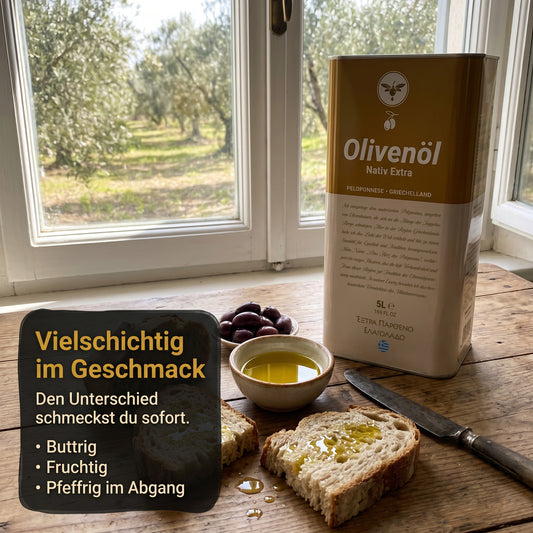
Here is the most useful thing you will read today: you do not need a laboratory to spot a polyphenol-rich oil. Your mouth is the test. Pour a little oil — ideally at room temperature — into a small glass, warm it in your cupped hand, and taste it on its own. A high-polyphenol oil hits you with three things in sequence: a fruity, green aroma; a gentle bitterness across the tongue; and a distinct peppery sting at the back of the throat that can make you cough.
The famous “cough test”
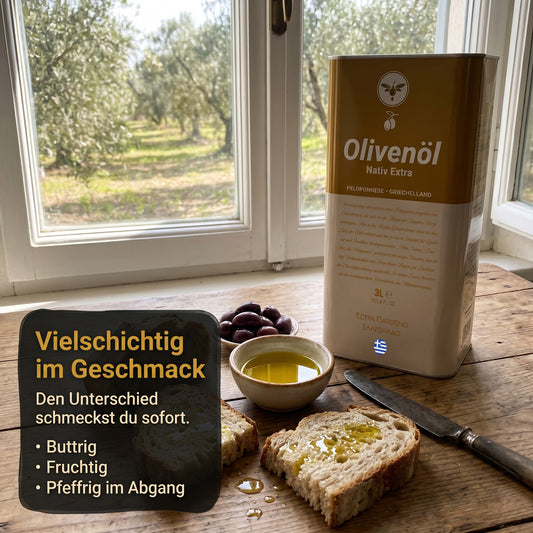
Olive oil tasters actually grade oils by how many “coughs” they provoke — one cough, two coughs, three. That throat tickle comes from a specific polyphenol group and is the single clearest sign that an oil is fresh, early-harvest and alive. If an oil slides down smooth, buttery and with no kick at all, it is pleasant but low in polyphenols. If it makes you catch your breath, you are tasting quality. Our Peloponnese extra virgin is deliberately pressed to keep that peppery backbone — try the cough test on your next bottle and you will never un-taste the difference.
What makes an olive oil high in polyphenols
Polyphenol content is not luck. It comes down to a handful of decisions on the grove and in the mill:
- Early harvest. Olives picked earlier, while still green, are far richer in polyphenols than fully ripe black olives. It means a smaller yield and more peppery oil — a quality choice, not an economic one.
- Hand harvesting. Gentle, traditional hand harvesting avoids bruising the fruit, which protects the compounds before the olives even reach the mill. Our oil is traditionally hand-harvested for this reason.
- Cold mechanical extraction. No heat, no chemical solvents — just mechanical pressing. Heat is the enemy of polyphenols, so a genuine cold extraction keeps them intact.
- Low acidity. A low free-acidity figure is the technical signature of carefully handled, quickly pressed olives — the same care that preserves polyphenols.
- Freshness. Polyphenols fade with every month in the bottle. The newer the harvest, the higher the count.
- Protection from light. Oil stored and sold in dark glass or tins keeps more of its polyphenols than oil sitting in a clear bottle under shop lights.
How to choose a genuinely polyphenol-rich oil
Put the label buzzwords aside and look for evidence. Is the oil extra virgin (not just “pure” or “olive oil”)? Is it cold-extracted? Does the producer state a low acidity and actually lab-test the oil? Is there a harvest date, and is it recent? Is it naturally cloudy and unfiltered, which often means a less aggressively processed oil? And does it taste peppery?
This is precisely where our Peloponnese olive oil earns its place. It is extra virgin, traditionally hand-harvested and extracted by cold mechanical pressing only. It is naturally cloudy and unfiltered, and it is lab-tested: low in acidity, rich in polyphenols, and verified free from mineral-oil residues. It carries that signature spicy, buttery, peppery flavour — and because it is heat-stable up to 180°C without forming trans fats, you get the benefit whether you drizzle it raw or cook with it. Secure a bottle here and taste what a real polyphenol count feels like. If you cook with olive oil daily, our 3-litre tin from the Peloponnese keeps that same quality on hand for less per litre.
How to keep the polyphenols in your bottle
Buying a high-polyphenol oil is only half the job — the other half is not letting it fade in your kitchen. Store the bottle somewhere cool and dark, never next to the hob or on a sunny windowsill. Keep the cap closed between uses to limit contact with air. Buy a size you will actually finish within a few months rather than a bargain drum that sits open for a year. Treat the oil as the fresh, living product it is, and it will reward you with that peppery kick right down to the last pour. When it is time to restock, reach for a fresh bottle of our Peloponnese extra virgin here.
Frequently asked questions
Is a more bitter, peppery olive oil better?
For polyphenols, yes — within reason. Bitterness and that peppery throat-catch are direct signs of a high polyphenol content and a fresh, early-harvest oil. A well-made oil balances that kick with fruity, buttery notes, as ours does, so it tastes lively rather than harsh.
Does cooking destroy the polyphenols in olive oil?
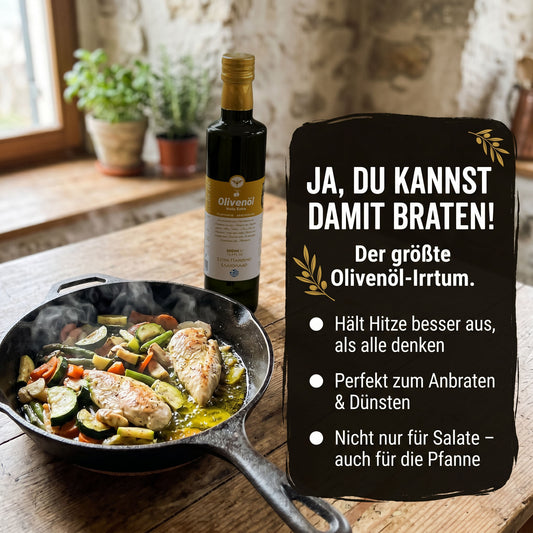
Heat reduces polyphenols gradually, which is why drizzling oil raw over a finished dish delivers the most. That said, a robust extra virgin like ours — heat-stable up to 180°C without forming trans fats — still brings far more character and antioxidants to the pan than a refined oil ever could. For the maximum hit, keep a little back to finish the plate.
How can I tell if my olive oil has lost its polyphenols?
Taste it. A fresh, polyphenol-rich oil is peppery and slightly bitter; an oil that has gone flat, greasy, waxy or faintly stale has lost its best compounds to time, light or heat. If there is no kick and no aroma, it is past its prime — time for a fresh, recent-harvest bottle.
Our product tip
Extra Virgin Olive Oil from the Peloponnese
Hand-harvested, naturally cloudy and unfiltered, lab-tested for low acidity and rich in polyphenols — with the peppery, throat-catching kick of a genuinely fresh oil.
Shop the olive oilPolyphenols are the one olive oil buzzword worth believing — as long as you buy an oil that actually delivers them. Look for extra virgin, cold extraction, low acidity, a recent harvest and a real peppery kick, and you will taste the difference in everything you make. Order our lab-tested Peloponnese olive oil today and bring a living, polyphenol-rich oil to your table — Pour La Vie.

The Best Olive Oil for Salads and Dressings: How to Choose One (and Why Cheap Oil Ruins a Good Salad)
How to choose the best extra virgin olive oil for salads and dressings - and why a naturally cloudy, polyphenol-rich Peloponnese oil...

Best Olive Oil in November 2026
Looking for the best olive oil in November 2026? A buyer's guide to extra virgin: acidity, polyphenols, harvest, origin and how to...

Olive Wood Cutting Board: How to Choose One and How to Care for It So It Lasts for Years
Olive wood cutting board guide: why the dense grain is naturally hygienic, what to look for when buying, and how to oil...