Best Olive Oil in November 2026

If you are shopping for the best olive oil in November 2026, you have picked a wonderful moment to do it. Late autumn is the heart of the olive harvest across the Mediterranean, which means the freshest, most vibrant extra virgin oils of the new season are beginning to arrive. A truly good olive oil is not a luxury reserved for special occasions — it is an everyday pleasure that lifts a simple salad, a warm slice of bread or a plate of roasted vegetables into something memorable. This guide walks you through exactly what to look for, so that whatever bottle ends up in your kitchen, you can be confident it is the real thing.
Olive oil can be confusing to buy. The shelves are full of words like “pure”, “light” and “cold-pressed”, and the prices swing wildly. The good news is that quality comes down to a handful of concrete, measurable things. Once you understand them, choosing well becomes second nature.
What makes a genuinely good extra virgin olive oil
Extra virgin is the highest grade of olive oil. It is produced purely by mechanical means — no heat treatment, no solvents, no refining — and it has to meet strict chemical and sensory standards. But not every bottle labelled “extra virgin” is equally good. Here is what separates the excellent from the merely acceptable.
Acidity: the first mark of quality
Free acidity is the single most telling number on a technical sheet. For an oil to qualify as extra virgin, its free acidity must sit at or below 0.8 grams per 100 grams. The finest oils go well below that, often under 0.3 or 0.4. Low acidity is a sign that the olives were healthy, picked at the right moment and pressed quickly before they could begin to degrade. When a producer is proud of a low acidity figure and happy to publish it, that is a reassuring signal.
Polyphenols and that peppery kick
Polyphenols are the natural antioxidant compounds that give a fresh extra virgin oil its character. They are also responsible for the gentle peppery tingle you feel at the back of your throat and the pleasant bitterness on the tongue. That little cough-inducing catch is not a flaw — it is the taste of a lively, well-made oil. A flat, buttery-only oil with no pepper at all is often older or more gently flavoured; a bright, peppery one tends to be fresher and more robust.
Harvest timing and cold extraction
Great oil starts in the grove. Olives picked earlier in the season, while still turning from green to purple, yield less oil per fruit but a far greener, more aromatic and more peppery result. Hand harvesting is gentler on the fruit than aggressive machine shaking, so the olives arrive at the mill intact. From there, cold mechanical extraction — keeping temperatures low throughout — preserves the delicate aromas and the polyphenols that heat would otherwise destroy. The phrase to look for is genuine cold extraction, not simply a vague “pressed” claim.
Naturally cloudy and unfiltered
Many premium oils, especially young ones straight from the new harvest, are naturally cloudy and unfiltered. Rather than being filtered to a bright, clear gold, they keep tiny particles of olive flesh in suspension. Those particles carry extra flavour and antioxidants, which is why an unfiltered oil can taste especially full and green. It may look slightly hazy and settle a little in the bottle — that is completely normal and, for many enthusiasts, a mark of authenticity. If you prefer, give the bottle a gentle swirl before using.
Origin: why the Peloponnese matters
Where the olives grow shapes everything. The Peloponnese, the southern peninsula of mainland Greece, is one of the world's great olive regions. Its sun-drenched hillsides, mild coastal climate and long tradition of olive cultivation produce fruit of real depth and balance. Oils from this region are often prized for a flavour that manages to be at once buttery, grassy and peppery. Knowing the specific origin of your oil — a single region rather than an anonymous blend of several countries — is one of the clearest routes to consistent quality.
What to check before you buy
Beyond the grade on the label, a few practical checks will steer you towards a better bottle every time.
Look for a harvest or best-before date. Olive oil is a fresh product, not a fine wine — it does not improve with age. The newer the harvest, the more of those precious polyphenols and aromas remain. In November, you are ideally placed to catch oils from the freshest possible pressing. If a bottle shows only a distant best-before date and no harvest information, be a little cautious.
Check the packaging. Light and air are olive oil's enemies. Dark glass, tins or opaque containers protect the oil from light far better than clear bottles sitting under bright shop lighting. Larger formats, such as a well-sealed five-litre tin, can be excellent value and keep the bulk of the oil shielded from light until you decant what you need.
Favour transparency. A producer who tells you the region, the harvest approach, the acidity and, ideally, the results of laboratory testing is giving you the information you need to judge quality for yourself. Vagueness is rarely a good sign.
Mind how you store it at home. Even the best oil can be spoilt by poor storage. Keep it in a cool, dark cupboard, away from the hob and the window, and always close the cap tightly. Use it within a few months of opening for the best flavour.
Why November is the month to pay attention
November sits right inside the Mediterranean olive harvest. From roughly October through December, groves across Greece and the wider region are busy picking and pressing. This is when the year's new oil — often called agoureleo when it comes from early, greener fruit — is at its most vivid: intensely green, grassy and peppery, with aromas that fade over the following months. If you have ever wondered why a particular oil tasted so alive, chances are you caught it young. Buying in late autumn is simply the best way to experience extra virgin oil close to its peak. It also makes this the ideal season to treat yourself, or to set aside a generous bottle for the festive cooking ahead.
Our pick for November 2026
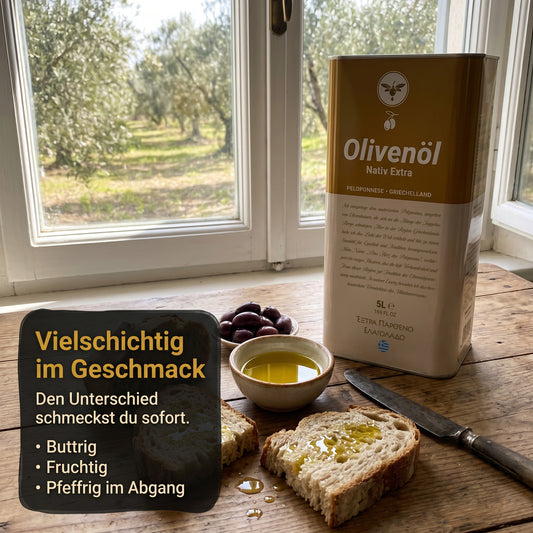
If you want an oil that ticks every box above, we would point you to our own Extra Virgin Olive Oil from the Peloponnese. It is hand harvested in the historic groves of the southern Greek peninsula and made purely by cold mechanical extraction, so the aromas and antioxidants stay intact. It is naturally cloudy and unfiltered, with the full, green character that comes from keeping those flavour-carrying particles in the oil. Laboratory tested for low acidity and a high polyphenol content, it delivers exactly the spicy, buttery and peppery profile that marks out a serious Peloponnese oil. The generous five-litre format means it is as practical for everyday cooking as it is pleasurable for finishing a dish.
Whether you are drizzling it over a crisp salad, dipping warm bread, finishing grilled vegetables or using it as a dependable everyday cooking oil, this is the kind of bottle that quietly improves whatever you make with it.
Frequently asked questions
How do I know if an olive oil is really extra virgin?
Look for the words “extra virgin” together with supporting detail: a stated origin, a recent harvest, a low free-acidity figure (0.8 or below, ideally much lower) and, best of all, laboratory results. A fresh extra virgin oil should also taste alive — fruity and green, with a pleasant bitterness and a peppery catch in the throat.
Is cloudy, unfiltered olive oil better than clear oil?
Neither is automatically “better”, but naturally cloudy, unfiltered oil keeps tiny particles of olive that carry extra flavour and antioxidants, so it often tastes fuller and greener, especially when young. A little haze or sediment is normal and is a sign the oil has not been heavily processed. Simply swirl the bottle gently before use.
How should I store olive oil to keep it fresh?
Keep it cool, dark and sealed. Store the bottle or tin in a cupboard away from heat and light, close the cap firmly after each use, and try to use it within a few months of opening. Treated well, a good extra virgin oil will reward you with its full flavour right to the last drop.
Our product tip
Extra Virgin Olive Oil 5L from the Peloponnese
Hand harvested, naturally cloudy and unfiltered — a laboratory-tested Peloponnese extra virgin with a spicy, buttery and peppery flavour.
Shop the olive oilChoosing well in November means enjoying extra virgin olive oil at its freshest and most alive. Pick an oil with a clear origin, a recent harvest and honest quality figures, store it with care, and let it bring a little of the Greek sun to your table every day. Jegit — Pour La Vie.

The Best Olive Oil for Salads and Dressings: How to Choose One (and Why Cheap Oil Ruins a Good Salad)
How to choose the best extra virgin olive oil for salads and dressings - and why a naturally cloudy, polyphenol-rich Peloponnese oil...

Olive Wood Cutting Board: How to Choose One and How to Care for It So It Lasts for Years
Olive wood cutting board guide: why the dense grain is naturally hygienic, what to look for when buying, and how to oil...

Laurel Berry Oil in Aleppo Soap: What the 'Lorbeeröl' Actually Does for Your Skin and Hair
Laurel berry oil — the Lorbeeröl — is the soul of Aleppo soap. Here is what a high 40% laurel content really...