Green Olives vs Black Olives: What's the Difference?
Stand in front of a Greek deli counter and the first question is almost always the same: green olives or black? Most people assume they are two different fruits, or that one is simply dyed. Neither is true. The honest, slightly surprising answer is that green and black olives usually come from the same tree, and the real difference comes down to one thing: ripeness. Understanding that single fact changes how you buy, taste and cook with olives, and it makes it much easier to pick ones that are actually worth eating. If you would rather taste the difference than read about it, our Greek mixed olives tasting box puts green and black side by side in one order.
The real difference: ripeness, not type
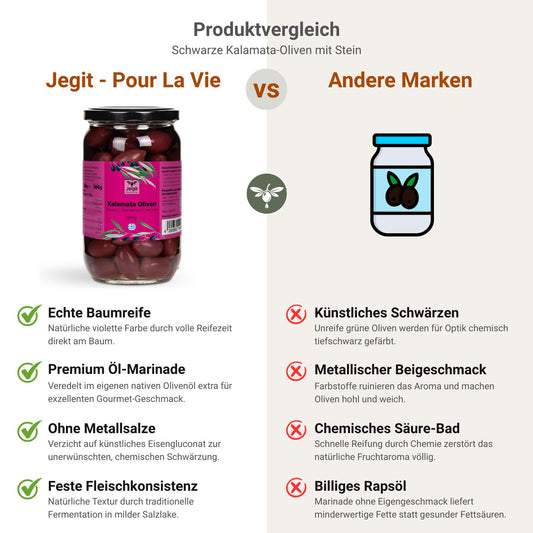
An olive starts out green and hard on the branch. Left to ripen in the sun, it slowly turns from green to pale straw, then purple, then the deep brown-black of a fully mature fruit. So a green olive is simply an olive picked early, and a black olive is the same fruit picked later. That is the whole story for naturally produced olives. The one caveat worth knowing is that some industrial black olives are actually green olives that have been oxidised and darkened artificially, often given away by a uniform, matte jet-black colour and a flat taste. Naturally ripened black olives, such as genuine Kalamata, keep a glossy, deep aubergine-purple colour and a far more interesting flavour. When you buy from a producer who ferments in brine rather than chemically darkens, you taste the fruit, not the process.
Taste and texture: how they really compare
Because ripeness is the real variable, it drives the flavour too. Green olives are firmer, with a dense, almost crunchy bite and a brighter, more bitter, sometimes grassy or lemony taste. They stand up well to bold marinades of garlic, chilli, lemon and herbs. Black olives are softer and meatier, with a rounder, fruitier, richer flavour and a gentle, almost buttery finish. Neither is better; they are different tools. A good way to learn your own preference is to try a firm green Chalkidiki olive next to a ripe black Kalamata and simply notice which one you reach for again. Most people are surprised by how far apart they taste once they pay attention.
Nutrition: are green or black olives healthier?
This is the most common question, and the reassuring answer is that both are genuinely good for you. Green and black olives are both rich in heart-healthy monounsaturated fats and in antioxidants, the plant compounds that give olives much of their value. The differences are smaller than the marketing suggests. Because they are picked riper, black olives tend to be slightly higher in oil and therefore a touch higher in calories, while firmer green olives are sometimes a little higher in sodium simply because of how they are cured. For everyday eating, the healthiest olive is not green or black specifically; it is the one made without artificial colourants or unnecessary additives, cured naturally in brine. That is exactly how Jegit's olives are prepared, which is why they belong in a Mediterranean diet rather than just on a party platter.
How to use each one in the kitchen
Green and black olives earn their place in different dishes. Firm green olives are perfect whole as a meze with a drink, chopped into a zesty salad, stirred through a lemony chicken or baked into focaccia. Richer black Kalamata olives are the classic choice for a horiatiki (Greek village salad), for olive tapenade, for olive bread, or simply served warm with good oil. The easiest way to always have the right olive to hand is to keep a range in the fridge. Our Greek mixed olives tasting box was built for exactly this: green, Kalamata and cracked varieties, marinated with oregano, thyme and basil and brightened with lemon, garlic, chilli and paprika, all vacuum-sealed in 200g packs so each one stays fresh until you open it.
How to choose an olive actually worth eating
Once you know that colour is about ripeness, you can judge quality on what really matters. Look for olives that are naturally fermented in brine rather than chemically darkened, free from artificial colourants and additives, and sold with their origin and variety named rather than hidden. Jegit's olives tick each of those boxes: authentic Greek varieties, hand-harvested, naturally fermented and free from artificial colourants, rich in the monounsaturated fats and antioxidants that make olives a true Mediterranean staple. A pale, uniformly black, flat-tasting supermarket olive and a glossy, naturally cured one are barely the same food. Order the tasting box and you can judge for yourself in a single sitting.
How to store olives so they keep their flavour
Good olives deserve a little care once they are home. Keep them submerged in their own brine, because the liquid is what protects the fruit from drying out and losing flavour; if you decant them, top the jar up with a little salted water or a thread of olive oil so they stay covered. Store opened olives in the fridge and always use a clean, dry spoon rather than fingers, which is the simplest way to keep a jar fresh for weeks. Vacuum-sealed packs, like the 200g portions in our tasting box, have an advantage here: each variety stays sealed and aromatic until the moment you open it, so you are not racing to finish one big tub before it tires. If your olives ever taste dull, let them come back to room temperature before serving and add a splash of good olive oil and a pinch of oregano; cold mutes flavour, and a little warmth and oil wake a naturally cured olive right back up. Treated this way, a genuinely good olive rewards you every single time you open the fridge.
Before the questions below, the short version is this: do not agonise over green versus black. Choose naturally cured olives from a named origin, and the colour becomes a matter of mood rather than quality. Start with our Greek tasting box and let your own palate decide.
Frequently asked questions
Are green and black olives the same olive?
Usually, yes. Most green and black olives come from the same tree; the green ones are picked early and the black ones later, once they have ripened on the branch. The main exception is cheap industrial black olives that are green olives darkened artificially, which is why naturally cured black olives like Kalamata taste so much better.
Which has a stronger flavour, green or black olives?
Green olives tend to be sharper, firmer and more bitter, while black olives are softer, rounder and fruitier. If you like a bold, bright bite, go green; if you prefer a rich, mellow, meaty olive, go black. Trying both side by side, as in our tasting box, is the quickest way to find your favourite.
Are black olives dyed?
Some mass-produced ones are. Unripe green olives can be oxidised and artificially blackened to look uniform and jet-black. Naturally ripened and brine-cured black olives, such as genuine Greek Kalamata, keep a glossy, deep purple-black colour and are free from artificial colourants, which is the standard every Jegit olive is held to.
Our product tip
Greek Mixed Olives Tasting Box
Green, Kalamata and cracked varieties, naturally prepared and marinated with herbs and citrus: the easiest way to taste green and black olives side by side.
Try the tasting box nowGreen or black, the olives worth eating have one thing in common: they are made honestly, with nothing but the fruit, brine and time. Skip the flat, dyed supermarket versions, taste a naturally cured Greek olive the way it should be, and you will understand what the fuss is about. Bring home our Greek tasting box and enjoy the whole spectrum, Pour La Vie.