Green Olives vs Black Kalamata Olives: What's the Difference?
Stand in front of the olive counter and the choice can feel surprisingly hard. Plump and grassy-green on one side, dark and glossy-black on the other — both labelled simply ‘Greek olives’. Are they two completely different fruits? A different variety? Or the same olive picked at different times? If you have ever wondered whether to reach for green olives or black Kalamata olives, this guide clears it up: where the colour comes from, how the two taste, and which one belongs in which dish.
Are green and black olives different olives?
Here is the part that surprises most people: colour is mostly about ripeness, not species. Every olive starts out green on the tree and slowly turns straw-yellow, then rosy purple, and finally deep black-purple as it ripens. Pick early and you get a firm green olive; leave the fruit to ripen fully and you get a soft black one.
But ripeness is only half the story, because variety matters too. Some cultivars are grown specifically to be harvested young and green, while others are prized for the rich flavour they develop when fully ripe. That is exactly the difference between the two Greek classics on most tables: the bright green Chalkidiki olive and the dark, almond-shaped Kalamata. One is a green-harvest specialist; the other is famous precisely because it is left to ripen.
Green olives: bright, firm and fresh
Greece’s best-known green table olive is the Chalkidiki, grown in the north around the peninsula that gives it its name. Picked while still young, these olives are large, meaty and satisfyingly firm, with a mild, slightly fruity, faintly grassy taste and a clean, almost buttery finish. Because they are cured young, they carry less of the winey depth of a ripe olive and more of a fresh, lively snap — the kind of olive you can happily eat by the handful.
Our Greek green olives are naturally fermented in nothing more than brine and vinegar, which preserves that lively, fresh character and their firm bite. That gentle curing is what keeps them tasting of the fruit rather than of salt, and it is why they hold their shape so well in cooking and on a platter.
Green olives are at their best when you want: a firm, mild olive for antipasti and cheese boards; something that stays intact when baked into bread or roasted with chicken; a milder option for anyone new to olives; or a crisp bite to balance rich, creamy dishes.
Black Kalamata olives: rich, winey and soft
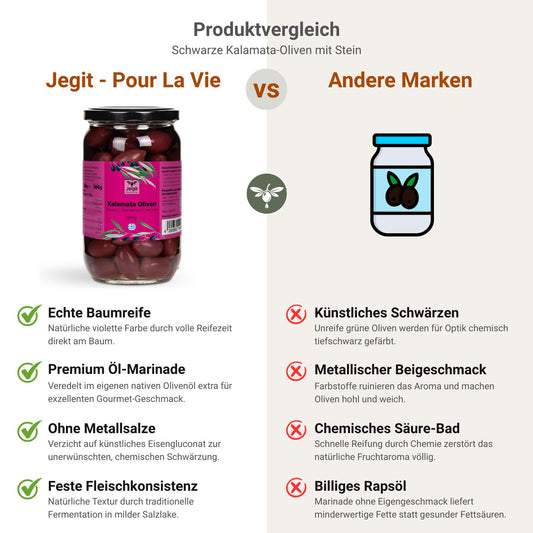
The Kalamata is a different creature. Named after the city in the southern Peloponnese, it is an almond-shaped olive that is always left to ripen fully on the tree, which is where its deep aubergine-to-black colour comes from. The flavour is everything the green olive is not: intense, fruity and winey, with a smooth, meaty flesh and a savoury richness that lingers.
Traditionally Kalamata olives are cured in brine and often finished with a little red wine vinegar, which deepens their signature tang. Our black Kalamata olives are picked by hand at full ripeness and cured naturally, with no artificial colouring — the deep colour is simply what a ripe Kalamata looks like. It is this bold, complex taste that makes them the classic choice for a Greek village salad and the heart of a good olive tapenade.
Black Kalamata olives are at their best when you want: the authentic finish for a horiatiki salad; a deep, savoury olive for tapenade and dips; a rich partner for feta, tomatoes and olive oil; or an olive with enough character to stand up to strong flavours like garlic and anchovy.
Green vs black Kalamata: the quick comparison
If you only remember one thing, make it this: green olives are picked young for a firm, mild bite; Kalamata olives are ripened fully for a soft, rich, winey flavour. Beyond that:
- Colour: green comes from an early harvest; the deep black-purple of a Kalamata comes from full ripeness — not from dye.
- Texture: green olives are firm and crisp; Kalamata olives are softer and meatier.
- Taste: green is mild, fresh and grassy; Kalamata is bold, fruity and savoury.
- Best used: green for snacking, platters and baking; Kalamata for salads, tapenade and rich Mediterranean dishes.
Neither is ‘better’ — they simply do different jobs. Most Greek kitchens keep both jars within reach.
Which olive should you choose?
Let the dish decide. Building a mezze board or serving olives as a nibble with drinks? Reach for firm green olives, ideally a mix of plain and herb-marinated ones, so guests get variety in every bite. Making a Greek salad, a tapenade, or anything where the olive needs to carry real depth of flavour? Kalamata is the answer. And if you are cooking — baking olives into focaccia, roasting them with vegetables, or simmering a chicken traybake — green olives tend to keep their shape and bite better, while Kalamata melts into the sauce and enriches it.
For everyday eating, many people simply keep both and choose by mood: the fresh snap of a green olive one day, the rich, savoury Kalamata the next.
How to taste them side by side
The best way to understand the difference is to try them together. Set out a small bowl of each with some bread, feta and a drizzle of good olive oil, and taste one after the other — you will notice the firm, clean freshness of the green against the deep, winey warmth of the Kalamata immediately. If you would like to explore the full range in one go, our Greek mixed olives tasting box brings several styles together so you can find your favourite. Serve them on an olive-wood board with a glass of something cold and you have an effortless Mediterranean starter.
Frequently asked questions
Are black olives just ripe green olives?
Often, yes — an olive naturally darkens as it ripens, so many black olives are simply green olives left longer on the tree. The important exception is that some black olives sold cheaply are green olives darkened artificially with oxygen and iron salts. A true Kalamata is never dyed; its deep colour comes only from ripening fully in the sun.
Which is healthier, green or black olives?
Both are wholesome table olives rich in the same heart-friendly monounsaturated fats and antioxidants that make olives a cornerstone of the Mediterranean diet. The nutritional difference between them is small; the bigger factor is choosing olives cured naturally in brine, without artificial additives or colouring, as ours are.
Can I use green olives instead of Kalamata in a Greek salad?
You can, and it will still be delicious — but the salad will taste milder and fresher rather than rich and traditional. For an authentic horiatiki, Kalamata olives give the deep, savoury note the dish is known for. If you prefer a gentler flavour, green olives are a perfectly good swap.
Our product tip
Black Kalamata Olives with pit
Hand-picked at full ripeness and naturally cured — rich, winey and never artificially coloured.
Shop Kalamata olivesWhether you love the crisp, fresh bite of a green olive or the deep, savoury richness of a Kalamata, the secret is the same: real olives, cured slowly and naturally, with nothing added. Taste the difference for yourself. Pour La Vie.