Vegan Olive Oil Aioli: A Silky Mediterranean Recipe Without Eggs
A good aioli is one of those small Mediterranean pleasures that turns an ordinary plate into something worth lingering over. This vegan olive oil aioli keeps everything that makes the classic so moreish — the garlic, the gentle tang, the glossy, spoon-coating richness — but leaves out the eggs entirely. In their place, a little chickpea water (aquafaba) does the emulsifying, and a fruity extra virgin olive oil from the Peloponnese does the rest. The result is a dip that is light, garlicky and unmistakably Mediterranean.
Best of all, it comes together in about ten minutes with a bowl and a whisk, or even faster with a hand blender. Once you have made it, you will find yourself reaching for it constantly: alongside warm bread, with roasted potatoes, spooned over grilled vegetables or as the anchor of a summer meze table.
What is aioli — and what makes it vegan?
Traditional aioli hails from the sun-drenched coasts of the western Mediterranean, where it began as little more than garlic pounded with olive oil into a thick, pungent paste. Over time, egg yolk was added to stabilise the emulsion and soften the bite, and the sauce spread across Provence, Catalonia and beyond.
A vegan aioli simply swaps the egg for a plant-based emulsifier. The most reliable is aquafaba — the viscous liquid you normally pour away from a tin of chickpeas. It behaves remarkably like egg white, trapping tiny droplets of oil in a stable, creamy suspension. With a good olive oil, a whisper of mustard and plenty of fresh garlic, the finished sauce is every bit as satisfying as the original, and arguably lighter.
Why the olive oil matters most
In a sauce this simple, the oil is not a background player — it is the flavour. That is why the choice of olive oil makes or breaks the dish. A flat, refined oil gives a flat, forgettable aioli; a lively, aromatic one gives a sauce with real character.
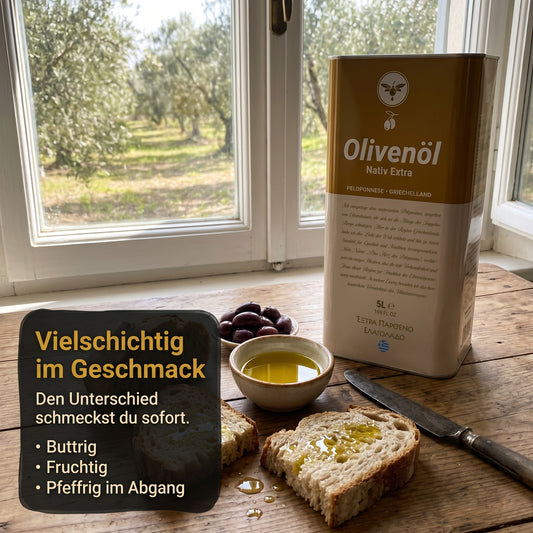
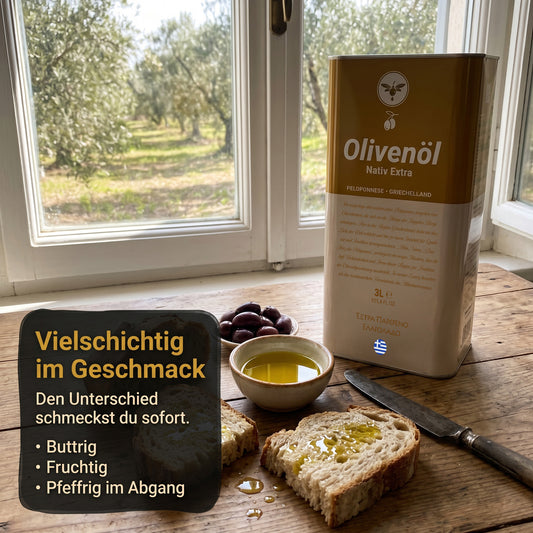
Our extra virgin olive oil from the Peloponnese is unfiltered, naturally cloudy and hand-harvested, with the fruity, buttery and peppery notes that give this aioli its backbone. One word of guidance: extra virgin oil is rich in polyphenols, and blitzing it too hard in a machine can knock those compounds loose and turn the sauce bitter. The gentle methods below avoid that entirely, so all you taste is fruit and warmth.
Ingredients
Makes roughly one small bowl (about 250 ml), enough for four as a dip.
- 60 ml aquafaba (the liquid from one tin of unsalted chickpeas), at room temperature
- 1 small garlic clove, very finely grated (use 2 if you like it punchy)
- 1 tsp Dijon mustard
- 1 tbsp freshly squeezed lemon juice
- ½ tsp fine sea salt
- 180 ml extra virgin olive oil from the Peloponnese
- A pinch of white pepper (optional)
Method
- Build the base. In a deep, narrow bowl or jug, combine the aquafaba, grated garlic, mustard, lemon juice and salt. Whisk for about thirty seconds until the mixture looks pale and a little frothy.
- Add the oil slowly. This is the only rule that truly matters. Begin pouring the olive oil in a very thin, steady stream while whisking constantly (or with a hand blender running on low). Add it drop by drop at first, then in a slightly thicker thread once the sauce starts to thicken and hold.
- Watch it come together. After about two-thirds of the oil, the mixture will visibly thicken into a pale, glossy cream. Keep going until all the oil is incorporated and the aioli holds a soft peak.
- Taste and adjust. Add more lemon for brightness, more salt for depth, or a pinch of white pepper. If it feels too thick, loosen it with a teaspoon of cold water.
- Rest before serving. Cover and chill for at least twenty minutes. The garlic mellows, the flavours settle, and the texture firms up beautifully.
Tips for a silky, foolproof aioli
Go slow with the oil. Nearly every split aioli is the result of oil added too quickly. Patience in the first minute guarantees a stable emulsion.
Keep everything at room temperature. Cold aquafaba and cold oil emulsify less willingly. Let both sit out for half an hour before you start.
If it splits, don't panic. Start again with a fresh tablespoon of aquafaba in a clean bowl and whisk the broken sauce back in slowly, as if it were the oil. It will come together.
Grate, don't chop, the garlic. A fine grating or paste distributes the flavour evenly, so you never bite into a raw, sharp piece.
How to serve your olive oil aioli
This is a wonderfully versatile sauce. Serve it as a dip with warm flatbread, crudités or crisp roast potatoes. Spoon it over grilled courgettes, peppers or asparagus. Use it as a creamy base for a Mediterranean sandwich or wrap, or as the luxurious finishing touch on a bowl of chickpeas and greens. It also earns its place on any meze table, right beside a dish of good olives and a drizzle of the same olive oil you made it with.
Frequently asked questions
Can I make vegan aioli without aquafaba?
Yes. Unsweetened soya milk works well as an alternative emulsifier: use 60 ml in place of the aquafaba and blend it with the garlic, mustard and lemon before streaming in the oil. Soya milk emulsifies more reliably than other plant milks thanks to its protein content.
Why did my aioli turn bitter?
Over-blending extra virgin olive oil in a high-speed machine can release bitter polyphenols. To avoid it, whisk by hand or use a hand blender on a low setting, and add the oil gradually. A gentle emulsion keeps the flavour fruity and rounded.
How long does it keep?
Store your aioli in a sealed jar in the fridge and use it within three days. Because it contains raw garlic and fresh lemon, it is best made fresh and enjoyed while lively. Give it a quick stir before serving.
Our product tip
Extra Virgin Olive Oil 500 ml from the Peloponnese
Fruity, peppery and unfiltered — the heart of a truly silky aioli.
Shop the olive oilMade with a single, honest bottle of oil and a handful of pantry staples, this aioli is proof that the best Mediterranean cooking is rarely complicated. Whisk it, chill it, and let good olive oil do the talking. Pour La Vie.