Thyme Honey Roasted Carrots: An Easy Mediterranean Side Dish
There is a quiet kind of magic that happens when carrots meet heat, good olive oil and a spoonful of thyme honey. The sugars caramelise at the edges, the honey turns glossy and the herbal notes of wild Greek thyme wrap around everything like sunshine. This is one of those side dishes that looks like you tried very hard and, in truth, took about ten minutes of actual work. It belongs next to a Sunday roast, on a mezze table, or simply eaten warm from the tray while you pretend you are only "testing" them.
Carrots are humble and always in the shop, which is exactly why they deserve a little glamour now and then. The combination of sweet root vegetable, fruity extra virgin olive oil and floral thyme honey is deeply Mediterranean without being fussy. Below you will find everything you need to make roasted carrots that are tender inside, lightly charred outside and glazed in a honey that actually tastes of something. Pour La Vie.
Why Thyme Honey Makes the Difference
Any honey will sweeten a carrot. Thyme honey does something more interesting. Harvested from bees that forage on wild thyme growing across sun-baked Greek hillsides, it carries a warm, resinous, almost savoury character underneath the sweetness. That herbal backbone is what stops this dish from tasting like dessert. It echoes the fresh thyme in the tray and gives the glaze a grown-up, aromatic edge.
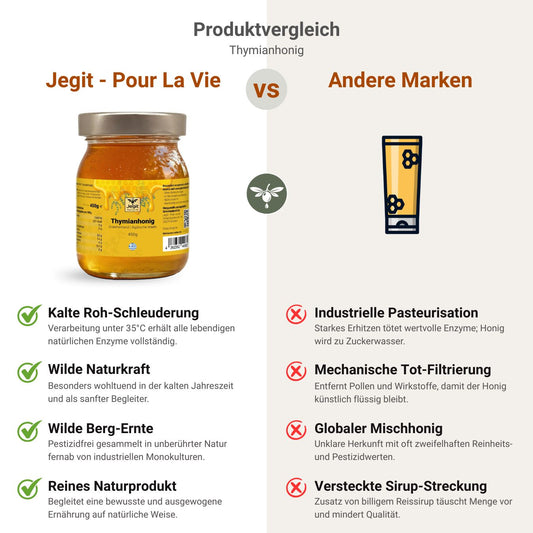
Because thyme honey is intense, you need less of it. A single tablespoon is enough to glaze a whole tray of carrots, which means the natural flavour of the vegetable still leads. Our Greek thyme honey is raw and unfiltered, so it keeps the delicate aromatics that gentle heat would otherwise dull. Add it towards the end of roasting rather than the start, and you protect both the flavour and the beautiful glossy finish.
Choosing the Right Carrots
Any carrot will roast well, but a few choices make the dish look and taste its best. Small, slender carrots roast quickly and stay sweet; larger ones can be halved lengthways so they cook evenly. If you can find carrots with the leafy tops still on, keep an inch of green stalk for a rustic, market-garden look. Bunched heritage carrots in orange, purple and yellow turn this simple side into a centrepiece.
There is no need to peel young or organic carrots. A good scrub under cold water is enough, and the skin adds a pleasant earthiness. Try to keep the pieces roughly the same size so they finish cooking at the same time. Uniformity is the quiet secret behind vegetables that roast evenly instead of turning to a mix of raw and burnt.
The Role of Good Olive Oil
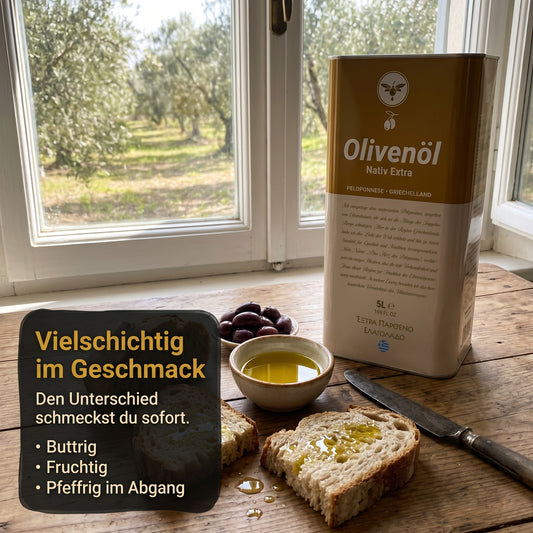
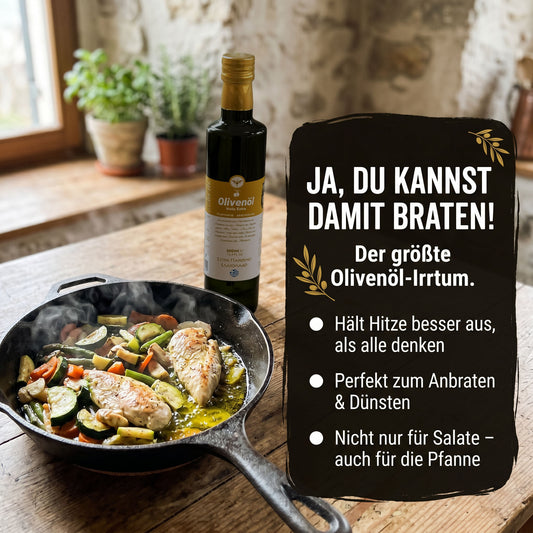
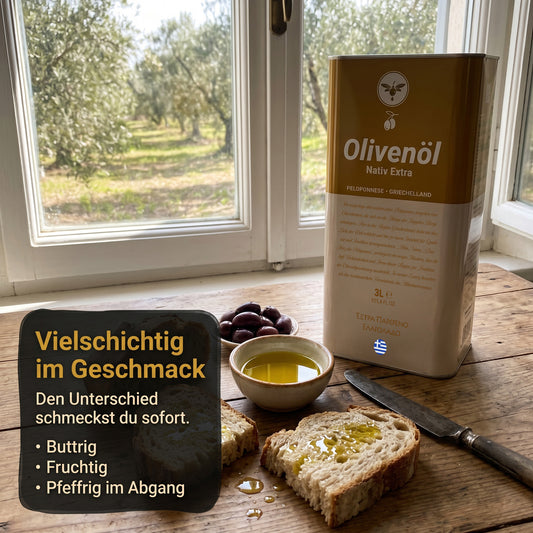
Roasting is where a good extra virgin olive oil earns its place. It carries heat, helps the edges caramelise and adds its own peppery, buttery flavour to the finished dish. A flat, refined oil will roast the carrots but give nothing back. A characterful one, like our extra virgin olive oil from the Peloponnese, adds a fruity depth that plays beautifully against the sweetness of the honey.
Use enough oil to coat every carrot with a thin, even film. Too little and they dry out; too much and they steam in a puddle rather than roast. A generous tablespoon or two for a full tray is usually right. Toss well with your hands so each piece glistens before it goes into the oven.
Ingredients
Serves four as a side dish.
- 800 g carrots, scrubbed and trimmed (halved lengthways if large)
- 2 tablespoons extra virgin olive oil
- 1 tablespoon Greek thyme honey
- 3 to 4 sprigs of fresh thyme (plus extra to finish)
- 1 clove of garlic, lightly crushed (optional)
- ½ teaspoon sea salt
- Freshly ground black pepper
- A squeeze of lemon juice, to finish
Method
- Heat the oven. Preheat to 200°C (fan 180°C). A hot oven is essential for caramelised edges rather than soft, steamed carrots.
- Prepare the carrots. Scrub them well and trim the tops. Halve any thick carrots lengthways so every piece is a similar thickness.
- Season and toss. Spread the carrots on a large baking tray. Drizzle with the olive oil, scatter over the sea salt, black pepper, thyme sprigs and the crushed garlic if using. Toss with your hands until every carrot is coated, then spread them in a single layer with space between them.
- Roast. Roast for 20 to 25 minutes, turning once halfway through, until the carrots are tender when pierced and golden at the edges.
- Add the honey. Warm the thyme honey slightly so it pours easily, then drizzle it over the carrots. Gently toss to coat and return the tray to the oven for a final 5 minutes, until the glaze is glossy and just beginning to caramelise. Watch closely, as honey can catch quickly.
- Finish and serve. Remove from the oven, add a squeeze of lemon juice to lift the sweetness, and scatter over a little fresh thyme. Serve warm.
Ways to Serve and Vary
These carrots are endlessly adaptable. For a light lunch, tumble them over a bed of yoghurt or whipped feta and finish with extra thyme honey and a grind of pepper. For a heartier plate, serve them alongside roast chicken, grilled lamb or a Sunday roast, where their sweetness balances rich, savoury meat.
Want a little heat? Add a pinch of chilli flakes with the seasoning. Prefer something zestier? Grate a little orange zest over the finished dish. A crumble of salty cheese or a scatter of chopped fresh parsley both work well too. The honey-and-thyme base is forgiving and welcomes almost any Mediterranean flourish you throw at it. And whatever is left over is wonderful cold the next day, chopped into a grain salad with a fresh drizzle of olive oil.
Frequently Asked Questions
Can I make thyme honey roasted carrots ahead of time?
Yes. Roast the carrots up to the point of glazing, then cool and refrigerate for up to two days. When you are ready to serve, reheat them in a hot oven for a few minutes, add the thyme honey and give them a final blast so the glaze turns glossy. Adding the honey fresh keeps the finish bright rather than sticky.
Why add the honey at the end instead of the start?
Honey burns at a lower temperature than olive oil. If you add it at the beginning, the sugars can scorch and turn bitter before the carrots are cooked through. Adding raw thyme honey in the last few minutes gives you a glossy, caramelised glaze while protecting its delicate aromatic notes.
What can I use instead of fresh thyme?
Fresh rosemary or oregano both pair beautifully with carrots and honey. If you only have dried herbs, use about a third of the quantity, as they are more concentrated. The thyme honey itself already carries a gentle herbal note, so even a modest amount of fresh herb is enough to tie the dish together.
Our Product Tip
Greek Thyme Honey 400g
Raw, unfiltered wild thyme honey from Greece — the aromatic heart of this glaze.
Shop Thyme HoneySimple ingredients, treated with care, are what Mediterranean cooking does best. A tray of carrots, a good olive oil and a spoonful of real thyme honey is proof that you do not need much to eat beautifully. Make them once and they will quietly become a regular on your table. Pour La Vie.