Spaghetti Aglio e Olio: The 15-Minute Italian Classic Where the Olive Oil Is the Whole Dish

There are maybe five ingredients in a real plate of spaghetti aglio e olio, and one of them is water. That is exactly why this fifteen-minute Roman classic is the most honest test of your kitchen: with nothing to hide behind, the olive oil is not a supporting act, it is the whole dish. Get the oil right and you get a silky, garlicky, gently spicy plate of pasta that tastes like a trattoria in Naples. Get it wrong, with a flat supermarket oil, and you get greasy noodles. Pour La Vie starts with the right oil – taste our Peloponnese extra virgin here.
What is aglio e olio?
Spaghetti aglio e olio (literally “spaghetti with garlic and oil”) is the patron saint of Italian weeknight cooking. Born in Rome and Naples as a late-night, cupboard-raid dinner, it is built on thinly sliced garlic gently warmed in a generous pour of extra virgin olive oil, a pinch of chilli flakes (peperoncino), parsley, and a splash of starchy pasta water that pulls everything into a glossy sauce. No cream, no cheese required, no fuss. It is ready in the time it takes the spaghetti to cook.
Because there is nowhere to hide, this is a dish Italians are fiercely particular about. The two things that separate a memorable aglio e olio from a disappointing one are technique and, above all, the quality of your olive oil.
Why the olive oil makes or breaks this dish
In a tomato sauce, a cheap oil disappears. Here it is the sauce. Every mouthful is coated in it, so its flavour is front and centre – which means a dull, refined oil tastes exactly as dull as it is. A great extra virgin, on the other hand, brings a living, peppery, grassy character that turns three humble ingredients into something you would happily serve to guests.
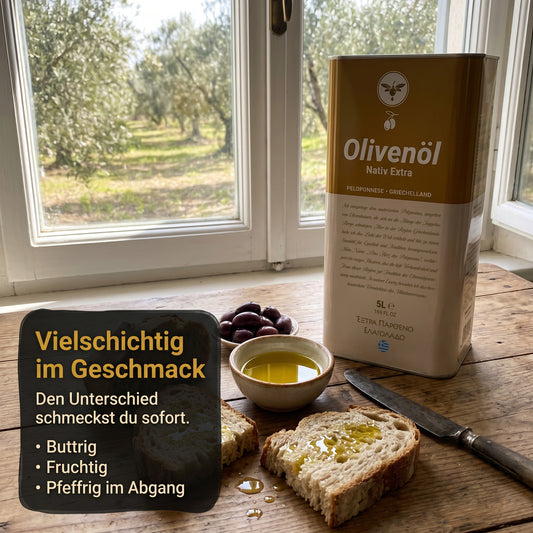
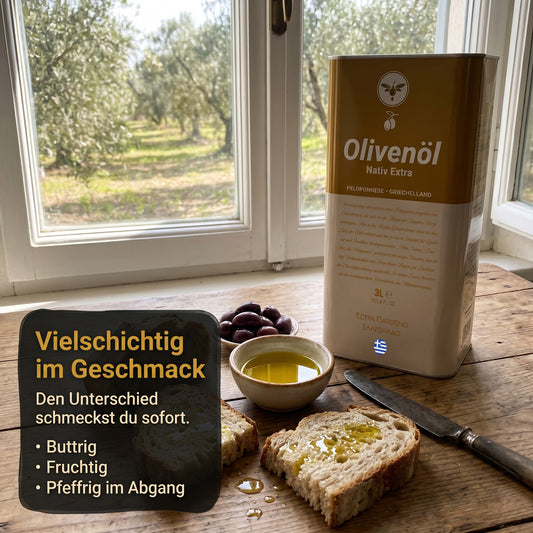
Our Extra Virgin Olive Oil from the Peloponnese is built for exactly this kind of cooking. It is hand-harvested and naturally cloudy, unfiltered, with a flavour that is genuinely spicy, buttery and peppery – the signature of an oil that is rich in polyphenols. It is laboratory-tested for low acidity and verified free of mineral-oil residues, and it stays stable in the pan up to 180°C. In a dish that is nothing but garlic, chilli and oil, that pepperiness is the difference between good and unforgettable. Taste the difference – order a bottle here.
Ingredients (serves 2)
- 200 g good-quality spaghetti (or spaghettoni)
- 6 tbsp extra virgin olive oil from the Peloponnese – the star of the dish, so use the best you have
- 4–5 cloves garlic, very thinly sliced
- ½–1 tsp dried chilli flakes (peperoncino), to taste
- A generous handful of fresh flat-leaf parsley, finely chopped
- Fine sea salt for the pasta water
- Optional: a squeeze of lemon, or a little grated Parmesan or Pecorino (purists leave the cheese out)
That short list is the whole point: when a recipe is this bare, the oil you reach for decides how it tastes. Stock your kitchen with our Peloponnese extra virgin – shop it here.
How to make spaghetti aglio e olio, step by step
- Boil the pasta. Bring a large pot of water to a rolling boil and salt it well. Add the spaghetti and cook until just shy of al dente – it will finish cooking in the sauce. Before draining, scoop out a mugful of the starchy pasta water.
- Gently warm the garlic in the oil. While the pasta cooks, pour the extra virgin olive oil into a large, cold frying pan, add the sliced garlic, and set it over low-to-medium heat. The goal is to coax the garlic to pale gold and perfume the oil – never brown or burnt, which turns it bitter. Add the chilli flakes in the last minute so they bloom without scorching.
- Build the sauce. Add a splash of the hot pasta water to the pan. As it hits the oil and you swirl the pan, the starch emulsifies the oil into a creamy, glossy sauce that clings to the strands. This is the secret – see the trick below.
- Marry pasta and sauce. Lift the spaghetti straight into the pan (a little extra water clinging to it is welcome) and toss hard for a minute over the heat, adding more pasta water a splash at a time until the sauce is silky and coats every strand.
- Finish. Off the heat, stir through the parsley and, if you like, a final raw drizzle of your best olive oil for aroma. Taste, adjust salt and chilli, and serve immediately in warm bowls.
From pot to plate in about fifteen minutes – and the only ingredient doing real work is your oil. Make it count with our Peloponnese extra virgin.
The pasta-water trick
The cloudy, starchy water you cooked the spaghetti in is liquid gold. Whisked into the warm oil, the starch acts as an emulsifier, binding oil and water into a smooth, almost creamy sauce without a drop of cream. Add it gradually and keep the pan moving; if the sauce ever looks greasy or split, another splash of pasta water and a vigorous toss will bring it back together.
Tips from a Mediterranean kitchen
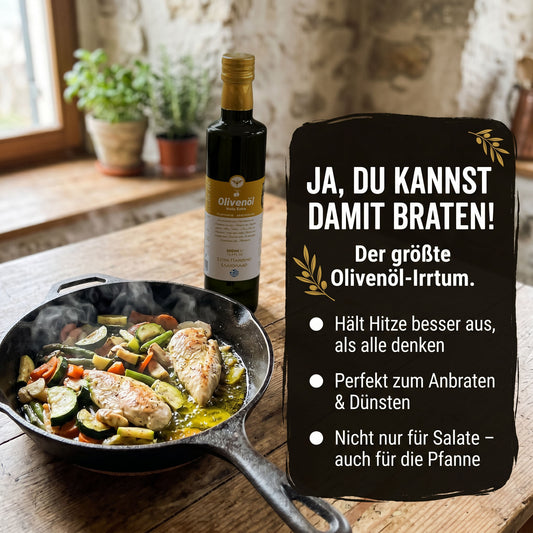
- Keep the heat gentle. Burnt garlic is the number-one way to ruin aglio e olio. Low and slow keeps both the garlic and the olive oil sweet. If you want to understand how your oil behaves on the hob, our guide to cooking and frying with extra virgin olive oil explains smoke point and heat in plain terms.
- Finish raw. A final drizzle of unheated extra virgin at the end adds a fresh, peppery lift that cooking mellows – one of many reasons to keep a great bottle within arm’s reach. For more everyday ideas, see what to use olive oil for.
- Don’t drown it. Aglio e olio should glisten, not swim. Six tablespoons for two is plenty when the oil is good.
Variations worth trying
- Aglio, olio e peperoncino: the classic with a bolder hit of chilli for those who like heat.
- With anchovies: melt one or two anchovy fillets into the oil with the garlic for a savoury, umami depth (no longer vegan, but wonderful).
- With breadcrumbs: toasted pangrattato scattered on top adds crunch – the Southern Italian “poor man’s Parmesan”.
- With seafood: if you love olive-oil-forward pasta, try our Southern Italian spaghetti with sardines, cherry tomatoes and olive oil next.
Whichever way you take it, the foundation never changes: garlic, chilli and a truly good oil. Get the foundation right – shop our extra virgin now.
Frequently asked questions
Can I use normal olive oil instead of extra virgin?
You can, but you shouldn’t. In aglio e olio the oil is the flavour, so a refined or “pure” olive oil will taste flat and greasy. A fresh, peppery extra virgin is what makes the dish sing. This is the one recipe where upgrading your oil upgrades everything.
Why did my garlic turn bitter?
It browned too fast over high heat. Start the garlic in cold oil over low-to-medium heat and take it only to pale gold. The moment it turns deep brown it goes bitter and can’t be rescued, so keep the heat gentle and your eye on the pan.
Is spaghetti aglio e olio vegan?
The classic version is – it’s just pasta, garlic, chilli, parsley and olive oil, with no cheese or egg. Leave out any optional Parmesan or anchovies and it’s a naturally vegan, naturally quick dinner.
Our product tip
Extra Virgin Olive Oil from the Peloponnese
Hand-harvested, naturally cloudy and unfiltered, lab-tested for low acidity and rich in polyphenols – the spicy, peppery oil that turns garlic and chilli into an unforgettable plate of pasta.
Shop the olive oil nowPour La Vie
Aglio e olio is proof that the simplest food is often the most demanding: with three ingredients and a pot of water, there is nothing between you and the quality of your olive oil. Choose a living, peppery extra virgin and this fifteen-minute supper becomes something you crave. That is the whole philosophy behind Jegit – real, natural products with nothing added and a story in every bottle. Bring the Peloponnese to your table and cook Pour La Vie.

Bacalhau à Lagareiro: The Portuguese Roast Cod Where the Olive Oil Is the Whole Dish
Bacalhau à lagareiro is Portugal's garlicky roast cod drenched in extra virgin olive oil with smashed potatoes. The oil makes it. Full...

Baked Camembert with Thyme Honey: The 10-Minute Festive Centrepiece Everyone Crowds Around
Molten baked camembert drizzled with Greek thyme honey: a 10-minute festive sharing dish where the honey, not the cheese, steals the show.

Patatas Bravas: The Crispy Spanish Tapas Classic Where the Olive Oil Makes or Breaks It
Crispy Spanish patatas bravas with a smoky brava sauce and quick aioli. The real secret is the olive oil, so here is...