Portuguese Garlic Prawns in Olive Oil (Gambas à Guilho): The 15-Minute Algarve Classic Where the Oil Is the Sauce

There is a moment, seconds after the prawns hit the pan, when the whole kitchen changes. The oil begins to shimmer, the garlic turns gold, a pinch of chilli crackles — and that warm, nutty, peppery smell of good olive oil fills the room. That is gambas à guilho, the Portuguese garlic prawns the Algarve orders by the dozen, and it is one of the fastest, most generous things you can put on a table. Fifteen minutes, one pan, and a loaf of bread to catch every last drop.
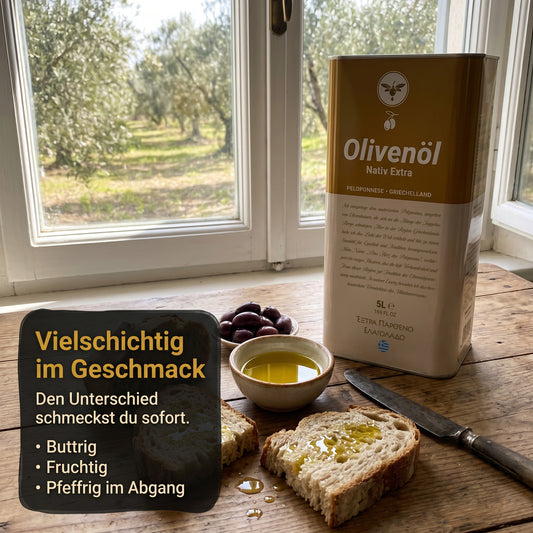
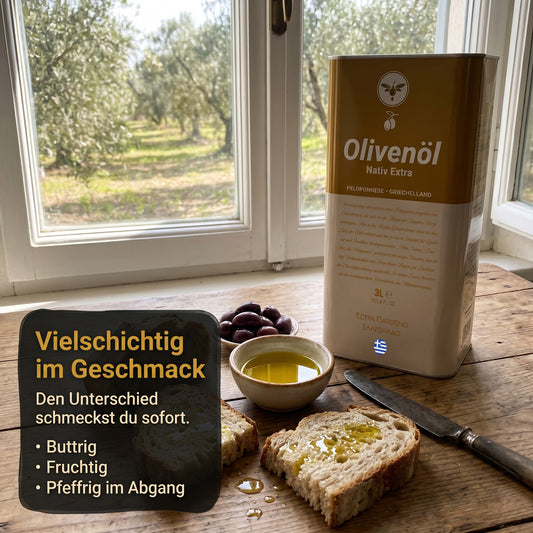
Here is the honest truth about this dish, though: it is barely a recipe at all. Prawns, garlic, chilli, parsley. It lives or dies on one ingredient — the olive oil the prawns are gently poached in. With a flat supermarket oil it tastes thin and faintly greasy. With a real, peppery extra virgin olive oil it tastes like a seaside holiday. If you want to taste that difference tonight, start with our hand-harvested Peloponnese olive oil and build the dish around it.
Why the olive oil is the whole dish
In most recipes olive oil is a background player — the fat you fry in and forget. In gambas à guilho it is the sauce. You use a generous pour, you warm it slowly so it takes on the garlic and chilli, and what is left in the pan when the prawns are gone is the best part: a golden, garlicky, peppery oil you mop up with bread. That is exactly why the oil you choose matters more here than in almost any other dish.
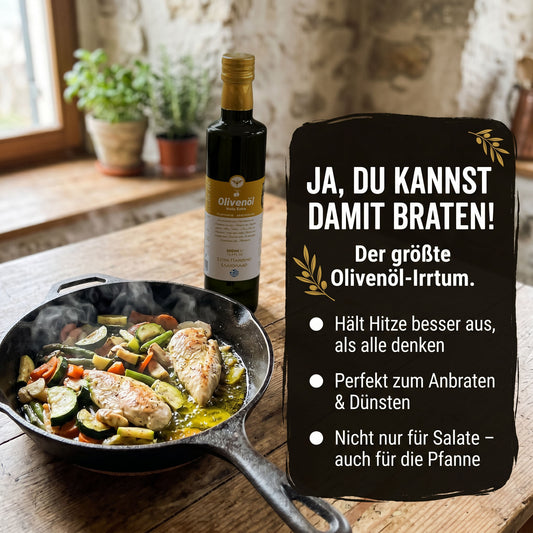
A cheap refined oil has had its character stripped out, so it brings nothing but grease. Our extra virgin olive oil from the Peloponnese does the opposite. It is traditionally hand-harvested and extracted by cold mechanical pressing, it is naturally cloudy and unfiltered, and it is lab-certified for low acidity and a high polyphenol content — which is where that signature spicy, buttery, peppery kick comes from. It is also heat-stable up to 180°C, so it carries the dish from a warm pan to the plate without losing its backbone. The difference between good and unforgettable really is in the oil.
What you’ll need (serves 4 as a starter, 2 as a main)
Everything here is a store-cupboard or fishmonger staple, with one exception you should not compromise on — the oil.
- 600 g raw king prawns, peeled and deveined (tails on for looks)
- 120 ml extra virgin olive oil from the Peloponnese — yes, a generous pour; it is the sauce
- 6 garlic cloves, thinly sliced
- 1–2 dried red chillies, crumbled (or ½ tsp chilli flakes)
- 1 tsp sweet or smoked paprika (the Portuguese piri-piri touch)
- Juice of ½ lemon
- A small handful of flat-leaf parsley, roughly chopped
- Flaky sea salt
- A crusty loaf, to serve — non-negotiable
Because the prawns barely cook and the garlic never browns hard, there is nowhere for a dull oil to hide. This is the dish to open your best bottle for — grab the Peloponnese olive oil here and you are already most of the way to dinner.
How to make Portuguese garlic prawns
- Dry and season the prawns. Pat them very dry with kitchen paper and season with a little flaky salt. Dry prawns sear and stay plump instead of stewing.
- Infuse the oil. Pour the olive oil into a cold, wide pan or a cazuela, add the sliced garlic and crumbled chilli, and set over medium-low heat. Let it come up slowly — you want the garlic to turn pale gold and perfume the oil, never to brown and turn bitter. This gentle warming is where the whole flavour of the dish is built.
- Add the prawns. Turn the heat up to medium, slide the prawns in in a single layer, and cook for about 1½–2 minutes on each side, just until they turn pink and opaque. They will keep cooking in the residual heat, so stop early rather than late.
- Finish off the heat. Take the pan off the heat, stir in the paprika, squeeze over the lemon, and shower with parsley. Swirl everything together so the oil goes glossy and orange.
- Serve at once. Bring the whole pan to the table while it is still sizzling, with plenty of bread for the oil at the bottom — that is the real prize.
Tips for the best gambas
Keep the heat moderate: this is poaching in oil, not deep-frying, so the garlic stays sweet. Do not overcrowd the pan, or the prawns steam instead of searing — use two batches if your pan is small. And do not drain the oil away at the end; it is the point of the whole dish. A good oil here is an investment that pays off in every mouthful, which is exactly why we would reach for our peppery Peloponnese extra virgin and nothing flatter.
Make it a Mediterranean feast
Gambas à guilho is built to share. Set it in the middle of the table as part of a spread — a plate of olives, some cured meats, a tomato salad dressed with the same olive oil, and that essential bread. It turns a Tuesday into something that feels like the Algarve, and it is impressive enough to open a dinner party. Whatever you build around it, let the oil be the thread that ties it together.
Our product tip
Extra Virgin Olive Oil 500ml from the Peloponnese
Hand-harvested, naturally cloudy and unfiltered, lab-certified for low acidity and a high polyphenol content — and heat-stable up to 180°C, so it carries this dish from pan to plate without losing its peppery backbone.
Shop the Peloponnese olive oilFrequently asked questions
Can I use frozen prawns?
Absolutely — most “fresh” prawns were frozen anyway. Defrost them fully in the fridge, then pat them very dry before cooking, because any water will drop the oil temperature and stew them. Raw (grey) prawns are better than pre-cooked ones, which turn rubbery when reheated.
Which olive oil is best for gambas à guilho?
An extra virgin olive oil with real character, because here the oil is tasted, not hidden. You want one that is fresh, fruity and peppery rather than flat. Our Peloponnese extra virgin is ideal: low in acidity, rich in polyphenols for that signature kick, and heat-stable up to 180°C, so it holds up beautifully to a warm pan.
Is it a problem that the prawns cook in so much oil?
Not at all — the prawns are gently poached, not deep-fried, so they absorb far less than you would think, and the rest becomes the sauce you scoop up with bread. Extra virgin olive oil is rich in monounsaturated fats, which is part of why this simple dish feels so satisfying.
Fifteen minutes, one pan, and an oil worth tasting — that is the whole secret of great gambas. Pour generously, serve it sizzling, and let the Peloponnese do the talking. Secure your bottle of extra virgin olive oil here and cook it tonight. Pour La Vie.

Sicilian Swordfish alla Ghiotta: The 30-Minute Olive Oil Braise Where the Oil and Green Olives Carry the Whole Dish
Sicilian swordfish alla ghiotta: swordfish steaks braised in extra virgin olive oil with green olives, capers and tomato. A 30-minute Mediterranean main.

Danish Honey-Mustard Chicken Traybake (Honningssennep): The 45-Minute Nordic Dinner Where the Thyme Honey Makes the Glaze
A Danish honey-mustard chicken traybake ready in 45 minutes - juicy thighs, roasted roots and a sticky glaze made with raw Greek...

Greek Beef Youvetsi: The Slow-Baked Orzo Main Course Where the Olive Oil Carries the Whole Dish
Greek beef youvetsi: fork-tender beef and orzo slow-baked in a cinnamon-tomato sauce, built on hand-harvested Peloponnese extra virgin olive oil.