Moroccan Lamb Tagine with Green Olives and Preserved Lemon: The Slow-Braised Sunday Dish Where the Olive Oil Carries the Sauce

Some dishes are about the meat. This one is about the sauce — and the sauce is built on olive oil. A Moroccan lamb tagine with green olives and preserved lemon is one of those slow, forgiving dishes where the lamb falls apart into a glossy, golden, gently spiced broth. But here is the part most recipes gloss over: the depth of that sauce comes from the fat you braise in. Use a flat supermarket oil and the whole pot tastes thin. Start with a real extra virgin olive oil and every spoonful turns savoury, rounded and unforgettable. Pour in our Extra Virgin Olive Oil from the Peloponnese and you will taste the difference from the very first bite.
This is a weekend dish in the best sense: fifteen minutes of real work, then the oven does the rest while your kitchen fills with cinnamon, cumin and slow-cooked lamb. It is generous, forgiving and built for sharing — exactly the kind of warming, golden plate you want as the evenings draw in.
Why Olive Oil Is the Heart of This Tagine
A tagine has no cream, no butter and very little liquid beyond stock. That means the olive oil is not a background ingredient — it is the body of the sauce, the thing that carries every spice and coats every piece of lamb. This is exactly why a cheap, over-refined oil lets the dish down: there is nowhere for a flat flavour to hide.
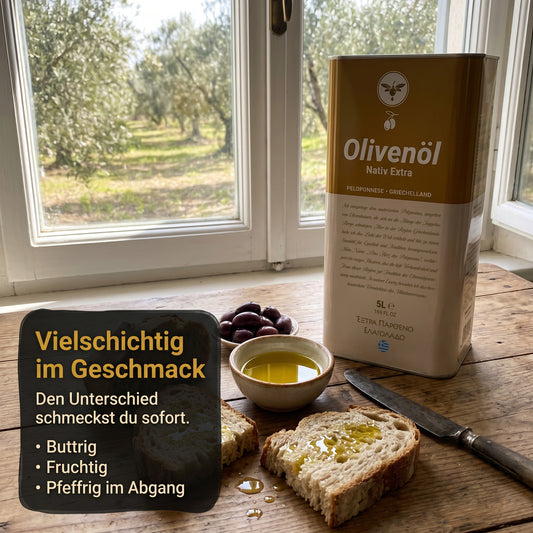
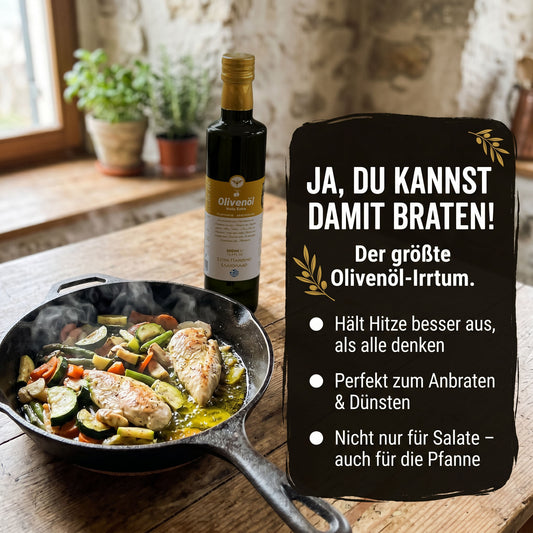
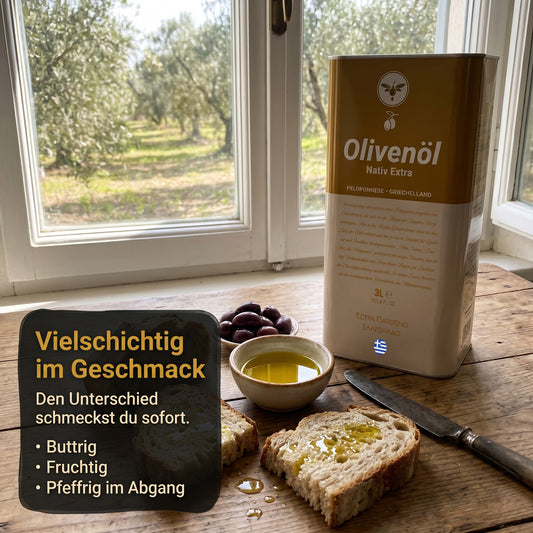
Our Peloponnese extra virgin olive oil is built for this job. It is traditionally hand-harvested and extracted purely by cold mechanical means, then lab-tested: low in acidity, rich in polyphenols and with no mineral-oil residues detected. Naturally cloudy and unfiltered, it keeps the full, peppery, buttery character of the olive — and because it stays heat-stable up to 180°C without forming trans fats, it is just as happy searing the lamb as it is finishing the dish. In short: it browns, it braises and it shines, all from one bottle. Secure your bottle here before you start cooking.
Ingredients (Serves 4)
For the lamb and spice base:
- 800 g lamb shoulder, cut into large 4–5 cm chunks
- 4 tbsp Jegit Extra Virgin Olive Oil from the Peloponnese
- 2 onions, finely sliced
- 4 garlic cloves, crushed
- 1 tbsp grated fresh ginger
- 1 tsp ground cumin
- 1 tsp ground coriander
- 1 tsp sweet paprika
- 1 tsp ground turmeric
- 1 cinnamon stick
- A pinch of saffron threads (optional)
- 400 ml lamb or chicken stock
- Sea salt and freshly ground black pepper
To finish:
- 150 g Greek green olives, whole or lightly cracked
- 1 preserved lemon, skin only, finely sliced
- A large handful of fresh coriander and flat-leaf parsley, chopped
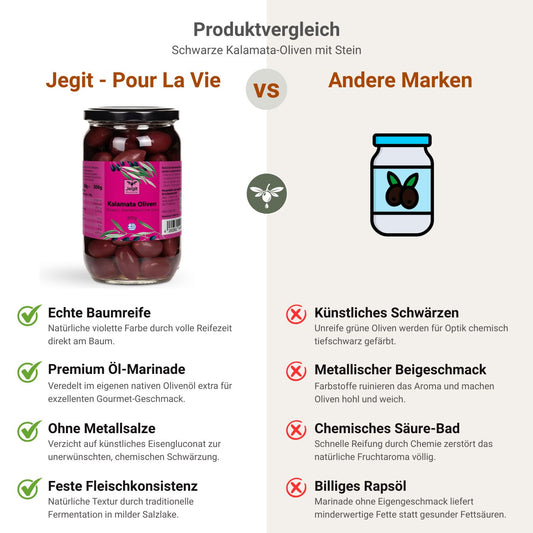
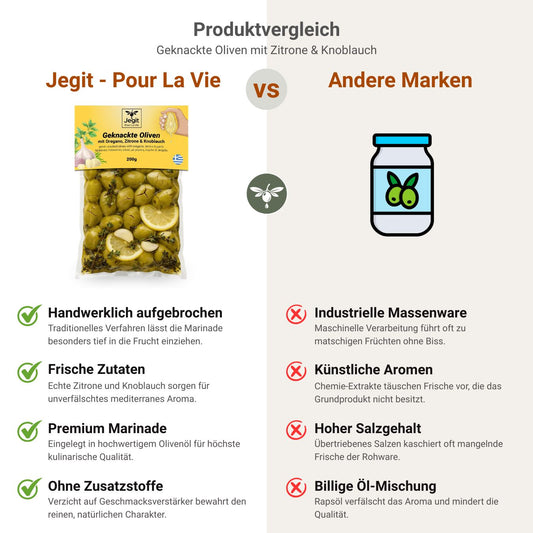
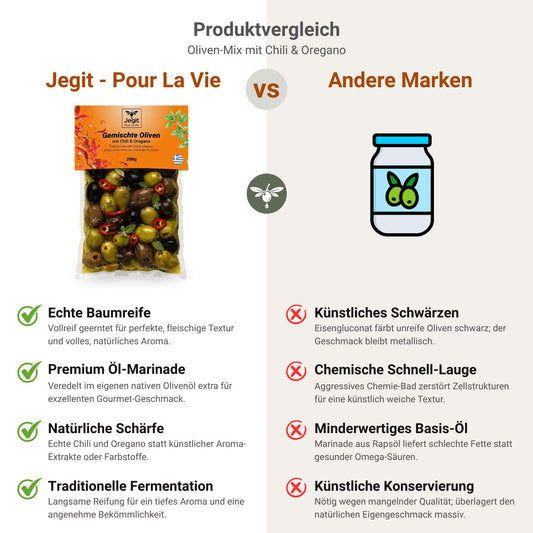
A quick word on the two ingredients that make or break this dish. The olives should taste of the Mediterranean, not of the brine tin — our Greek green olives, marinated in extra virgin olive oil with paprika and oregano, melt into the sauce and leave it savoury and bright. And the olive oil, as above, is the engine of the whole pot. Stock up on both now and the rest is easy.
How to Make Moroccan Lamb Tagine, Step by Step
- Brown the lamb. Heat 2 tablespoons of the olive oil in a heavy casserole or tagine over medium-high heat. Pat the lamb dry, season well and sear in batches until deeply browned on all sides. Don’t crowd the pan — this colour is the first layer of flavour. Set the lamb aside.
- Soften the onions. Lower the heat, add the remaining 2 tablespoons of olive oil and the sliced onions. Cook gently for 8–10 minutes until soft and golden, scraping up the browned bits from the bottom of the pan.
- Bloom the spices. Stir in the garlic, ginger, cumin, coriander, paprika, turmeric, cinnamon stick and saffron. Cook for 1–2 minutes until fragrant — the olive oil carries the spices and keeps them from catching.
- Braise low and slow. Return the lamb and its juices to the pan, pour in the stock and bring to a gentle simmer. Cover and cook on the lowest heat (or in a 160°C oven) for 2 to 2½ hours, until the lamb is meltingly tender.
- Add the olives and lemon. Stir in the green olives and the sliced preserved lemon. Uncover and simmer for a final 15–20 minutes so the sauce reduces and turns glossy.
- Finish and serve. Taste for salt, scatter over the coriander and parsley, and — the Moroccan touch — add one last drizzle of raw olive oil over the top just before serving. That final peppery hit is where a good tagine becomes a great one.
Chef’s Tips for the Best Tagine
Go low and slow. Lamb shoulder needs time; rush it and the meat stays tight. Keep the heat gentle and let the collagen do its work.
Don’t skip the final drizzle. Cooking mellows olive oil; a raw spoonful at the end brings back the fresh, peppery aroma. This is the single easiest way to lift the dish — and the reason it pays to use an oil you actually love.
Make it ahead. Like most braises, this tagine is even better the next day, once the olives and spices have settled into the sauce. It reheats beautifully for an easy second dinner.
What to Serve With It
Fluffy couscous or warm flatbread is non-negotiable — you will want something to soak up that golden sauce. A simple salad of tomatoes and red onion dressed with the same extra virgin olive oil keeps the plate bright, and a bowl of extra green olives on the table never goes amiss.
Frequently Asked Questions
Can I make this tagine with chicken instead of lamb?
Yes. Use bone-in chicken thighs and reduce the braising time to about 45 minutes. The olives, preserved lemon and olive oil stay exactly the same — chicken with olives and preserved lemon is a Moroccan classic in its own right.
Do I need a tagine pot?
Not at all. A heavy, lidded casserole or Dutch oven works just as well. The clay tagine is lovely for serving, but the magic is in the slow braise and the quality of your olive oil, not the pot.
Which olive oil is best for a tagine?
A robust extra virgin olive oil that can both sear and finish the dish. Our Peloponnese extra virgin olive oil is heat-stable to 180°C, low in acidity and rich in polyphenols, so one bottle handles the browning, the braising and that all-important final drizzle.
Our Product Tip
Extra Virgin Olive Oil from the Peloponnese
Hand-harvested, naturally cloudy and lab-tested — low in acidity, rich in polyphenols and heat-stable to 180°C. The oil that carries the whole sauce.
Taste the difference — order nowGreat cooking is never about complicated technique — it is about starting with ingredients that have something to say. A slow-braised lamb tagine proves it: the spices, the olives and the preserved lemon all sing, but it is the olive oil underneath them that ties the dish together. Cook it once with a real extra virgin oil and you will never go back. Order your Peloponnese olive oil today and bring the warmth of the Mediterranean to your table. Pour La Vie.

Greek Olive Oil Cake with Orange and Thyme Honey Syrup: The Moist, Golden Bake Where the Oil Is the Star
A moist, golden Greek olive oil cake with orange and a thyme honey syrup — the easy one-bowl bake where a great...

Pomelo & Feta Winter Salad with a Thyme Honey Dressing: The Bright 15-Minute Plate Everyone Wants Right Now
A bright 15-minute winter salad of pomelo, feta and fennel — where a real Greek thyme honey dressing is what turns a...

Portuguese Garlic Prawns in Olive Oil (Gambas à Guilho): The 15-Minute Algarve Classic Where the Oil Is the Sauce
Portuguese garlic prawns (gambas à guilho) in 15 minutes: plump prawns poached in peppery extra virgin olive oil with garlic and chilli....