Mediterranean Garlic Aioli with Olive Oil (Plus an Easy Vegan Version)
There is a moment in Mediterranean cooking when a handful of humble ingredients — garlic, salt and a good extra virgin olive oil — turn into something far greater than the sum of their parts. Aioli is exactly that moment: a glossy, garlicky emulsion that lifts grilled vegetables, crisp roast potatoes, warm bread or a simple piece of fish. Made well, with real olive oil rather than a flavourless bottle from the back of the cupboard, it tastes of sunshine and the sea.
In this guide you will learn what aioli actually is, why olive oil is the ingredient that matters most, and three reliable ways to make it at home: the classic egg-yolk emulsion, the traditional egg-free mortar method, and an easy vegan version made with aquafaba. We will also cover how to rescue a split aioli, because it happens to everyone eventually.
What is aioli, really?
The name says it all. In the old languages of the Mediterranean coast, ai means garlic and oli means oil. In its purest, oldest form, aioli is precisely that: raw garlic pounded to a paste and emulsified with olive oil until it turns thick, pale and creamy — no eggs at all. This is the version you still find in parts of Provence and along the Spanish and Catalan coast, where it is often called allioli.
Over time, cooks discovered that an egg yolk makes the emulsion far more stable and forgiving, and the line between aioli and garlic mayonnaise began to blur. Today most home cooks make an egg-yolk aioli, which is what many people picture: a garlicky, spoonable sauce somewhere between mayonnaise and pure magic. Both versions are wonderful. The one thing they share is that the flavour lives or dies by the olive oil.
Why olive oil is the heart of a good aioli
Because aioli has so few ingredients, each one is exposed. The garlic brings heat, the salt brings balance, the acid brings brightness — but the oil is the body of the sauce, and it is most of what you taste. A dull, refined oil gives you a dull, greasy aioli. A fresh, fruity extra virgin olive oil gives you depth, a peppery finish and that unmistakable Mediterranean character.
There is one thing worth knowing. Extra virgin olive oil is rich in natural polyphenols, and when you whizz it at high speed in a blender or food processor, those compounds can be knocked about and the oil can turn noticeably bitter and almost gluey. This is not a fault in the oil — it is simply chemistry. The traditional fix is to work more gently: whisk by hand, use a mortar and pestle, or add the olive oil in a slow stream at the end rather than blitzing it all at once. If you prefer a milder result, you can also build the emulsion with a neutral oil and finish with a generous glug of extra virgin olive oil stirred in by hand, so its flavour stays clean and fresh.
Ingredients
This makes a small bowl, enough for four to six people as a dip or sauce.
- 3 to 4 fat garlic cloves, peeled
- 1/2 teaspoon fine sea salt, plus more to taste
- 2 fresh egg yolks, at room temperature (for the classic method)
- 200 ml extra virgin olive oil, ideally a fresh, fruity one — or 100 ml neutral oil plus 100 ml olive oil for a milder sauce
- 1 to 2 teaspoons lemon juice, to taste
- 1 teaspoon cold water, if needed to loosen
Of these, only the olive oil is a store-cupboard product worth buying well — the rest you almost certainly have already. A mortar and pestle is the traditional tool, though a bowl and whisk work perfectly.
How to make garlic aioli, step by step
The classic egg-yolk method
- Crush the garlic with the salt to a smooth paste — either in a mortar or by mashing it against a board with the flat of a knife. The salt acts as an abrasive and tames the raw bite.
- Scrape the garlic paste into a bowl and add the egg yolks. Whisk for a few seconds until slightly thickened and evenly combined.
- Now add the olive oil very slowly. Start literally drop by drop, whisking constantly, until the mixture begins to thicken and hold. Once it looks like a loose mayonnaise, you can add the oil in a thin, steady stream, still whisking.
- When all the oil is in and the aioli is thick and glossy, whisk in the lemon juice. Taste, then adjust with more salt or lemon. If it is too stiff, loosen with a teaspoon of cold water.
- Cover and rest in the fridge for at least 20 minutes before serving so the garlic mellows and the flavours settle.
The mortar method (egg-free, Provençal style)
- Pound the garlic and salt in a mortar until you have a wet, silky paste with no lumps. Patience here is everything.
- Add the olive oil a few drops at a time, grinding and stirring the pestle in one direction, letting each addition disappear before adding more.
- Keep going, increasing to a thin trickle, until you have a thick, pale emulsion. This version is more delicate than the egg one, so go slowly and keep the oil moving. Finish with a little lemon juice and salt to taste.
An easy vegan aioli
You can make a beautifully creamy egg-free aioli using aquafaba — the liquid from a tin of chickpeas — which whips and emulsifies much like egg white.
- Crush 3 garlic cloves with 1/2 teaspoon salt to a paste.
- In a tall jug, combine 3 tablespoons aquafaba, the garlic paste, 1 teaspoon lemon juice and 1 teaspoon Dijon mustard (the mustard helps the emulsion).
- Using a hand blender, blitz briefly, then add 200 ml oil in a slow stream with the blender running. To keep extra virgin olive oil from turning bitter, build the base with a neutral oil and stir a good spoonful of extra virgin olive oil through at the end by hand.
- Season, chill and serve.
How to serve aioli
Aioli belongs anywhere you want richness and garlic at once. Serve it as a dip for warm bread, crudités or crisp roast potatoes. Spoon it over grilled or roasted vegetables — courgettes, peppers, asparagus, artichokes. It is classic alongside fish and seafood, and it turns a simple burger, sandwich or bowl of fries into something memorable. A small bowl of aioli on a mezze table, next to olives and good bread, is one of the easiest ways to bring the Mediterranean to your kitchen.
Tips and troubleshooting
My aioli split — can I save it? Almost always, yes. A split (broken) aioli usually means the oil went in too fast. Put a fresh egg yolk (or 1 tablespoon of aquafaba) in a clean bowl, then very slowly whisk the broken mixture into it, drop by drop, as if starting again. It will come back together.
Too garlicky? Raw garlic mellows in the fridge over a few hours, so make it ahead. You can also blanch the peeled cloves in boiling water for a minute first for a gentler flavour.
Keeping it: Because it contains raw garlic and, in the classic version, raw egg, store aioli covered in the fridge and use it within two to three days.
Frequently asked questions
What is the difference between aioli and mayonnaise?
Traditional aioli is garlic emulsified with olive oil and, in its oldest form, contains no egg at all. Mayonnaise is an egg-yolk emulsion usually made with neutral oil and no garlic. The egg-yolk aioli most of us make today sits between the two: a garlic-forward sauce built on the character of good olive oil.
Can I make aioli with only extra virgin olive oil?
Yes, and it is the most authentic choice. Just work gently — by hand or in a mortar rather than a high-speed blender — so the oil stays fruity rather than turning bitter. If you prefer a milder sauce, use part neutral oil and finish with extra virgin olive oil stirred in at the end.
Why did my aioli turn out bitter?
Bitterness almost always comes from blitzing extra virgin olive oil too hard in a food processor or blender, which breaks up its natural polyphenols. Switch to a whisk or mortar, or fold the olive oil in gently at the end, and the bitterness disappears.
Our product tip
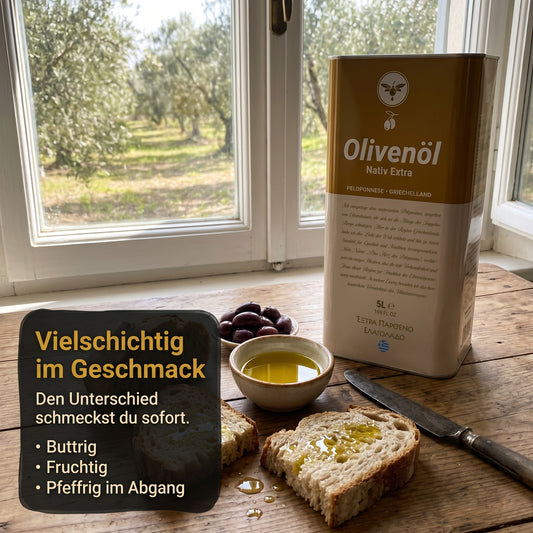
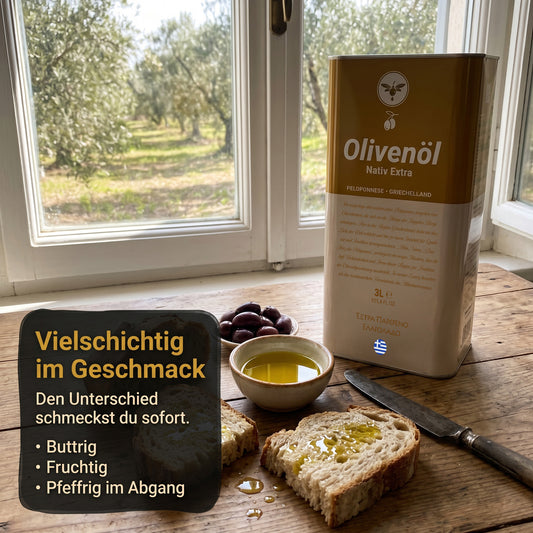
Premium Olive Oil 3L from Peloponnese
Cold-extracted, unfiltered extra virgin olive oil with a fruity, peppery character — the perfect base for a silky, authentic aioli.
Shop the olive oilGreat aioli is proof that simple food, made with honest ingredients, is the most satisfying of all. Start with a fresh, fruity olive oil, take your time with the emulsion, and let the garlic mellow before serving. That is the whole secret — natural, unhurried, and full of flavour. Pour La Vie.