Ladenia: The Greek Olive Oil Flatbread from Kimolos (Easy Recipe)
If you have ever stood in a bakery on a Greek island and torn into a warm slab of tomato-and-onion flatbread glistening with olive oil, you have already met ladenia. Often described as the Greek answer to pizza, ladenia comes from the Cycladic islands of Kimolos and Milos, where cooks have made it for generations with almost nothing more than flour, ripe tomatoes, onions and a generous pour of good olive oil. There is no cheese and no meat — just honest ingredients and the flavour of the Mediterranean.
This ladenia recipe keeps things traditional and forgiving. The dough needs no special skill, the topping is chopped in minutes, and the oven does the rest. What makes it sing is the olive oil, so this is a dish worth using your best bottle for. Below you will find everything you need: the story, the ingredients, a step-by-step method, and answers to the questions people ask most.
What Is Ladenia?
The name says it all. Ladi is the Greek word for oil, and ladenia (λαδένια) means, roughly, “the oily one” — a nod to the olive oil that soaks the base and crisps the edges. It is a yeasted flatbread, thicker and softer than a pizza but thinner than a focaccia, baked until the underside turns golden and the tomatoes collapse into a sweet, jammy topping.
Food historians often point to ladenia as one of the oldest ancestors of pizza in the Mediterranean, a rustic bread that fed fishermen and farmers long before mozzarella arrived. On Kimolos it is still sold by the piece, wrapped in paper, and eaten warm with your hands. It is naturally vegan, budget-friendly and endlessly adaptable — which is exactly why it has travelled so far beyond its island home.
Why Olive Oil Is the Heart of Ladenia
In a dish with so few ingredients, quality is everything, and nothing matters more than the oil. Because ladenia uses olive oil both in the dough and poured generously over the base, its flavour defines the whole bread. A flat, tired oil gives a flat, tired result; a vivid, peppery one gives you that unmistakable Greek aroma the moment the tray comes out of the oven.
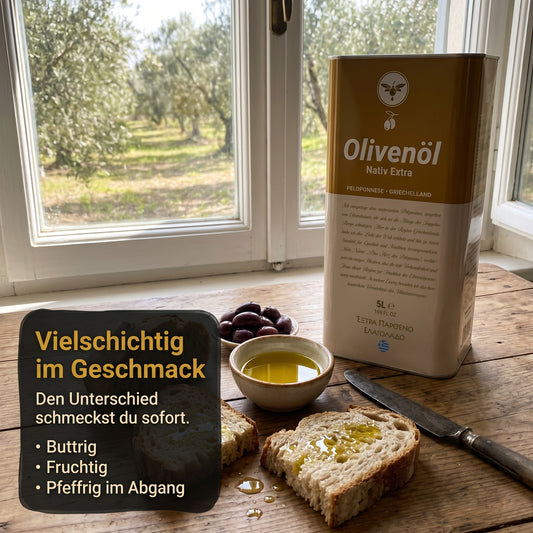
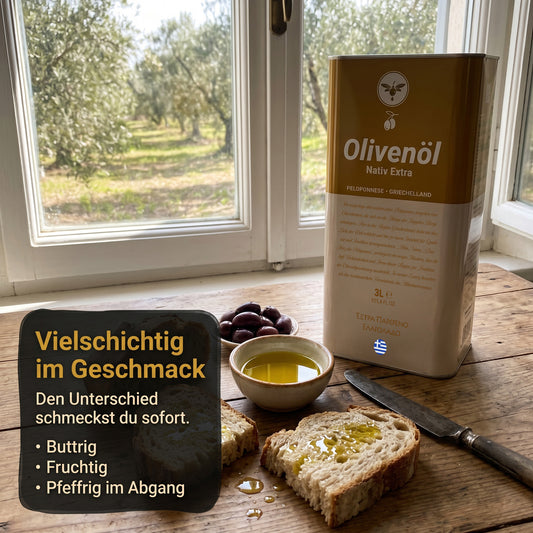
We make ours with extra virgin olive oil from the Peloponnese, hand-harvested, naturally cloudy and pressed to keep its polyphenols and its bold, buttery, peppery character. It holds up beautifully to the heat of the oven — extra virgin olive oil is far more heat-stable than most people believe — and its fruitiness is what turns simple flour and tomato into something you will make again and again.
Ingredients
Makes one large tray (roughly 30 x 40 cm), enough for 6 generous pieces.
For the dough
- 500 g plain (all-purpose) flour
- 7 g dried yeast (1 sachet)
- 1 teaspoon sugar
- 1 teaspoon fine sea salt
- Around 320 ml lukewarm water
- 4 tablespoons extra virgin olive oil, plus more for the tray
For the topping
- 5–6 ripe tomatoes, thinly sliced (or halved cherry tomatoes)
- 2 medium red onions, thinly sliced
- 1–2 teaspoons dried oregano
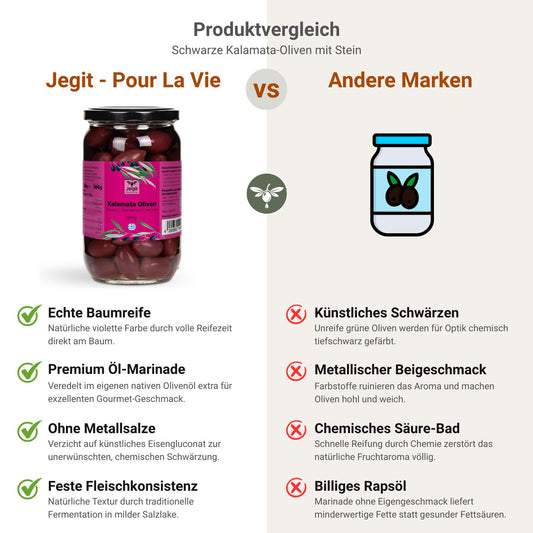
- A handful of Kalamata olives (optional, but very traditional)
- Sea salt and freshly ground pepper
- A final, generous drizzle of olive oil
How to Make Ladenia (Step by Step)
- Wake up the yeast. Stir the yeast and sugar into the lukewarm water and leave for 5–10 minutes, until it turns frothy. This tells you the yeast is alive and ready.
- Make the dough. Put the flour and salt in a large bowl and make a well in the centre. Pour in the yeast mixture and the olive oil, then bring everything together with your hands until you have a soft, slightly sticky dough. Knead on a lightly floured surface for 5–7 minutes until smooth and elastic.
- Let it rise. Shape the dough into a ball, place it in an oiled bowl, cover with a clean tea towel and leave somewhere warm for about 1 hour, or until doubled in size.
- Prepare the topping. While the dough rises, slice the tomatoes and onions thinly. If your tomatoes are very juicy, let the slices drain on kitchen paper for a few minutes so the base does not turn soggy.
- Shape the base. Pour a good few tablespoons of olive oil into your baking tray and spread it across the base and sides. Tip the risen dough onto the tray and press it out with oiled fingertips until it reaches the edges. Do not worry about a perfect rectangle — rustic is the point.
- Build the ladenia. Scatter the onions over the dough first, then lay the tomato slices on top. Season with salt, pepper and oregano, dot with Kalamata olives, and finish with a generous drizzle of olive oil over the whole surface.
- Bake. Bake in an oven preheated to 200°C (fan 180°C) for 30–40 minutes, until the edges are deep golden and the underside is crisp. Lift a corner with a spatula to check the base has colour.
- Rest and serve. Let the ladenia cool for at least 10 minutes so the base firms up. It is traditionally eaten warm or at room temperature, never piping hot — the flavours are rounder once it settles.
Tips for the Best Ladenia
Use ripe, in-season tomatoes; their sweetness is what balances the sharp onion. Slice everything thinly so it cooks in the same time as the base. If you like a softer, breadier ladenia, let the shaped dough rest on the tray for another 20 minutes before topping. And do not be shy with the oil — the “ladi” in ladenia is not a suggestion, it is the whole idea.
How to Serve Ladenia
On the islands, ladenia is a meal in itself, cut into squares and eaten out of hand. It also makes a wonderful part of a mezze spread alongside a crisp Greek salad, a bowl of olives and a cold glass of white wine. Leftovers keep well for a day and are delicious cold in a lunchbox, or briefly reheated so the base crisps up again. Any ladenia you cannot finish is the perfect excuse to make a quick tomato-and-olive salad with the same olive oil the next day.
Frequently Asked Questions
Is ladenia the same as pizza?
Not quite. Ladenia is older, has no cheese, and relies on olive oil rather than a rich sauce. The base is softer and more bread-like, and the topping is simply tomatoes, onions, herbs and oil. Think of it as a rustic, vegan cousin of pizza.
Can I make ladenia ahead of time?
Yes. It is one of the few flatbreads that tastes just as good at room temperature, so you can bake it a few hours before serving. You can also prepare the dough the night before and leave it to rise slowly in the fridge, which deepens the flavour.
Which olive oil should I use for ladenia?
A fruity, robust extra virgin olive oil is ideal, because its flavour carries the whole dish. A Peloponnese extra virgin like ours brings peppery, buttery notes and enough body to survive the oven without losing character.
Our product tip
Extra Virgin Olive Oil from the Peloponnese (500 ml)
Hand-harvested, naturally cloudy and boldly peppery — the olive oil that gives ladenia its soul.
Shop the olive oilLadenia is proof that the simplest food is often the most memorable: good flour, ripe tomatoes, sweet onions and, above all, real olive oil. Make it once and it will earn a permanent place in your kitchen. Bake it, share it warm, and taste the Mediterranean the way the islanders do — Pour La Vie.