Italian Lemon & Olive Oil Cake (Torta all'Olio d'Oliva)
Cut into a proper Italian torta all'olio d'oliva and the crumb glistens. It is impossibly moist, it keeps beautifully for days, and it carries a fruity, almost peppery warmth that no butter cake can imitate. Here is the secret most recipes hide in the footnotes: in an olive oil cake the oil is not a stand-in for butter — it is the flavour. Use a flat, tired supermarket oil and you bake a flat, tired cake. Use a living, cold-pressed extra virgin olive oil and you bake something people remember.
This Italian lemon and olive oil cake takes about fifteen minutes to bring together. No mixer, no creaming, no fuss. It is the cake to make when you want to taste exactly what a real oil does, so start with the right one: reach for our Peloponnese extra virgin olive oil and you are already most of the way to a cake worth baking on repeat.
Why olive oil beats butter in a cake
Butter is a solid fat that sets hard in the fridge, which is why butter cakes turn dense and dry by day two. Olive oil stays liquid at room temperature, so it coats the flour differently and locks moisture into the crumb. The result is a cake that is tender on the day you bake it and arguably even better the next morning with coffee.
But moisture is only half the story. A good extra virgin olive oil brings its own taste — grassy, buttery, with a gentle peppery finish — that marries with lemon and sugar into something far more grown-up than a plain sponge. This is precisely where the quality of the oil decides the whole cake. The difference between good and unforgettable is in the bottle you pour.
The one ingredient that decides everything
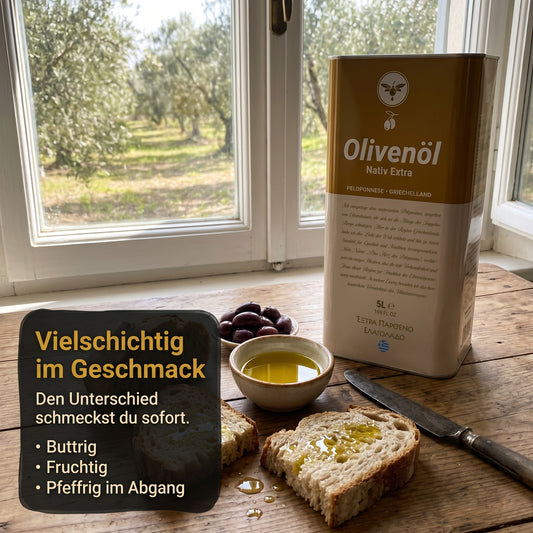
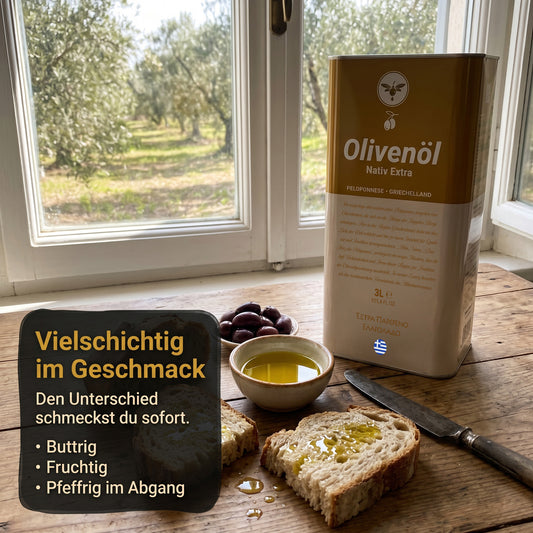
Because the oil carries the flavour, it pays to use one you would happily taste from a spoon. Our extra virgin olive oil from the Peloponnese is built for exactly this kind of recipe:
- Hand-harvested and cold mechanically extracted — never refined, never rushed
- Naturally cloudy and unfiltered, so the fruity aromatics stay in the bottle
- Lab-tested: low in acidity, rich in polyphenols and free from mineral-oil residues
- Heat-stable up to 180°C, so it behaves beautifully in a moderate oven
- A spicy, buttery, peppery flavour that actually tastes of the Mediterranean
A supermarket blend will give you a cake. This oil gives you a reason to bake again. Secure your bottle here before you preheat the oven.
Ingredients
Makes one 22–24 cm cake (serves 8–10).
- 200 ml extra virgin olive oil from the Peloponnese, plus a little for the tin
- 3 large eggs, at room temperature
- 200 g caster sugar
- 250 g plain flour
- 2 tsp baking powder
- Finely grated zest of 2 unwaxed lemons and the juice of 1
- 120 ml whole milk (or plain yoghurt for an even richer crumb)
- A pinch of fine sea salt
- Icing sugar to finish — and, if you like, a drizzle of Greek thyme honey
Method
- Heat your oven to 170°C (fan 150°C). Lightly brush a 22–24 cm round tin with olive oil and line the base with baking paper.
- In a large bowl, whisk the eggs and caster sugar for 2–3 minutes until pale and slightly foamy. This is where the cake gets its lift, so do not skip it.
- Pour in the olive oil in a steady stream while whisking, then the milk, lemon juice and zest. The batter will look glossy and loose — exactly as it should.
- Sift in the flour, baking powder and salt. Fold gently with a spatula until just combined; stop the moment you no longer see dry flour.
- Pour into the tin and bake for 40–45 minutes, until golden and a skewer comes out clean. If the top colours too fast, lay a loose sheet of foil over it.
- Cool in the tin for 10 minutes, then turn out onto a rack. Dust with icing sugar once cool — or brush the warm cake with a thin glaze of lemon juice and thyme honey for a glossy, fragrant finish.
Tips, swaps and how to serve
Swap half the lemon for orange zest and juice in winter, or add a spoon of fennel seeds for a Tuscan twist. For a dairy-free crumb, use plant milk — the olive oil keeps it moist regardless. Serve it plain with espresso, or with a spoonful of thick yoghurt and extra thyme honey for a dessert that feels far more generous than the effort it took.
One quiet tip from Mediterranean kitchens: finish each slice with a few drops of the same olive oil you baked with. It sounds unusual; it tastes extraordinary. If your bottle is running low, top it up here so you never bake with a lesser oil.
Frequently asked questions
Can I really bake with extra virgin olive oil?
Absolutely. At a moderate 170°C, well within our oil's heat-stability of up to 180°C, extra virgin olive oil performs beautifully and keeps the cake moist for days. For baking, flavour is the whole point, which is why a fruity, cold-pressed oil is worth it.
Will the cake taste strongly of olives?
No. It tastes rounded, fruity and faintly peppery — the oil reads as richness and warmth rather than ‘olives’. With lemon alongside, most people simply say the cake tastes wonderfully fresh.
How long does it keep?
Three to four days at room temperature under a cloth or in a tin, and it genuinely improves after the first day as the olive oil settles through the crumb. That keeping quality is one more reason butter cannot compete here.
Our product tip
Extra Virgin Olive Oil 500ml from the Peloponnese
Hand-harvested, naturally cloudy and lab-tested — low in acidity, rich in polyphenols and heat-stable to 180°C. The fruity, peppery oil that turns a simple cake into something unforgettable.
Taste it in your next bakeGreat baking is not about complicated technique. It is about one honest ingredient doing the heavy lifting. Pour a real Peloponnese extra virgin olive oil into this cake and you will taste why we do everything the slow, traditional way. Order your olive oil now and bake the cake that makes people ask for the recipe — Pour La Vie.