Homemade Olive Tapenade – The Easy Mediterranean Recipe
Olive tapenade is the essence of the Mediterranean in a single spoonful: intense, savoury and ready in minutes. This classic Provençal spread needs just a handful of good ingredients – and quality olives make all the difference. Here's how to make olive tapenade yourself, plus easy variations and serving ideas.
What is tapenade?
Tapenade is a thick paste from the South of France, traditionally made from olives, capers, olive oil and a little garlic. The name comes from the Provençal word for capers, "tapenas". It's served as a dip, a spread on bread, or as a punchy seasoning for fish, meat and vegetables.
Which olives are best for tapenade?
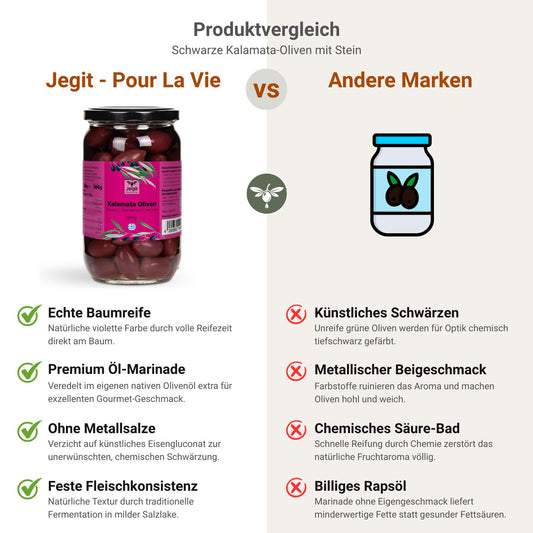
The olives are the star, so quality matters. Kalamata olives are the classic choice: dark, fruity and rich in flavour. Use naturally ripened olives without artificial additives. Our Black Kalamata Olives are hand-picked and naturally harvested – ideal for an authentic, full-bodied tapenade. (You'll simply remove the pits before blending.)
Basic recipe: olive tapenade
For one small jar:
- 200 g Kalamata olives (pitted)
- 1 tbsp capers
- 1 small garlic clove
- 4–5 tbsp extra virgin olive oil
- a squeeze of lemon juice
- optional: a few leaves of fresh thyme or basil, freshly ground pepper
Method:
- Pit the olives and peel the garlic.
- Add olives, capers and garlic to a food processor (or use a mortar for a rustic texture).
- Blend coarsely while drizzling in the olive oil until you reach a spreadable paste.
- Season with lemon juice, pepper and herbs to taste.
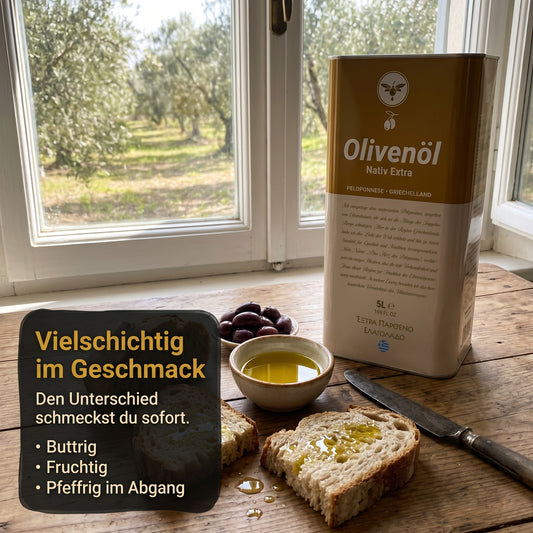
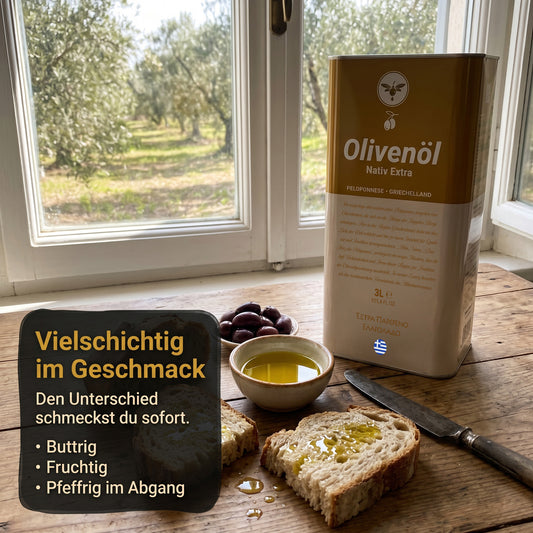
Tip: For the best flavour, use a fragrant extra virgin olive oil. Our Extra Virgin Olive Oil from the Peloponnese adds a spicy, buttery depth.
Tasty variations
- Green tapenade: use green olives for a milder, fresher taste.
- With sun-dried tomatoes: adds sweetness and a deeper colour.
- With anchovies: the traditional Provençal version for extra umami.
- Herb-forward: more thyme, rosemary or basil for a garden-fresh note.
How to serve tapenade
Tapenade is wonderfully versatile: spread on toasted baguette or crackers, as part of a meze or antipasti board, stirred into pasta, dolloped on grilled fish or chicken, or swirled into a dressing. It also makes a beautiful edible gift in a small jar.
Shelf life and storage
Keep tapenade in a clean, sealed jar in the fridge for up to one week. Cover the surface with a thin layer of olive oil to keep it fresh and prevent it drying out.
Frequently asked questions
Can I make tapenade without capers?
Yes – simply leave them out or replace with a few extra olives. The result is slightly milder.
Do I need a food processor?
No. A mortar and pestle gives a lovely rustic texture; a knife works too for a chunky version.
How long does tapenade keep?
About one week in the fridge, covered with a layer of olive oil.
Our product tip
Black Kalamata Olives
Hand-picked, naturally harvested and additive-free – the perfect base for an authentic tapenade.
Shop Kalamata olivesTaste the Mediterranean with our Black Kalamata Olives and Peloponnese olive oil – Pour La Vie.