Greek Olive Oil Cake with Thyme Honey
A good Greek olive oil cake is one of those quietly brilliant bakes: no butter, no fuss, and yet it comes out of the oven tender, golden and fragrant. Instead of butter, the fat comes from a generous pour of extra virgin olive oil, which keeps the crumb moist for days and carries a gentle, savoury depth that plain sponge cakes never quite manage. Finish it with a spoonful of Greek thyme honey and you have a dessert that tastes like a sunny afternoon in the Peloponnese.
This is a forgiving, one-bowl recipe. You do not need a stand mixer or any special skill — just a whisk, a tin and about fifteen minutes of hands-on time. Below you will find the full ingredient list, clear step-by-step instructions, and answers to the questions people most often ask before they bake it.
Why olive oil makes a better cake
Baking with olive oil is a centuries-old Mediterranean habit, and there is good reason it has never gone out of fashion. Olive oil stays liquid at room temperature, so the cake remains soft and moist long after a butter cake would have dried out. It also brings its own flavour to the party: a fruity, peppery, slightly grassy note that pairs beautifully with citrus, honey and warm spices.
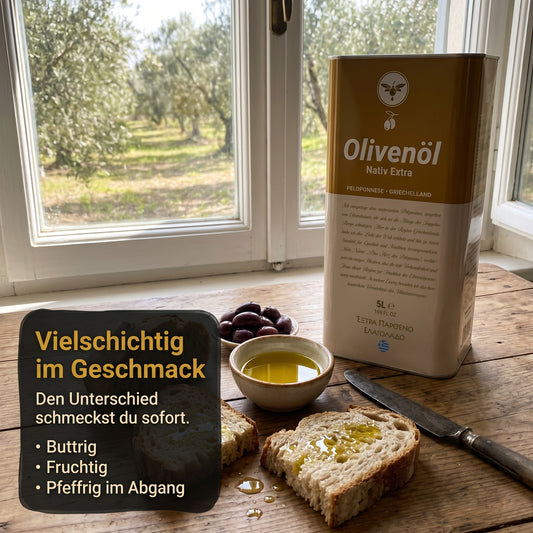
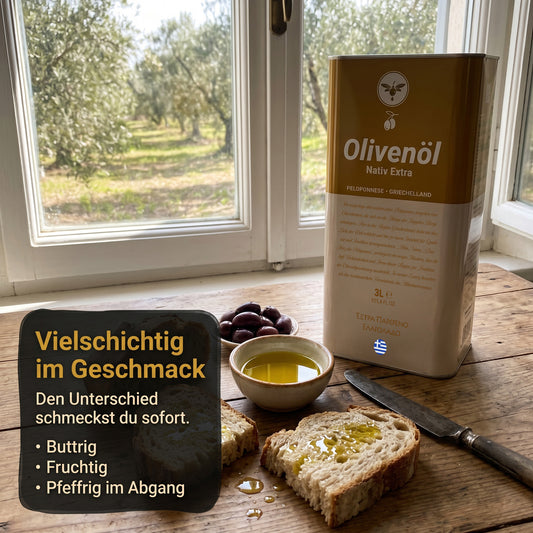
The key is to use an oil you actually enjoy tasting. A flat, characterless supermarket oil will give you a flat cake. A proper hand-harvested extra virgin oil, on the other hand, turns a simple sponge into something memorable. We use extra virgin olive oil from the Peloponnese, which is naturally cloudy, unfiltered and full of that spicy-buttery character that shines through in baking.
Ingredients
Makes one 23 cm (9 inch) round cake, roughly 10 slices.
- 200 ml extra virgin olive oil, plus a little for the tin
- 200 g caster sugar
- 3 large eggs, at room temperature
- 250 g plain flour
- 2 tsp baking powder
- 1/2 tsp fine sea salt
- 120 ml whole milk (or plant milk)
- Zest and juice of 1 unwaxed orange
- 1 tsp vanilla extract
- 4 tbsp Greek thyme honey, for the glaze (plus extra to serve)
A few notes on the ingredients
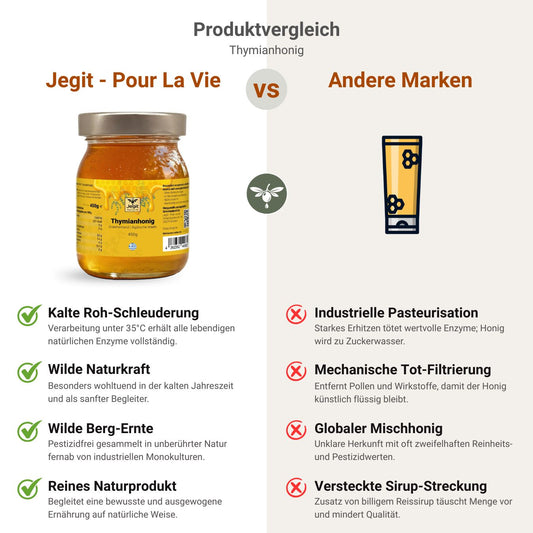
Orange is the classic Greek pairing, but lemon works just as well if you prefer a sharper finish. The thyme honey glaze is what lifts this cake from lovely to special — its intense, herbal-floral aroma is quite different from ordinary blossom honey, and a thin layer soaks into the warm sponge to keep it moist. If you like, you can stir a spoonful of honey into the batter too, for a rounder sweetness.
Step-by-step method
- Heat your oven to 175°C (fan 160°C / gas mark 4). Lightly grease a 23 cm round tin with olive oil and line the base with baking paper.
- In a large bowl, whisk the sugar and eggs together for two to three minutes, until pale and slightly thickened. This little bit of air is what gives the cake a light crumb.
- Pour in the olive oil in a steady stream, whisking as you go, followed by the milk, orange zest and juice, and vanilla. The batter will look loose and glossy — that is exactly right.
- In a separate bowl, stir together the flour, baking powder and salt. Sift this over the wet mixture and fold gently with a spatula until just combined. Stop as soon as you no longer see dry flour; over-mixing makes the cake tough.
- Pour the batter into the prepared tin and smooth the top. Bake for 40 to 45 minutes, until the cake is deep golden and a skewer inserted into the centre comes out clean.
- While the cake bakes, gently warm the thyme honey in a small pan (or for a few seconds in the microwave) so it becomes pourable.
- Let the cake cool in the tin for 10 minutes, then turn it out onto a rack. While it is still warm, brush or drizzle the warm thyme honey over the top so it sinks in. Serve slightly warm or at room temperature, with an extra drizzle of honey.
How to serve and store it
This cake is wonderful on its own with a strong coffee, but it also loves company. Try it with a spoonful of thick Greek yoghurt, a scattering of fresh berries, or a few toasted seeds for crunch. For a more grown-up dessert, serve thin slices alongside a glass of dessert wine.
Because it is made with olive oil rather than butter, it keeps beautifully. Store it in an airtight tin at room temperature for up to four days — many people swear it tastes even better on the second day, once the honey and orange have had time to mingle. It also freezes well: wrap individual slices and defrost as needed.
Frequently asked questions
Will the cake taste strongly of olive oil?
No — it tastes pleasantly rich and moist, with a subtle savoury note rather than an oily one. A good extra virgin oil adds fruitiness and depth; it does not overpower the orange and honey. If you are nervous, start with a milder oil, but most people are surprised by how balanced the finished cake is.
Can I make this cake dairy-free or vegan?
For a dairy-free version, simply swap the whole milk for your favourite plant milk — oat and almond both work well. Making it fully vegan is trickier because the eggs provide structure, so you would need a tested egg replacer; the texture will be a little denser but still very pleasant.
What kind of olive oil should I use for baking?
Use a genuine extra virgin olive oil you enjoy the taste of. Freshness matters more than anything: a young, well-stored oil gives the brightest flavour. Our hand-harvested Peloponnese oil is a reliable all-rounder for baking, dressings and everyday cooking, with a spicy-buttery profile that complements sweet bakes without dominating them.
Our product tip
Premium Olive Oil from the Peloponnese
Hand-harvested, naturally cloudy extra virgin olive oil with a spicy, buttery, peppery flavour — the heart of this cake.
Shop the olive oilBaking this cake is one of the simplest ways to taste the difference a real, hand-harvested olive oil makes. Pour generously, finish with golden thyme honey, and share a slice of the Mediterranean at your own table. Pour La Vie.