Greek Marinated Olives: A Simple Mediterranean Meze with Herbs, Lemon and Olive Oil
Few things say Pour La Vie quite like a bowl of glossy, herb-flecked olives on the table. In Greece, marinated olives are the little ritual that opens almost every meal — something to nibble with a glass of wine while the rest of the meze finds its way to the table. The best part is that turning plain, naturally cured olives into a fragrant, taverna-worthy bowl takes about ten minutes of hands-on work and a handful of pantry staples. This guide walks you through it step by step, with tips for choosing the right olives and a few easy ways to make the flavour your own.
Why marinate your own olives?
Shop-bought marinated olives are convenient, but making your own gives you three things a jar rarely does: freshness, control and generosity. You decide how much garlic goes in, how bright the lemon is and whether you want a whisper of chilli or a gentle sweetness. You also use a proper amount of good extra virgin olive oil, which becomes half the pleasure — that herb-infused oil left at the bottom of the bowl is liquid gold for dunking bread. And because you start from naturally cured olives rather than a heavily processed mix, the flavour stays clean, fruity and honest.
Choosing the right olives
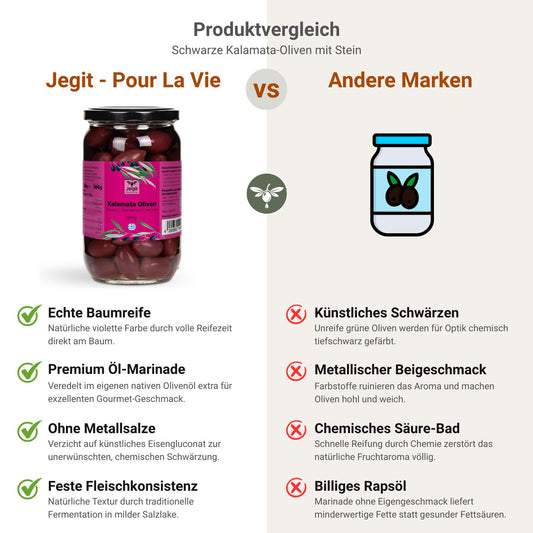
Great marinated olives begin with great olives. Reach for firm, naturally cured fruit rather than pale, bland olives that have been rushed through a chemical bath. Two Greek classics work beautifully here and can even be combined for contrast:
The black Kalamata olives bring a deep, wine-dark richness with almondy, fruity notes — the unmistakable taste of the Peloponnese. For a brighter, meatier bite, the Greek green olives add a firm crunch and a milder, grassy flavour. Using both gives your bowl a lovely mix of colour and texture. Olives with the pit left in tend to hold their shape and flavour better through marinating, so they are ideal for this recipe.
What you need
This makes a generous bowl to share (about 4–6 servings as a meze).
- 250 g black Kalamata olives, drained
- 150 g Greek green olives, drained
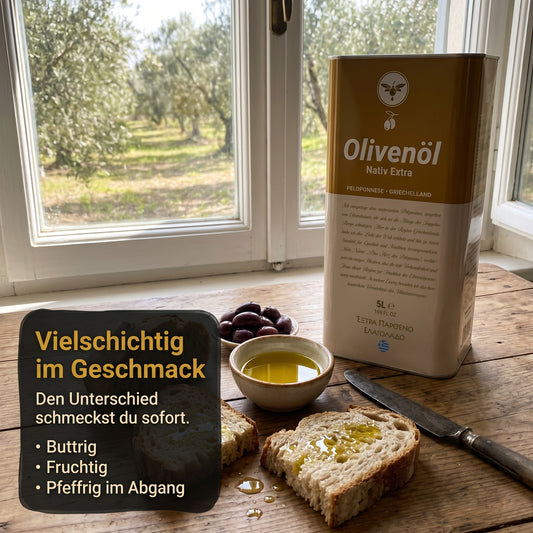
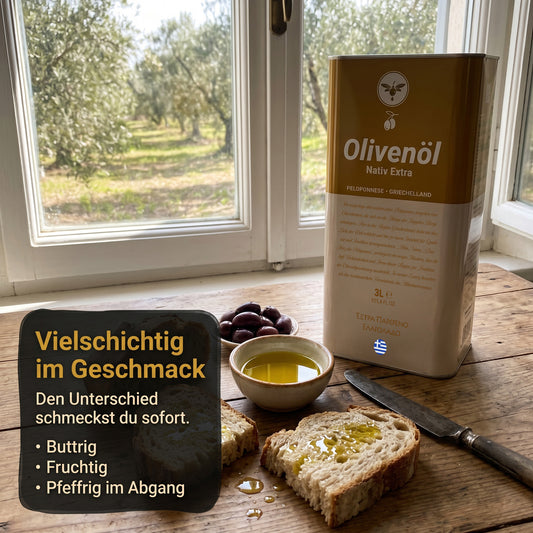
- 6 tbsp extra virgin olive oil from the Peloponnese
- 2 garlic cloves, thinly sliced
- Zest and juice of half an unwaxed lemon, plus a few thin lemon slices
- 1 tsp dried oregano (Greek, if you can find it)
- 2–3 sprigs fresh thyme, or ½ tsp dried
- 1 bay leaf
- ½ tsp coriander seeds or fennel seeds, lightly cracked (optional)
- A pinch of chilli flakes (optional)
- 1 tbsp red wine vinegar (optional, for a little tang)
How to make Greek marinated olives
- Rinse and drain the olives. Tip both kinds of olives into a colander, rinse briefly under cool water and drain well. Pat them dry with a clean tea towel — a little patience here helps the marinade cling instead of sliding off.
- Warm the oil gently. Add the olive oil to a small pan over the lowest heat. Add the sliced garlic, oregano, thyme, bay leaf and cracked seeds. Warm for 2–3 minutes, just until the garlic turns fragrant and the herbs begin to sizzle softly. Do not let the garlic brown or the oil smoke — you are infusing, not frying.
- Add the bright notes. Take the pan off the heat and stir in the lemon zest, lemon juice, chilli flakes and vinegar (if using). Let the mixture cool for a couple of minutes so the fresh flavours are not scorched.
- Combine. Put the olives in a bowl, pour over the warm, herby oil and add the lemon slices. Toss gently until every olive glistens.
- Let them rest. Cover and leave at room temperature for at least 1 hour before serving so the flavours settle in. For the fullest flavour, marinate in the fridge overnight, then bring back to room temperature before serving.
Flavour variations
Sweet and savoury with thyme honey
For a version that plays sweet against salty, whisk a teaspoon of Greek thyme honey into the warm oil along with the lemon. The floral, peppery honey rounds out the brine beautifully and makes these olives irresistible alongside cheese.
Citrus and fennel
Swap the lemon for orange zest and add lightly cracked fennel seeds for a fragrant, slightly aniseed twist that suits the meatier green olives.
Extra garlicky and herby
Double the garlic and add a handful of chopped fresh parsley or rosemary just before serving for a punchier, greener bowl.
How to serve marinated olives
Serve your olives at room temperature, which is when their aroma truly opens up. They are the natural centrepiece of a meze spread — set them alongside warm pita, feta, a dip or two and plenty of that herb-scented oil for dunking crusty bread. They are also wonderful scattered over a Greek salad, tucked into a cheese board, or stirred through pasta and grain salads. Do not waste the leftover oil: strain it and use it to dress salads or drizzle over grilled vegetables.
Frequently asked questions
How long do homemade marinated olives keep?
Stored in a clean, airtight jar in the fridge and fully covered by oil, marinated olives keep well for up to two weeks. Always use a clean spoon, and let them come back to room temperature before serving so the olive oil turns liquid again.
Can I marinate olives that already come seasoned?
Yes. If you start with olives that are already lightly seasoned, simply go easier on the salt and added herbs and treat the marinade as a refresh — a little warm oil, garlic and lemon will wake them right up.
Should I use olives with or without the pit?
For marinating, olives with the pit are the better choice: they keep their firm texture and fruity flavour and are less likely to turn mushy. Just remember to warn your guests before they bite in.
Our product tip
Black Kalamata Olives with Pit
Naturally cured Greek Kalamata olives — the rich, fruity heart of this marinade, with no artificial additives.
Shop Kalamata olivesMaking your own marinated olives is one of those small pleasures that turns an ordinary evening into something a little more Mediterranean. Start with honest, naturally cured olives and good olive oil, add herbs with a generous hand, and let time do the rest. From our family to your table — Pour La Vie.