Greek Lemon Potatoes (Patates Lemonates): The Authentic Oven-Baked Recipe
In a Greek kitchen, lemon potatoes are never an afterthought. They come to the table in the same dish they were roasted in, edges deep gold, the middle almost creamy, the whole tray smelling of lemon, oregano and warm olive oil. Nobody bothers to serve them elegantly. People simply reach for them.
The recipe is one of the simplest in the Mediterranean repertoire, which is exactly why it is so easy to get wrong. There is no butter, no cream, no clever technique hiding behind the flavour. There are potatoes, lemons, garlic, oregano and a generous amount of good olive oil — and the quality of that oil is the difference between a pleasant side dish and one people remember.
This is the traditional oven method, the one used in tavernas across the Peloponnese, where the potatoes cook in liquid first and then finish uncovered until they colour.
Why Greek lemon potatoes are different from ordinary roast potatoes
Most roast potatoes are cooked dry: fat, heat, and a crisp shell. Patates lemonates work the other way round. The potatoes are first braised in a shallow bath of lemon juice, water and olive oil, so they absorb flavour all the way through. Only when the liquid has almost gone does the oven finish the job and the surfaces caramelise.
The result is a potato with two textures at once — a soft, lemon-soaked interior and a golden, slightly sticky exterior. That contrast is the whole point of the dish, and it is why the cooking liquid matters as much as the oven temperature.
Choosing the right potatoes
Use a floury or all-rounder variety — Maris Piper, King Edward, Agria or a comparable starchy potato. Waxy salad potatoes hold their shape too firmly and never take on that soft, creamy centre.
Cut them into thick wedges, not thin ones. Each wedge should be roughly the size of your thumb. Thin pieces collapse in the liquid and dry out before the tray is done.
Choosing the olive oil
This dish uses more olive oil than most people expect, and it is not there simply as a cooking fat. It emulsifies with the lemon juice and the starch released by the potatoes, forming the glossy sauce that clings to every wedge at the end.
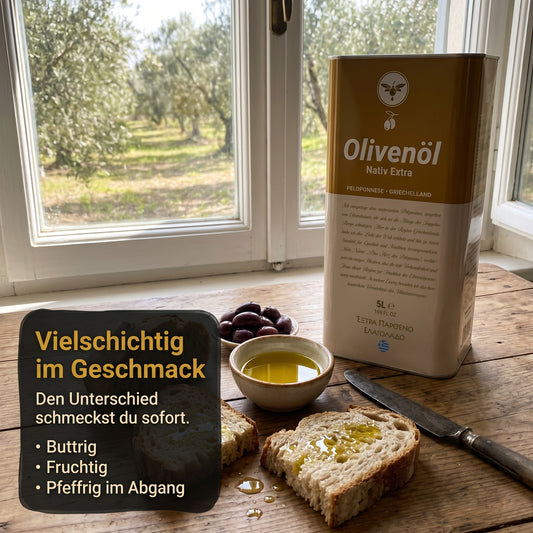
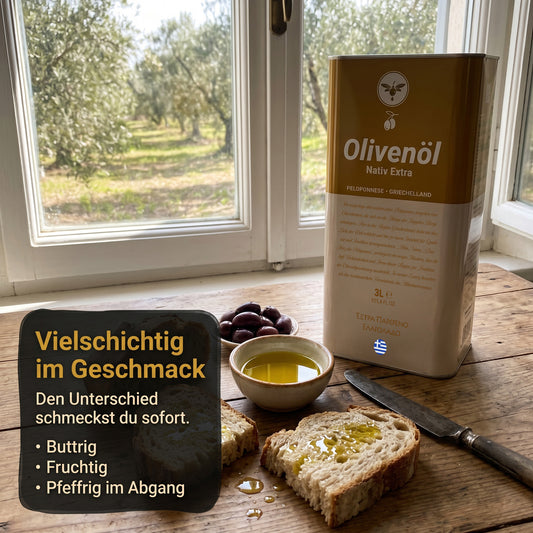
An unfiltered, cold-extracted extra virgin oil with a peppery finish is ideal, because the heat softens its bite and leaves behind a rounded, buttery depth. Our extra virgin olive oil from the Peloponnese is hand-harvested and naturally cloudy — exactly the kind of oil this recipe was built around. A refined, neutral oil will cook the potatoes perfectly well, but it will not season them.
Ingredients (serves 4 as a side)
- 1 kg floury potatoes, peeled and cut into thick wedges
- 100 ml extra virgin olive oil from the Peloponnese
- Juice of 2 large lemons (about 100 ml)
- 250 ml water or light vegetable stock
- 4 garlic cloves, lightly crushed
- 1 tbsp dried oregano
- 1 tsp sea salt, plus more to taste
- Freshly ground black pepper
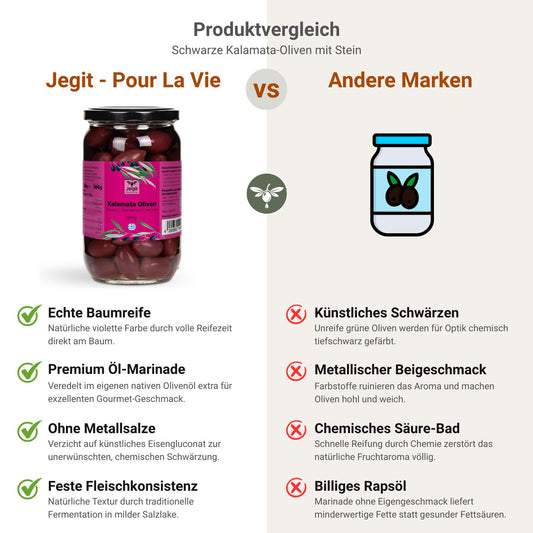
- Optional, to serve: a handful of black Kalamata olives
- Optional: 1 tsp Dijon mustard, for a slightly rounder sauce
Method
- Heat the oven to 200 °C (180 °C fan). Choose a roasting tin large enough for the potatoes to sit in a single layer. Crowding them means they steam instead of colouring.
- Prepare the potatoes. Peel and cut them into thick wedges, then pat them dry with a cloth. Excess surface water dilutes the lemon.
- Mix the cooking liquid. In a jug, whisk together the olive oil, lemon juice, water, oregano, salt, pepper and the mustard if you are using it. It will look like a loose, cloudy dressing — that is correct.
- Assemble the tray. Put the potatoes in the tin, tuck the crushed garlic cloves between them, and pour the liquid over. It should come roughly halfway up the potatoes.
- Roast covered for 40 minutes. Cover the tin tightly with foil or a lid. The potatoes braise in the lemon and oil and soften right through.
- Uncover and turn. Remove the foil, turn the potatoes carefully so the pale sides face upwards, and return the tray to the oven.
- Roast uncovered for 30–40 minutes. The remaining liquid reduces to a thick, glossy sauce and the edges turn deep gold. Check after 30 minutes; if the tray runs dry too early, add a splash of hot water.
- Rest and finish. Let the tray stand for five minutes. Spoon the pan juices back over the potatoes, taste, and add a little more salt or a squeeze of lemon if needed. Serve warm, with olives alongside if you like.
Getting the balance right
Three things decide whether this dish sings.
Enough liquid, but not too much
The potatoes should sit in liquid, not swim in it. If the tray is too wet at the end, the sauce never thickens and the potatoes stay pale. If it is too dry, they scorch. Halfway up the wedges is the mark to aim for.
Real lemon, freshly squeezed
Bottled juice tastes flat after an hour in the oven. Fresh lemon keeps its brightness and cuts through the richness of the oil.
Oregano, added early
Dried oregano needs time and moisture to open up. Stir it into the liquid at the start rather than scattering it on at the end, where it simply burns.
How to serve them
Lemon potatoes are traditionally served alongside roast chicken or lamb, but they hold their own as a vegetarian main with nothing more than a bowl of thick yoghurt and a tomato salad. A few Kalamata olives and a slice of feta turn the tray into a full meze table.
Leftovers reheat well in a hot oven for ten minutes — never in the microwave, which softens the crust you worked for.
Our product tip
Extra Virgin Olive Oil 500 ml from the Peloponnese
Hand-harvested, unfiltered and naturally cloudy — the peppery, buttery oil that gives these potatoes their character.
Discover the olive oilFrequently asked questions
Can I make Greek lemon potatoes without peeling them?
Yes. Scrub them well and leave the skins on. The texture is slightly firmer and the flavour a little earthier, but the method does not change. Waxy varieties with the skin on will simply stay firmer in the middle.
Why are my lemon potatoes soggy instead of golden?
Almost always too much liquid, or a tray that was too crowded. The potatoes need space and the second half of the cooking time must be uncovered so the liquid can reduce. If there is still a pool of liquid after 30 minutes uncovered, raise the heat for the last ten.
Can I prepare them in advance?
You can complete the covered braising stage a few hours ahead and leave the tray at room temperature. Finish the uncovered roast just before serving, allowing an extra five minutes for the cold tray.
Simple food, honestly made
Patates lemonates need four things and nothing more: a good potato, a real lemon, dried oregano, and olive oil worth tasting. That is the whole Mediterranean philosophy on a single tray — few ingredients, chosen carefully, left to speak for themselves.
Cook them once with a proper extra virgin oil and you will not go back. Pour La Vie.