Greek Lemon Olive Oil Cake with Thyme Honey
There is a moment with a good olive oil cake — somewhere between the first forkful and the last — when it quietly wins you over. It is moist without being heavy, gently sweet, and it carries the green, peppery character of real extra virgin olive oil the whole way through. Add a slow drizzle of Greek thyme honey and a whisper of lemon, and you have a cake that tastes like a warm afternoon on the Peloponnese. Best of all, it comes together in one bowl, with a whisk, in about ten minutes of real work.
Olive oil cake has been baked around the Mediterranean for generations, long before butter was an everyday ingredient in southern kitchens. Cooks used what they had — fragrant local oil, citrus from the garden, honey from nearby hives — and the result is a cake that stays tender for days and needs no icing to feel special. This version keeps that spirit: simple, honest, and built around one truly good bottle of oil.
Why olive oil makes a better cake
Butter is solid at room temperature, which is why butter cakes firm up (and dry out) as they cool. Olive oil stays liquid, so it keeps the crumb soft and moist for three or four days — often the cake is even better on day two. Because you are not creaming butter and sugar, there is no mixer and no waiting for ingredients to reach room temperature; you simply whisk.
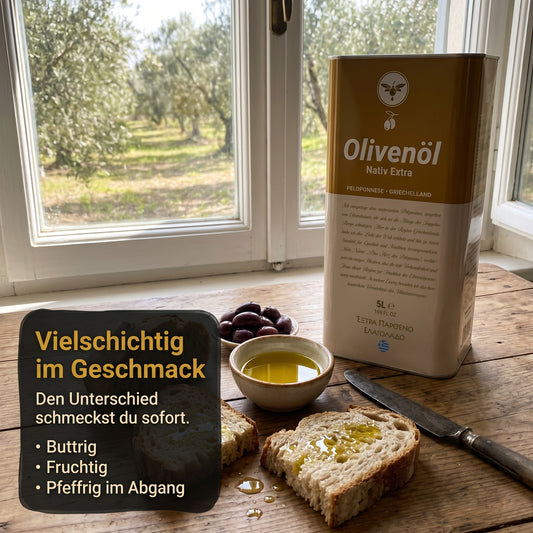
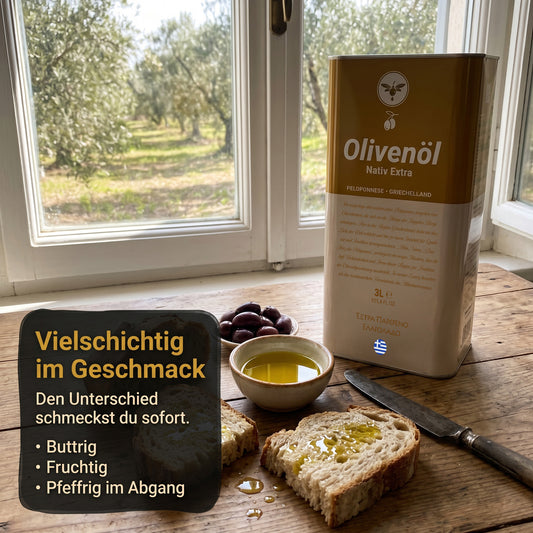
Flavour is the other reason. A fruity, peppery oil brings a savoury depth that balances the sugar and lifts the lemon, so the cake never tastes cloying. This is where quality matters most: because the oil is the star, use one you would happily drizzle over warm bread. Our extra virgin olive oil from the Peloponnese is hand-harvested, naturally cloudy and unfiltered, with exactly the buttery-peppery balance this cake wants.
Ingredients
This makes one 22–24 cm round cake, about ten slices. Weigh where you can — baking rewards a little precision.
For the cake
- 200 ml extra virgin olive oil from the Peloponnese, plus a little for the tin
- 200 g caster sugar
- 3 medium eggs, at room temperature
- 250 g plain flour
- 2 tsp baking powder
- 1 pinch of fine sea salt
- Zest of 2 unwaxed lemons and 4 tbsp lemon juice
- 120 ml whole milk (or plain yoghurt for extra moisture)
- 1 tsp vanilla extract (optional)
For the thyme honey drizzle
- 4 tbsp Greek thyme honey
- 2 tbsp lemon juice
- 1 tbsp water
How to make Greek lemon olive oil cake
- Heat the oven. Preheat to 175 °C (fan 160 °C). Lightly oil a 22–24 cm round tin and line the base with baking paper.
- Whisk the base. In a large bowl, whisk the sugar and eggs for two minutes until pale and slightly foamy. Pour in the olive oil in a steady stream, whisking as you go, then add the lemon zest, lemon juice, milk and vanilla.
- Fold in the dry ingredients. Sift the flour, baking powder and salt over the bowl. Fold gently with a spatula just until no streaks remain — stop there, as overmixing toughens the crumb.
- Bake. Pour into the tin and level the top. Bake for 40–45 minutes, until golden and a skewer comes out clean. If the top browns too quickly, lay a piece of foil loosely over it for the last ten minutes.
- Make the drizzle. While the cake bakes, warm the thyme honey, lemon juice and water in a small pan for a minute until loose and glossy.
- Soak and cool. Let the cake rest for ten minutes, then prick the top all over with a skewer and spoon the warm thyme honey drizzle across it. Cool in the tin for another fifteen minutes before turning out.
The golden thread: Greek thyme honey
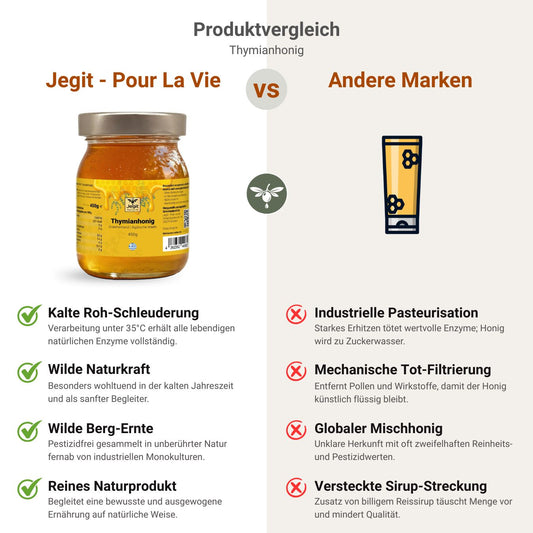
What turns a nice olive oil cake into a memorable one is the finish. Greek thyme honey is gathered from wild thyme that flowers across sun-baked hillsides in high summer, and it carries a warm, herbal, almost resinous note that ordinary blossom honey cannot match. Warmed with a little lemon juice and spooned over the still-hot cake, it seeps into every pore of the crumb, adding fragrance and a faint savoury edge that echoes the olive oil. If you add only one special ingredient to this recipe, make it the honey.
Tips for the best olive oil cake
Bring your eggs to room temperature so they whisk to more volume — a cold egg gives a denser cake. Zest the lemons directly over the bowl to catch the fragrant oils, and always zest before you juice. If you like a more pronounced olive flavour, choose a robust, peppery oil and reduce the sugar by a tablespoon; for a milder cake, a softer, buttery oil works beautifully. A spoonful of yoghurt in place of some of the milk makes the crumb even more moist and adds a gentle tang.
Serving and storing
This cake is happiest at room temperature, cut into generous wedges. Serve it plain with coffee, or dress it up with a spoonful of thick Greek yoghurt, a little extra thyme honey and a scattering of lemon zest. It keeps well: store it under a cake dome or wrapped loosely for up to four days, and it actually improves overnight as the honey settles into the crumb. It also freezes beautifully — wrap individual slices and thaw at room temperature.
Frequently asked questions
Can I taste the olive oil in the cake?
You taste it as a gentle, fruity warmth rather than anything sharp. Baking softens the pepperiness of extra virgin oil, leaving a savoury depth that balances the lemon and honey. The better the oil, the rounder that flavour will be.
Which olive oil should I use?
Use a genuine extra virgin oil you enjoy eating — the flavour goes straight into the cake. A hand-harvested, unfiltered oil like our Peloponnese bottling gives the best balance of fruitiness and body. Avoid refined or "light" olive oils, which have little flavour to offer.
Can I make it dairy-free?
Yes. Swap the milk for the same amount of unsweetened plant milk or fresh orange juice. The olive oil already provides all the richness, so the cake stays moist without butter or cream.
Our product tip
Olive Oil Extra Virgin 500 ml from the Peloponnese
Hand-harvested, naturally cloudy and unfiltered — a fruity, peppery oil that makes this cake sing.
Shop the olive oilBake it once and it will earn a permanent place in your repertoire: one bowl, one very good bottle of oil, and the golden thread of thyme honey tying it together. That is the Mediterranean table in a single slice — simple, generous and made to be shared. Pour La Vie.