Greek Lamb Kleftiko: Slow-Roasted Lamb in Olive Oil, Lemon and Oregano

Some dishes you simply cook. Greek lamb kleftiko you surrender to. This is the Sunday centrepiece that fills the whole house with lemon, garlic and wild oregano, then rewards you with lamb so tender it slides off the bone at the touch of a fork. And here is the best part: the ingredient list is short, the method is almost entirely hands-off, and the real magic comes down to time, a sealed dish and a generous pour of proper extra virgin olive oil. Reach for our hand-harvested Peloponnese olive oil and you are already halfway to a main course people will talk about for weeks.
What is kleftiko — and why it belongs on your autumn table
Kleftiko (κλέφτικο) means “in the style of the klephts” — the mountain rebels of Ottoman-era Greece who, as the story goes, cooked stolen lamb slowly in sealed earth pits so that no smoke or aroma would betray their hiding place. Centuries later, that same principle is exactly what makes the dish so forgiving: you trap the meat with aromatics and olive oil, seal it tight, and let a low oven do all the work. The steam and oil can’t escape, so instead of drying out, the lamb braises in its own fragrant juices until it is meltingly, almost scandalously tender.
That makes kleftiko the ideal autumn main. It asks for twenty minutes of preparation and then leaves you free for three hours — no basting, no stirring, no anxious checking. When you finally break the seal at the table, the cloud of lemon-and-oregano steam that rises out is worth the wait on its own.
Why the olive oil is the heart of this dish, not an afterthought
Here is the honest truth most recipes won’t tell you: with a thin, flavourless supermarket oil, kleftiko tastes fine. With a real extra virgin olive oil, it tastes unforgettable. Because the lamb cooks sealed for hours, the oil isn’t just a cooking fat — it becomes the sauce, carrying the garlic, lemon and oregano deep into every fibre of the meat and soaking into the potatoes underneath. The difference between “good” and “I need the recipe” genuinely lives in the oil.
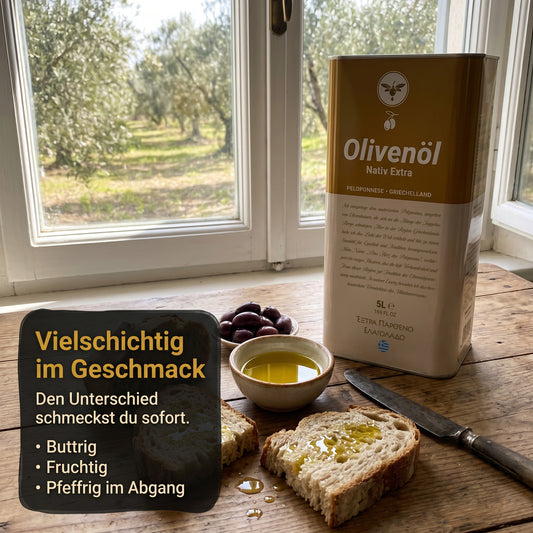
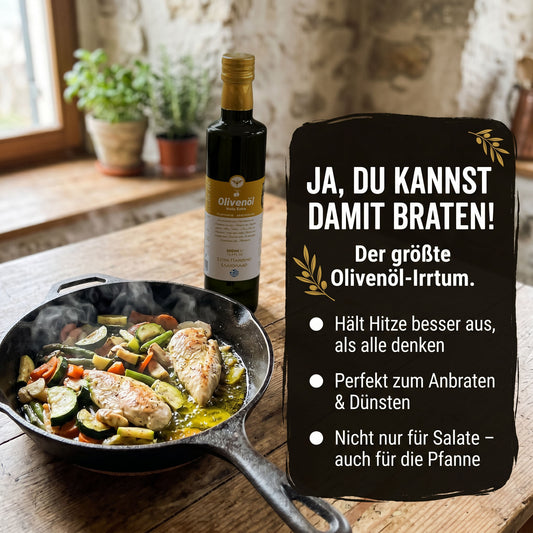
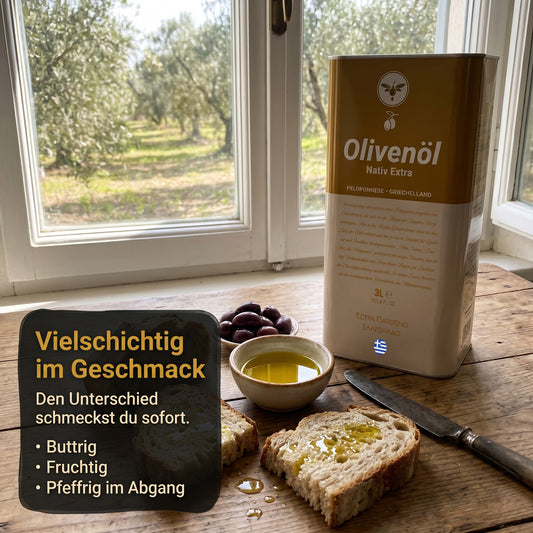
Our Extra Virgin Olive Oil from the Peloponnese is built for exactly this kind of cooking. It is hand-harvested and produced by cold mechanical extraction only, which is why it stays naturally cloudy and unfiltered with that full, fruity character. It is lab-tested for low acidity, rich in polyphenols and verifiably free of mineral oil residues, and it is heat-stable up to 180 °C without forming trans fats — so the very same bottle you drizzle over the finished dish is the one you can trust in a three-hour oven. Spicy, buttery and peppery, it is the quiet reason this lamb tastes like a taverna in the Mani.
Secure your bottle of Peloponnese olive oil here before you start — it is the one ingredient you don’t want to compromise on.
Ingredients (serves 4–6)
- 1.3–1.5 kg bone-in lamb shoulder (or 4–6 lamb leg steaks / shanks)
- 6 tbsp extra virgin Peloponnese olive oil
- 1 kg waxy potatoes, peeled and cut into large chunks
- 1 whole head of garlic, cloves separated and lightly crushed
- 2 unwaxed lemons (juice of both, plus one cut into wedges)
- 2 tbsp dried Greek oregano, plus a few fresh sprigs
- 2 bay leaves
- 1 tsp sweet paprika and 1 tsp ground cinnamon (optional, for warmth)
- 150 ml dry white wine or water
- Sea salt and freshly ground black pepper
Everything here is a store-cupboard regular except the lamb — and the oil. If your bottle is running low, top up with our Peloponnese olive oil now so the marinade has something worth soaking into.
How to make Greek lamb kleftiko, step by step
- Marinate the lamb. In a bowl, whisk together 4 tbsp of the olive oil, the juice of both lemons, half the garlic, the oregano, paprika, cinnamon, a generous teaspoon of salt and plenty of black pepper. Rub it all over the lamb, cover, and leave for at least 1 hour (overnight in the fridge is even better).
- Heat the oven. Preheat to 160 °C (fan 150 °C / gas mark 3). Low and slow is the whole point — resist the urge to rush it hotter.
- Build the base. Toss the potato chunks, remaining garlic cloves, bay leaves and lemon wedges with the last 2 tbsp of olive oil and a good pinch of salt. Spread them across a deep roasting dish.
- Add the lamb. Nestle the marinated lamb on top of the potatoes and pour over any marinade left in the bowl, followed by the wine or water.
- Seal it tight. This is the kleftiko secret. Cover the dish with a layer of baking parchment, then seal the whole thing with a tight double layer of foil (or a heavy lid). You want no steam escaping.
- Slow-roast. Cook, sealed, for 3 hours. Walk away and let it do its thing — the lamb is braising in oil, wine and citrus the entire time.
- Crisp the top. Remove the foil and parchment, turn the oven up to 210 °C (fan 190 °C / gas mark 6–7) and roast uncovered for a final 20–25 minutes, until the lamb is burnished and the potatoes are golden at the edges.
- Rest and finish. Rest for 10 minutes. Just before serving, drizzle over a little more raw Peloponnese olive oil and scatter with fresh oregano. Pull the lamb apart at the table — it will barely need a knife.
That final raw drizzle is where a great oil truly shows off, so don’t skip it. Grab a bottle of our hand-harvested olive oil here and taste the peppery finish for yourself.
Tips, swaps and what to serve alongside
- Cut: Bone-in shoulder gives the richest result, but lamb shanks or leg steaks work beautifully — just check for tenderness from around 2.5 hours.
- Make it a feast: Serve with a crisp horiatiki (Greek salad), warm flatbread and a bowl of olives. A spoonful of thick yoghurt on the side cuts through the richness perfectly.
- Don’t waste the juices: The liquid at the bottom of the dish is liquid gold — spoon it over the potatoes and bread.
- The one upgrade that counts: If you change one thing, make it the oil. A flat, refined oil cooks away to nothing; a polyphenol-rich extra virgin oil holds its character for hours.
Ready to cook it this weekend? Order your Peloponnese olive oil now and build your kleftiko on a foundation worth tasting.
Our product tip
Extra Virgin Olive Oil from the Peloponnese (500 ml)
Hand-harvested, naturally cloudy and unfiltered, lab-tested for low acidity and rich in polyphenols — heat-stable to 180 °C, so it carries your kleftiko from marinade to oven to the final drizzle.
Shop the Peloponnese olive oilFrequently asked questions
Can I make kleftiko ahead of time?
Yes — and it arguably tastes even better the next day. Cook it fully, cool, and keep it covered in the fridge for up to three days. Reheat gently (covered) at 150 °C until piping hot, then give it a fresh drizzle of olive oil before serving to wake the flavours back up.
What cut of lamb is best for kleftiko?
Bone-in lamb shoulder is the classic choice because its fat and connective tissue melt down over the long, slow cook into that signature fall-apart texture. Lamb shanks are a wonderful single-portion alternative, and leg steaks work if you want something a little leaner and quicker.
Does the olive oil really matter if it cooks for hours?
More than almost any other ingredient. In a sealed dish the oil never burns off — it becomes the sauce. A low-acidity, polyphenol-rich extra virgin oil like our Peloponnese olive oil keeps its fruity, peppery backbone through the whole cook and then shines again in the final raw drizzle. A cheap, refined oil simply fades.
Great kleftiko isn’t about effort — it is about patience and one or two ingredients worth believing in. Give the lamb its time, give it a real Greek olive oil, and you’ll understand why this dish has survived for centuries. Taste the difference the oil makes — shop our Peloponnese olive oil today. Pour La Vie.

Honey-Harissa Salmon Traybake: The 25-Minute Sweet-and-Spicy Dinner Where the Glaze Is the Whole Dish
Sticky honey-harissa salmon roasted in 25 minutes, where Greek thyme honey and extra virgin olive oil turn a simple fillet into something...

Sun-Dried Tomato & Olive Tapenade: The 10-Minute Mediterranean Spread Everyone's Making Right Now
A 10-minute sun-dried tomato and olive tapenade — a vegan Mediterranean spread made unforgettable with Greek extra virgin olive oil. Recipe +...

Italian Braised Pork with Olives (Maiale alle Olive): A Slow-Cooked Autumn One-Pot
Fork-tender Italian braised pork with olives, garlic and Peloponnese olive oil — a rustic autumn one-pot that proves great olive oil makes...