Gigantes Plaki: The Greek Baked Butter Beans in Tomato and Olive Oil
Walk into any Greek taverna in winter and you will find a wide, shallow dish of pale beans sitting in a deep red sauce, glossy with olive oil, waiting at room temperature. This is gigantes plaki — giant butter beans baked slowly with tomato, onion and herbs until the sauce thickens and the edges catch a little colour. It is one of the great ladera dishes: food cooked in oil, where olive oil is not a cooking medium but the main flavour.
The recipe is humble and forgiving. There is no browning of meat, no stock to reduce, no technique to master. What it asks for instead is patience and good oil. Because the sauce is little more than tomato, onion and olive oil, the character of the oil decides how the finished dish tastes.
What gigantes plaki actually is
Gigantes means giants — the large, flat white beans grown in northern Greece, particularly around Kastoria and Prespa. Plaki refers to the method: baked flat in a dish with tomato and oil. Together they describe a dish that has fed Greek families through Lent and through winter for generations, cheap to make and better the next day.
Outside Greece the beans are usually sold as butter beans, lima beans or corona beans. Any large, creamy white bean works. What matters is size — small beans turn to mush before the sauce has had time to concentrate.
Why the olive oil matters more than usual
Most recipes treat oil as a starting step. Here it is closer to a sauce ingredient. A proper gigantes plaki uses a generous amount, and much of it ends up pooled around the beans, carrying the tomato and herb flavour. Skimp on it and the dish is dry and a little sad; use a flat, characterless oil and the whole thing tastes flat too.
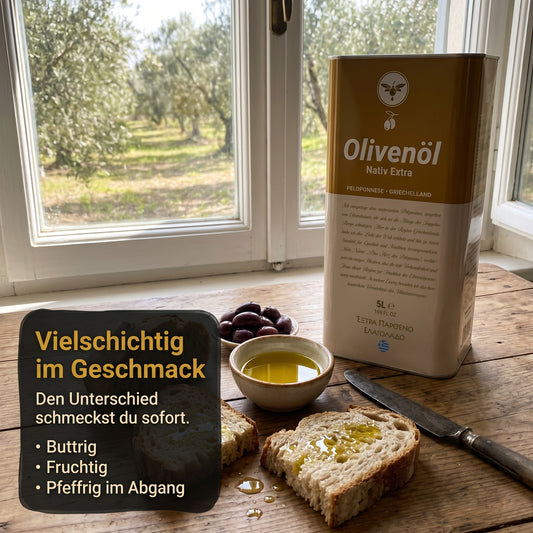
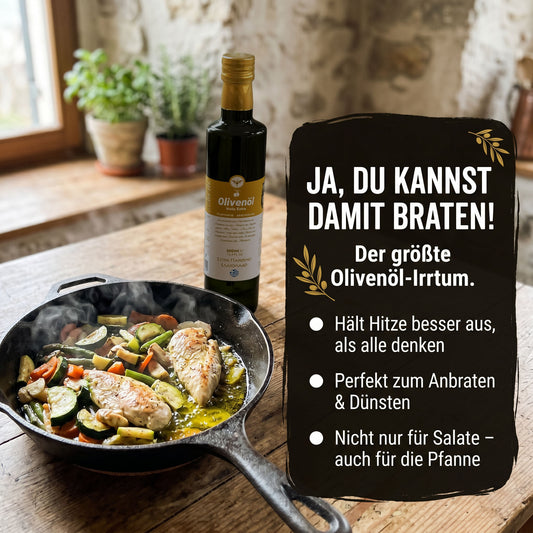
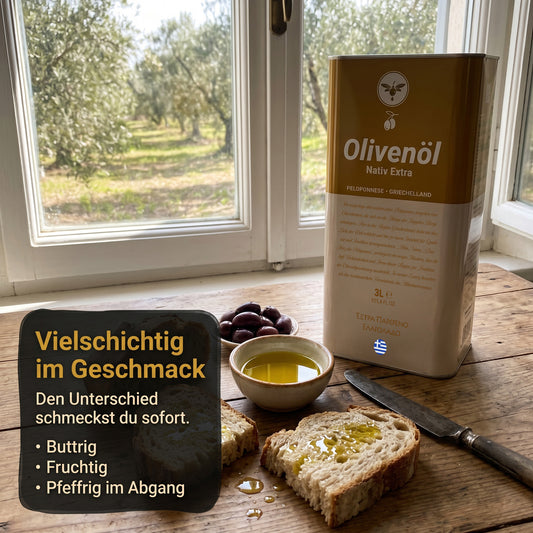
This is where a peppery, unfiltered oil earns its place. Our extra virgin olive oil from the Peloponnese is hand-harvested and cold-extracted, naturally cloudy, with the buttery-peppery backbone that stands up to forty minutes in a hot oven without turning bitter or dull. If you have ever wondered why a taverna version tastes different from your own, the oil is usually the answer.
Ingredients
Serves 4 as a main, 6 as part of a meze table.
- 500 g dried gigantes or butter beans (soaked overnight)
- 150 ml extra virgin olive oil, plus more to finish
- 2 large onions, finely chopped
- 3 garlic cloves, sliced
- 1 carrot, finely diced (optional, for sweetness)
- 1 stick celery, finely diced
- 800 g tinned chopped tomatoes, or 1 kg fresh tomatoes, grated
- 1 tbsp tomato purée
- 1 tsp dried oregano
- 1 tsp sweet paprika
- Small pinch of sugar, if the tomatoes are sharp
- Large handful of flat-leaf parsley, chopped
- Small handful of fresh dill, chopped
- Sea salt and freshly ground black pepper
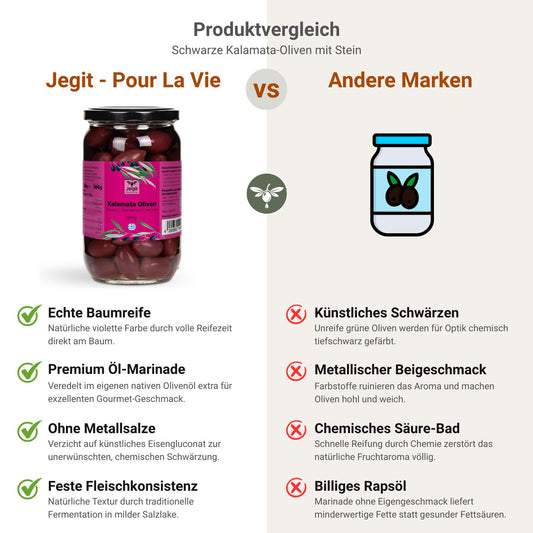
- A bowl of black Kalamata olives, to serve
Method
- Soak the beans. Cover them with plenty of cold water and leave overnight, at least 8 hours. They will roughly double in size, so use a bigger bowl than you think you need.
- Par-boil. Drain, rinse, and put the beans in a large pan of fresh unsalted water. Bring to a gentle boil and simmer for 40–50 minutes, skimming off any foam, until the beans are tender but still holding their shape. They should give when pressed but not collapse. Drain and keep a cup of the cooking water.
- Do not salt too early. Salt added at the boiling stage toughens the skins. Save it for the sauce.
- Start the sauce. Warm 100 ml of the olive oil in a wide pan over medium-low heat. Add the onion, carrot and celery and cook gently for 10–12 minutes until soft and sweet, not browned. Add the garlic for the last minute.
- Build the tomato base. Stir in the tomato purée and cook for a minute, then add the tomatoes, oregano, paprika and a pinch of sugar if needed. Season well. Simmer for 15 minutes, until it thickens slightly and loses its raw edge.
- Combine. Heat the oven to 180 °C. Tip the drained beans into a wide baking dish, pour the sauce over and fold gently — you want to coat the beans without breaking them. If it looks tight, loosen with a splash of the reserved bean water. The beans should sit in sauce, not be buried in it.
- Bake. Pour the remaining 50 ml of olive oil over the top and bake uncovered for 40–50 minutes. The sauce will reduce, the surface will darken and the beans at the edges will take on a slight crust. That crust is the point — resist the urge to stir.
- Rest and finish. Let the dish stand for at least 20 minutes. Scatter over the parsley and dill and add a final, unmeasured pour of olive oil while it is still warm.
- Serve. Bring it to the table warm or at room temperature, with bread, a bowl of Kalamata olives and feta if you like.
Getting the texture right
The most common problem is beans that are still chalky after baking. The oven will not rescue an undercooked bean — the acid in the tomato actually slows softening. So the par-boil has to do its job properly. Test three or four beans, not one; they cook unevenly, and old dried beans can take twice as long as fresh stock.
The second problem is the opposite: soup. If the sauce is thin at the end of baking, it usually means the tomato base went in too wet. Give it another 10 minutes uncovered and it will pull together.
How to serve it
Gigantes plaki is rarely a solo act. On a meze table it sits beside olives, bread and a sharp salad — something with acidity to cut the richness. As a main it needs only crusty bread to mop the dish and a block of feta crumbled on top in the last five minutes of baking.
It is also one of those rare dishes that genuinely improves overnight. The beans absorb the sauce, the oregano settles, and the oil carries the flavour through everything. Make it a day ahead if you can, and take it out of the fridge an hour before serving — cold blunts olive oil.
Frequently asked questions
Can I use tinned beans instead of dried?
You can, and it saves two hours. Use around 3 × 400 g tins, drained and rinsed well, and skip straight to the sauce. The texture will be softer and the beans absorb less of the tomato, so the result is a little less integrated — but on a weeknight it is a fair trade. Reduce the baking time to about 30 minutes.
Is gigantes plaki vegan?
Yes, in its traditional form it is entirely plant-based — beans, vegetables, tomato and olive oil. It belongs to the Greek nistisima tradition of fasting food, which is why it appears so often during Lent. Feta is a common addition but never essential.
How long does it keep?
Covered in the fridge, four to five days, and the flavour deepens over the first two. It freezes well too, though the beans soften further on thawing. Bring it back to room temperature rather than reheating hard — a fierce reheat dulls the fresh olive oil you added at the end.
Our product tip
Extra Virgin Olive Oil 500 ml from the Peloponnese
Hand-harvested, unfiltered and peppery — the oil that carries the whole sauce in a gigantes plaki.
Discover the olive oilGigantes plaki asks for very little: time, tomatoes and oil worth tasting. Cook it once and you will understand why it never left the Greek table. Pour La Vie.