Fasolada: The Traditional Greek White Bean Soup with Olive Oil
Ask a Greek what the real national dish is, and more often than not the answer isn't moussaka — it's fasolada. This humble white bean soup has warmed kitchens across Greece for generations: a pot of beans, a few vegetables, and a generous, unashamed amount of good olive oil. It costs very little, it's naturally vegan, and it tastes of exactly what it is — honest, comforting Mediterranean home cooking.
The magic of fasolada is in its simplicity. There's nowhere for poor ingredients to hide, which is precisely why the olive oil you choose matters so much. Get that right, and a handful of pantry staples turns into a bowl of something genuinely special.
What Is Fasolada?
Fasolada (φασολάδα) is a traditional Greek soup made from dried white beans slowly simmered with onion, carrot, celery, tomato and plenty of olive oil. It belongs to the family of Greek dishes known as ladera — meals built around olive oil rather than meat — and it has long been everyday food: cheap, filling and nourishing, the kind of thing a family could stretch across a cold week.
Every household has its own version. Some keep it thick and stew-like, others looser and brothy. Some blend a ladleful to thicken it; many finish the bowl with raw olive oil, a squeeze of lemon or a splash of vinegar. What stays constant is the character: mellow, savoury beans, sweet softened vegetables, and the fruity warmth of the oil running through all of it.
Why Olive Oil Makes Fasolada Special
In a dish this pared-back, olive oil isn't a cooking medium — it's a main ingredient. It's used twice: first to soften the vegetables and build the base, then again, raw, poured over each bowl at the table. That second pour is where a good oil truly shows itself, lending a peppery, buttery finish that a bland oil simply can't.
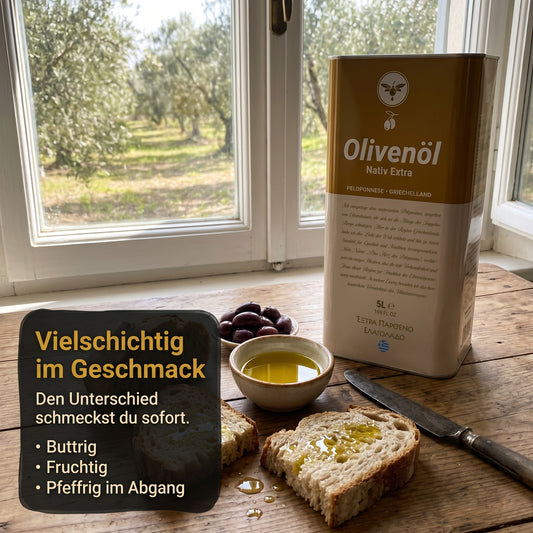
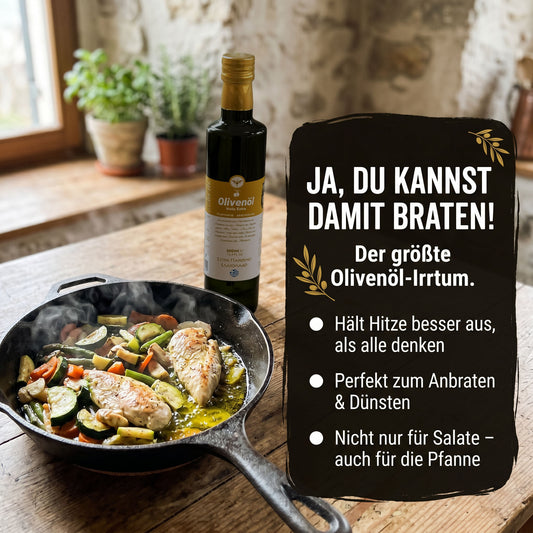
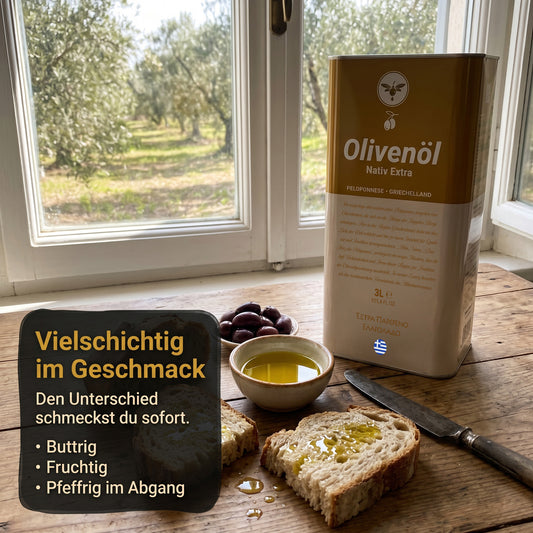
Our extra virgin olive oil from the Peloponnese is made for this role: hand-harvested, naturally cloudy and unfiltered, with a spicy, buttery, peppery depth. Stirred into the pot it enriches the broth; drizzled over the finished soup it lifts the whole bowl and keeps everything unmistakably Greek.
Ingredients You'll Need
Serves 4–6 as a main. Quantities are a guide — fasolada is forgiving.
- 400 g dried white beans (cannellini or haricot), soaked overnight
- 120 ml (about 8 tbsp) extra virgin olive oil, plus more to finish
- 1 large onion, finely chopped
- 2 carrots, sliced into rounds
- 2 celery sticks, sliced (a few leaves reserved)
- 2 garlic cloves, chopped
- 400 g tin of chopped tomatoes, or 2 tbsp tomato purée
- 1 bay leaf and 1 tsp dried oregano
- Sea salt and freshly ground black pepper
- Optional, to serve: lemon wedges, fresh parsley, olives and crusty bread
How to Make Fasolada (Step by Step)
- Pre-cook the beans. Drain the soaked beans, cover with fresh water, bring to the boil and simmer for about 30 minutes until just tender. Drain, keeping the beans aside. This gives you a cleaner, sweeter soup.
- Build the base. In a large pot, warm the olive oil over a medium heat. Add the onion, carrot and celery and cook gently for 8–10 minutes until soft and glossy. Stir in the garlic for the final minute.
- Add tomato and aromatics. Stir in the chopped tomatoes (or purée), bay leaf and oregano, and let it bubble for a couple of minutes so the flavours come together.
- Simmer. Return the beans to the pot and pour in enough water to cover them by a couple of centimetres. Bring to a gentle simmer.
- Cook low and slow. Partly cover and simmer for 40–50 minutes, stirring now and then, until the beans are completely soft and the soup has thickened. Add a little hot water if it reduces too far.
- Season and rest. Season well with salt and pepper — beans need more salt than you'd expect. Turn off the heat and let the soup sit for 10 minutes to settle.
- Finish with olive oil. Ladle into bowls and finish each with a generous drizzle of raw olive oil, a little chopped celery leaf or parsley, and a wedge of lemon on the side.
Tips for the Richest, Most Velvety Soup
- Salt at the end. Salting dried beans too early can keep them tough. Wait until they're soft, then season generously.
- Blend for body. For a creamier texture, blitz a ladleful of soup and stir it back in — no cream needed.
- Don't hold back the raw oil. That final drizzle is the soul of the dish, not a garnish. It's the difference between good and unforgettable.
- Better the next day. Like most bean dishes, fasolada deepens overnight, so it's ideal for making ahead.
How to Serve Fasolada
Fasolada is a meal in a bowl, and in Greece it's traditionally served with little more than bread, olives and perhaps a slice of feta. A basket of crusty bread to mop the bowl, a dish of marinated olives, and a final crack of pepper are all it needs. Keep the same bottle of olive oil on the table so everyone can add their own pour — that's how it's meant to be eaten, Pour La Vie.
Frequently Asked Questions
Do I have to soak the beans overnight?
Soaking is best: it shortens the cooking time and gives you creamier, more evenly cooked beans. If you forget, use the quick method — boil the beans for two minutes, then leave them to stand in the hot water for an hour before draining and continuing.
Can I use tinned beans to save time?
Yes. Two 400 g tins of drained white beans work well when you're short on time. Skip the pre-cooking step, build the vegetable base, then simmer everything together for around 20 minutes so the flavours can mingle and the soup thickens.
Why add olive oil at the end as well as during cooking?
Cooking with olive oil enriches the broth, but heat mellows its fresh, peppery notes. Adding a raw drizzle at the table brings those bright, fruity flavours back — which is exactly why a characterful extra virgin oil is worth using here.
Our product tip
Premium Olive Oil from the Peloponnese
Hand-harvested, naturally cloudy extra virgin olive oil – rich enough to cook with and finish a bowl of fasolada.
Shop the olive oilFasolada proves that the best Mediterranean food doesn't need much — just good beans, patient cooking, and an olive oil worth pouring twice. Make a big pot, share it with bread and olives, and taste why Greeks have loved this humble soup for so long. Pour La Vie.