Briam: Greek Roasted Vegetables Baked in Olive Oil
When late-summer courgettes, aubergines and tomatoes are all ripe at once, briam is the answer to the question of what to cook. This humble Greek tray bake — often called Greek ratatouille — turns a handful of ordinary vegetables into something deeply savoury and satisfying, using little more than plenty of good extra virgin olive oil, a few herbs and unhurried time in the oven. It is the very definition of ladera: the beloved Greek family of dishes ‘cooked in oil’, where olive oil is never a mere cooking fat but the heart of the plate.
Briam (μπριάμ) is naturally vegan, gluten-free and wonderfully forgiving. There is no frying, no fuss and no special equipment — just slicing, seasoning and a little patience. Serve it warm with crusty bread and a wedge of feta, or let it rest and enjoy it at room temperature the next day, once the flavours have deepened. This is Mediterranean home cooking at its most honest. Pour La Vie.
What Is Briam?
Briam is a traditional Greek oven-roasted vegetable dish in which seasonal vegetables are sliced, tossed generously with olive oil, seasoned simply and baked slowly until meltingly tender and lightly caramelised at the edges. It belongs to the ladera category of Greek cooking, from the word ladi (olive oil) — dishes gently braised or baked in a generous pool of oil so the vegetables almost confit rather than fry. Every Greek household has its own version, and it appears on tables across the mainland and the islands throughout the warm months, especially during summer and periods of fasting when meat-free meals are traditional.
Briam is frequently compared to French ratatouille, and the two are cousins. The key difference is the method: for ratatouille the vegetables are often cooked separately and then combined, while briam is the ultimate one-tray affair — everything is layered or tumbled together and roasted as one, so the flavours marry and the tomato juices and olive oil form a light, savoury sauce at the bottom of the dish.
Why Olive Oil Makes or Breaks Briam
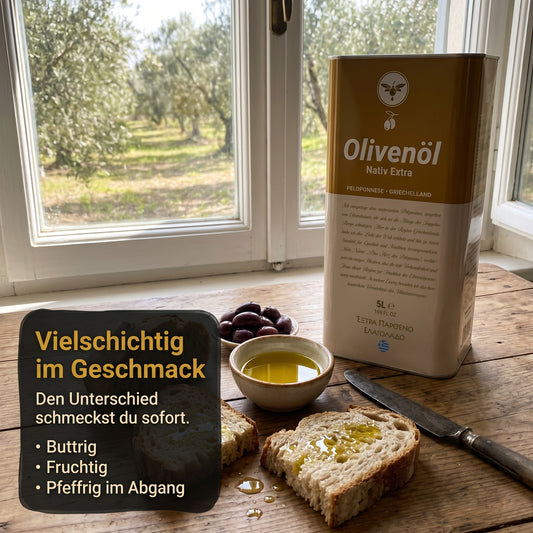
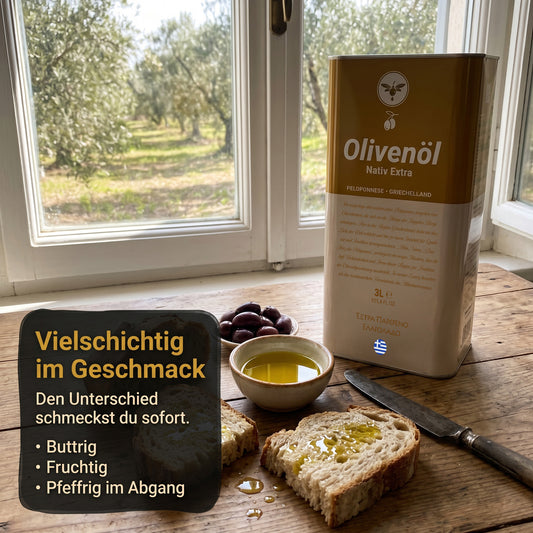
In a dish this simple, the olive oil is not a background player — it is the flavour. It carries the sweetness of the roasting onions, coaxes the natural sugars out of the tomatoes and courgettes, and forms the glossy sauce that makes briam so moreish. Because the vegetables spend a long time in the oven, they gently absorb the oil, which is why Greek cooks are famously generous with it. A grassy, peppery extra virgin olive oil from the Peloponnese gives briam a rounded, fruity depth that a neutral oil simply cannot. Do not be tempted to skimp: this is the moment to use an oil you would be happy to taste on its own.
Choosing the Vegetables
The classic quartet is potatoes, courgettes, aubergine and ripe tomatoes, held together by sweet onion and garlic. Potatoes give body, courgettes and aubergine bring silkiness, and the tomatoes provide the acidity and juice that becomes the sauce. Red or green peppers are a common and very welcome addition. Choose firm, glossy aubergines and courgettes of a similar size so they cook evenly, and the ripest tomatoes you can find — in winter, good tinned tomatoes work well.
Ingredients
Serves 4 to 6 as a main course, or more as a side. Quantities are a guide — briam is a forgiving dish.
- 2 medium potatoes, peeled and thinly sliced
- 2 courgettes, sliced into rounds
- 1 medium aubergine, cut into half-moons
- 4 ripe tomatoes, sliced (plus 1 grated for extra sauce)
- 2 red onions, thinly sliced
- 3 garlic cloves, finely chopped
- 1 red pepper, sliced (optional)
- 120 ml extra virgin olive oil, plus more to finish
- 1 tsp dried oregano
- A small handful of fresh parsley, chopped
- Sea salt and freshly ground black pepper
- Optional: feta, to serve
How to Make Briam: Step by Step
- Heat the oven to 190°C (170°C fan / gas mark 5).
- Prepare the vegetables. Slice everything to a similar thickness, around half a centimetre, so it all cooks at the same pace, then place it in a large roasting tin.
- Season and oil generously. Add the garlic, oregano, half the parsley, a good pinch of salt and plenty of pepper. Pour over the olive oil and the grated tomato, then toss with your hands until every piece glistens.
- Arrange. Spread the vegetables out — either tumbled rustically or arranged in neat overlapping rows for a prettier finish. Tuck the sliced tomatoes over the top.
- Bake. Roast uncovered for about 60 to 75 minutes, stirring gently once or twice, until the vegetables are soft, glossy and caramelised at the edges and most of the liquid has reduced to a rich sauce.
- Rest and finish. Let the briam sit for 10 to 15 minutes. Scatter with the remaining parsley and a final drizzle of olive oil before serving.
Tips for the Best Briam
- Salt the aubergine for 20 minutes and pat it dry if you want to reduce any bitterness and help it soften.
- Do not rush the roast. Long, slow cooking is what gives briam its signature melting texture — the edges should catch and colour.
- Add a splash of water if the tin looks dry before the vegetables are tender.
- Better the next day. Briam keeps for three days in the fridge and tastes even better once rested.
How to Serve Briam
Briam is a complete meal in itself — all you really need is bread to mop up the sauce. Serve it warm or at room temperature with a thick slice of crusty sourdough, a block of feta and a few olives on the side. It also makes a superb side dish alongside grilled fish, roast chicken or lamb, and sits perfectly on a summer meze table next to tzatziki and a Greek salad. A final drizzle of raw olive oil just before eating lifts the whole plate.
Frequently Asked Questions
Is briam the same as ratatouille?
They are close cousins but not identical. Both celebrate summer vegetables, but ratatouille is often cooked in stages on the hob, while briam is baked all together in one tray in the oven, using more olive oil so the vegetables slowly confit and release a savoury sauce.
Can I make briam ahead of time?
Absolutely — briam is one of those dishes that improves with a rest. Make it a day ahead, keep it covered in the fridge, and either serve at room temperature or warm it gently. The flavours deepen noticeably overnight.
Which olive oil is best for briam?
A robust, fruity extra virgin olive oil is ideal, because it is both the cooking medium and the main flavour. A polyphenol-rich Greek oil such as our Peloponnese extra virgin stands up beautifully to the long bake and finishes the dish with a peppery, grassy note.
Our product tip
Olive Oil Extra Virgin 500 ml from the Peloponnese
Hand-harvested, polyphenol-rich and peppery — the perfect oil to give your briam its soul.
Shop the olive oilBriam proves that the finest Mediterranean cooking is often the simplest: ripe vegetables, good olive oil and a warm oven. Reach for a bottle you love, be generous with it, and let the Peloponnese come to your table. Pour La Vie.