Authentic Greek Tzatziki: The Easy Traditional Recipe with Olive Oil
Few dishes capture the Greek table like tzatziki — a cool, garlicky yoghurt-and-cucumber dip finished with a slow ribbon of green olive oil. It sits beside grilled meats, tucks into warm pita, and anchors every meze spread from Athens to the islands. Best of all, authentic tzatziki takes minutes to make from a handful of honest ingredients.
The secret is not a long shopping list — it is quality. Thick strained yoghurt, properly drained cucumber, fresh garlic and, above all, a generous pour of real extra virgin olive oil. Get those right and you will never reach for a plastic supermarket tub again. Here is how to make it at home, Pour La Vie.
What is tzatziki?
Tzatziki (say dzah-DZEE-kee) is a traditional Greek dip made from strained yoghurt, grated cucumber, garlic, olive oil and a little acidity from red wine vinegar or lemon. Fresh herbs — usually dill, sometimes mint — round it out. It belongs to a wider family of Mediterranean yoghurt dips, but the Greek version stands apart for its thickness and its unmistakable garlic-and-olive-oil backbone.
Served well chilled, it plays two roles at once: a refreshing sauce for hot, charred food and a standalone dip for bread and raw vegetables. That contrast — cool and creamy against warm and smoky — is exactly why it has travelled so far beyond Greece.
A dip with deep roots
Yoghurt-and-cucumber dips have been made across the eastern Mediterranean for centuries, carried and adapted along old trade routes. The Greek tzatziki we know today — thick, garlicky and glossy with olive oil — grew out of that shared tradition and became a fixture of home cooking and of every taverna table. Each family keeps its own balance of garlic and herbs, which is part of the charm: there is a right method, but no single “correct” bowl.
Why the olive oil matters most
You can use good yoghurt and still make a decent bowl of tzatziki. But if you want it to taste properly Greek, the olive oil has to be the real thing. Extra virgin olive oil brings the peppery, grassy, gently bitter notes that lift the yoghurt and carry the garlic. Refined or blended oils taste flat and slightly greasy by comparison, and they mute everything around them.
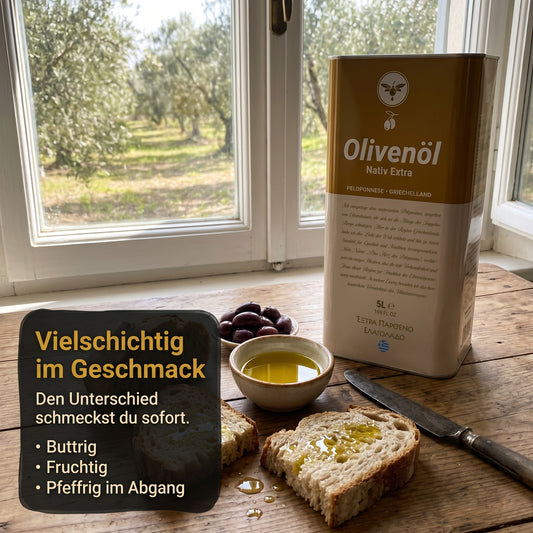
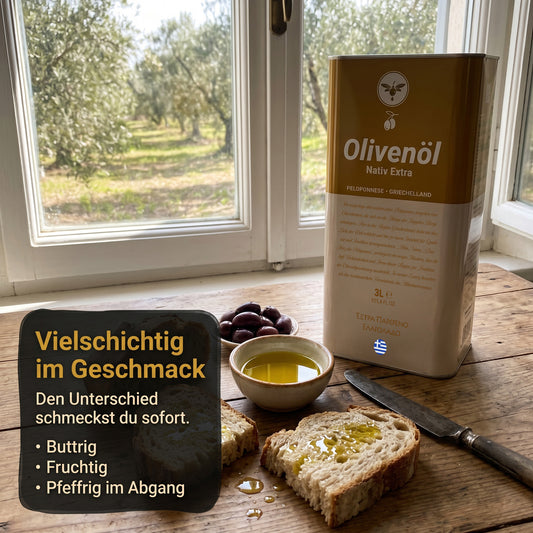
We reach for our extra virgin olive oil from the Peloponnese — hand-harvested, naturally cloudy, unfiltered and cold-extracted, with the fruity, buttery, peppery character that defines a great Greek oil. Stir a little into the dip for body, then drizzle more over the top just before serving. That final pour is not decoration; it is the flavour.
Ingredients
Makes about 400 g, enough for four to six people as a dip or sauce.
- 500 g thick Greek strained yoghurt (full-fat, ideally 10%)
- 1 medium cucumber (about 300 g)
- 2–3 garlic cloves, finely grated
- 2 tbsp extra virgin olive oil, plus more to serve
- 1 tbsp red wine vinegar (or the juice of half a lemon)
- 1 tbsp finely chopped fresh dill (or mint)
- ½ tsp fine sea salt, plus extra for the cucumber
How to make tzatziki
- Grate and salt the cucumber. Coarsely grate the whole cucumber, skin on. Toss it with a good pinch of salt in a sieve and leave it over a bowl for 10–15 minutes. The salt draws out water that would otherwise make your dip runny.
- Squeeze it dry. Gather the grated cucumber in a clean tea towel or in your hands and squeeze firmly over the sink. Get it as dry as you can — you will be surprised how much liquid comes out.
- Build the base. In a bowl, combine the strained yoghurt, grated garlic, olive oil, vinegar and the ½ tsp of salt. Whisk briefly until smooth and glossy.
- Fold in cucumber and herbs. Add the squeezed cucumber and chopped dill and stir through. Taste and adjust with more salt, vinegar or garlic until it sings.
- Rest it. Cover and chill for at least 30 minutes — an hour is better. Resting lets the garlic mellow and the flavours marry.
- Finish and serve. Spoon into a bowl, make a shallow well in the surface and pour in a final drizzle of extra virgin olive oil. Add a little more dill if you like, and serve cold.
Tips for the best tzatziki
Use genuinely strained, Greek-style yoghurt rather than runny natural yoghurt — the texture depends on it. Grate the garlic instead of chopping it so it disperses evenly and never bites in one spot. If you can, make it a few hours ahead: tzatziki is one of those dishes that tastes better after a rest in the fridge. And go easy on the vinegar at first; you can always add more, but you cannot take it back.
How to serve tzatziki
Tzatziki is endlessly useful. Serve it as a dip with warm pita, toasted bread or crisp raw vegetables. Spoon it beside grilled or roasted vegetables, souvlaki, or a simple piece of fish. Use it as a cooling sauce in wraps and sandwiches, or as one dish among many on a meze board with olives, bread and a bowl of good olive oil. A scattering of Greek olives on the side turns it into a light summer lunch on its own.
Storing tzatziki
Keep tzatziki covered in the fridge for up to three days. The garlic grows stronger over time, so a day-old batch has real punch. If a little liquid separates on top, simply stir it back in before serving. Tzatziki does not freeze well — the yoghurt and cucumber turn grainy and weep once thawed — so it is best made fresh.
Frequently asked questions
Do I peel the cucumber for tzatziki?
There is no need. The skin adds colour and a little texture, and once grated and squeezed it disappears into the dip. If your cucumber has a particularly thick or waxed skin, peel it in stripes — some on, some off.
Can I make tzatziki dairy-free or vegan?
Yes. Swap the Greek yoghurt for a thick, unsweetened plant-based yoghurt (coconut or soy work well) and keep everything else the same. Because plant yoghurts vary in tang, taste as you go and adjust the vinegar and salt. The olive oil matters even more here, as it carries much of the richness.
Why is my tzatziki watery?
Almost always the cucumber. If it is not salted and squeezed thoroughly, it releases water into the yoghurt as the dip sits. Drain and squeeze it hard, and start with genuinely thick strained yoghurt rather than a thin one.
Our product tip
Extra Virgin Olive Oil from the Peloponnese (500 ml)
Hand-harvested, unfiltered and cold-extracted — the fruity, peppery oil that makes tzatziki taste truly Greek.
Shop the olive oilHomemade tzatziki is proof that a few natural ingredients, treated with care, beat anything from a tub. Make it once with a proper extra virgin olive oil and you will taste the difference at once — bright, garlicky and unmistakably Greek. That is the Jegit way: nothing added, nothing hidden, just honest Mediterranean flavour. Pour La Vie.