Aioli with Olive Oil: The Authentic Mediterranean Garlic Sauce
Few things capture the spirit of the Mediterranean table like a bowl of proper aioli. At its heart it is astonishingly simple — garlic, salt and good olive oil, coaxed into a glossy, golden emulsion that clings to whatever you dip into it. Made well, aioli tastes of sunshine and stone-walled kitchens; made carelessly, it splits into a greasy puddle. The difference nearly always comes down to two things: patience, and the quality of the olive oil you pour in.
This guide walks you through making aioli with olive oil the way it is done along the coasts of Provence, Catalonia and Greece — slowly, by hand, with room-temperature ingredients and a steady wrist. You will also find a faster, foolproof egg-yolk version, tips for rescuing a broken batch, and plenty of ideas for serving it. True to our motto, Pour La Vie, this is food made from a handful of honest ingredients and nothing you cannot pronounce.
What Is Aioli, Really?
The word aioli comes from the Occitan ai (garlic) and oli (oil). In its oldest form it is exactly that: raw garlic pounded to a paste with salt, then emulsified with olive oil drop by drop until it turns thick and pale. No egg, no lemon, no mustard — just two ingredients and a mortar. This traditional version is intensely garlicky and beautifully pure, but it is also temperamental, because garlic alone is a weak emulsifier.
Over time, cooks began adding an egg yolk to stabilise the sauce. The yolk is rich in lecithin, a natural emulsifier that lets the oil and water come together reliably and forgivingly. The result is closer to a garlic mayonnaise, but softer and far more fragrant than anything from a jar. Both versions are “real” aioli; we give you the classic method below with the egg-yolk route as a dependable alternative.
Why the Olive Oil Makes All the Difference
Because aioli is mostly oil, the olive oil is not a background player — it is the flavour. A dull, flat oil gives a dull, flat sauce, while a vibrant extra virgin oil brings grassy, peppery and buttery notes that dance against the raw garlic. You genuinely taste the origin of the oil in every spoonful.
Choosing the right olive oil
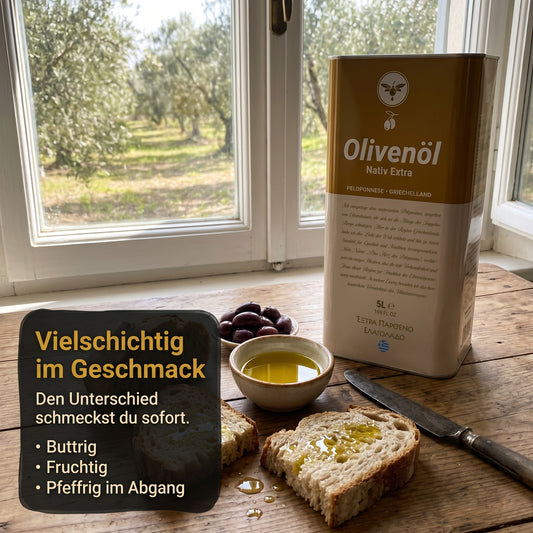
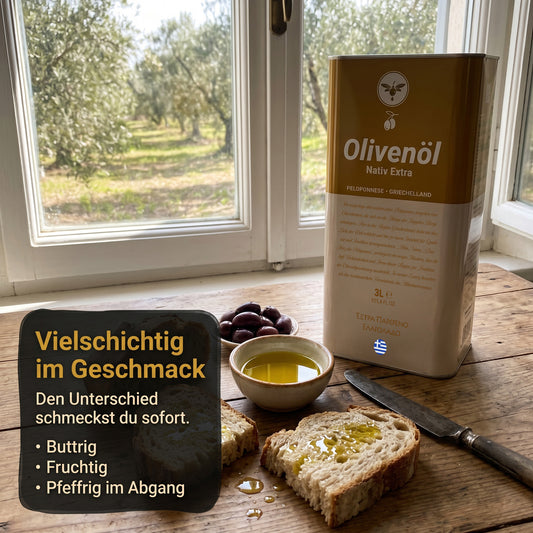
For aioli you want a fresh, cold-extracted extra virgin olive oil with genuine character. Our hand-harvested oil from the Peloponnese is naturally cloudy, low in acidity and rich in polyphenols, with the spicy, buttery, peppery profile that gives aioli its backbone. If you find a single robust oil too bitter for your taste, you can soften it by using part fruity oil and part neutral oil — but a good olive oil, used with a light hand, rarely needs help.
Ingredients
Makes about one small bowl (roughly 250 ml), enough for four to six people as a dip.
- 4 plump garlic cloves, peeled and any green germ removed
- 1/2 teaspoon fine sea salt, plus more to taste
- 1 large egg yolk, at room temperature (for the stabilised version)
- 200 ml extra virgin olive oil from the Peloponnese, at room temperature
- 1 teaspoon fresh lemon juice (optional, to brighten and help stabilise)
- 1 teaspoon lukewarm water, if needed to loosen
A tip before you start: everything works best at room temperature. Cold ingredients are the most common reason an emulsion refuses to come together.
How to Make Aioli with Olive Oil
- Make the garlic paste. Put the garlic and salt in a mortar and pound to a smooth, wet paste. The salt acts as an abrasive and helps break down the garlic completely, which is the secret to a mellow rather than harsh flavour.
- Add the yolk. Add the room-temperature egg yolk to the garlic paste and stir until you have a uniform, slightly sticky base. (For the traditional egg-free version, skip this step and go straight to the oil — but add it even more slowly.)
- Start the oil drop by drop. Add the olive oil literally a few drops at a time, stirring or whisking constantly in one direction. Let each addition disappear before adding more. This slow start is what builds a stable emulsion.
- Build to a steady stream. Once the sauce has visibly thickened and turned pale, you can add the oil in a thin, steady trickle, still whisking without pause. You will feel it grow firm and glossy.
- Season and loosen. When all the oil is incorporated, stir in the lemon juice if using, then taste. Adjust with a little more salt. If the aioli is thicker than you like, beat in a teaspoon of lukewarm water.
- Rest and serve. Let the aioli sit for ten minutes so the flavours settle, then serve at room temperature.
The traditional pestle-and-mortar method
If you want the purest expression, skip the egg entirely. Pound the garlic and salt as above, then add the olive oil one drop at a time, grinding constantly with the pestle in a slow circular motion. It takes patience and a good arm, but the reward is a sauce of remarkable purity — garlic and oil and nothing else. An olive-wood mortar and pestle is the classic tool for exactly this job.
Tips for a Perfect Emulsion
Go slowly at the start — this is the single most important rule. Keep everything at room temperature, and use a bowl that holds your whisk at a comfortable angle. If you are whisking by hand, set the bowl on a damp cloth so it does not skid. Add the olive oil more gradually than feels necessary; you can always speed up once the emulsion is established, but you cannot undo a rushed beginning.
How to rescue a broken aioli
If your sauce splits and turns oily, do not throw it away. Put a fresh egg yolk (or a teaspoon of the already-made aioli plus a few drops of water) in a clean bowl, and slowly whisk the broken mixture into it, drop by drop, exactly as if it were oil. It will come back together into a smooth sauce.
How to Serve Aioli
Aioli is wonderfully versatile. Serve it as a dip for warm crusty bread, roasted or grilled vegetables, boiled new potatoes, or a platter of crudités. It is the classic partner for a Provençal grand aioli of poached fish and vegetables, and it turns simple grilled prawns or lamb into something special. Spread it on sandwiches and burgers, dollop it beside oven fries, or stir a spoonful through a warm potato salad. A small bowl of aioli alongside olives and good bread is a meze in itself.
Frequently Asked Questions
Can I make aioli with only olive oil, or should I mix in a neutral oil?
You can absolutely make it with 100% extra virgin olive oil, and traditionally that is exactly what it is. A very robust, bitter oil can taste sharp in large amounts, so if you prefer a milder sauce, use half fruity olive oil and half neutral oil. With a balanced, buttery oil like ours, all-olive-oil aioli is a pleasure.
Why did my aioli split, and can I prevent it?
Splitting usually happens when the oil is added too fast, or when the ingredients are cold. Bring everything to room temperature, add the oil drop by drop at the start, and whisk constantly. If it still breaks, use the rescue method above with a fresh yolk.
How long does homemade aioli keep?
Because it contains raw garlic and (usually) raw egg yolk, keep aioli covered in the fridge and use it within two days. Let it come back to room temperature and give it a quick stir before serving. Do not leave it at room temperature for long stretches.
Our product tip
Extra Virgin Olive Oil 5L from the Peloponnese
Hand-harvested, naturally cloudy and rich in polyphenols — the peppery backbone your aioli deserves.
Shop the olive oilOnce you have made aioli with a truly good olive oil, the jarred stuff loses its appeal for good. It is proof that a handful of natural ingredients, treated with a little patience, can become something greater than the sum of its parts. That is what we mean by Pour La Vie — food made simply, for the love of living well.