Why Are Olives So Bitter Off the Tree? How Table Olives Are Cured
Pick an olive straight from the branch, take a hopeful bite, and you will spit it out immediately. Raw olives are astonishingly, mouth-puckeringly bitter — so bitter that they are essentially inedible. And yet the cured olives in your salad or on your meze board are savoury, fruity and deeply moreish. The journey between those two states is one of the oldest and most quietly clever traditions in Mediterranean food: curing.
If you have ever wondered why olives need so much preparation, what the difference between green and black really is, or how to recognise a properly cured olive, this guide walks you through it — and explains why the way an olive is cured matters just as much as where it was grown.
Why You Can't Eat an Olive Straight From the Tree
The culprit is a natural compound called oleuropein, concentrated in the flesh of the raw fruit. It is intensely bitter, and it is there to protect the olive on the tree. Curing is, at heart, simply the process of drawing out or breaking down that bitterness until the fruit becomes pleasant to eat, while developing the savoury, complex flavours we love.
Every traditional curing method — whether it uses water, salt or brine — is a different way of solving that same problem. The method chosen shapes the final taste, texture and character of the olive.
The Main Ways Olives Are Cured
Brine curing
The most traditional and widely used method. Olives are submerged in a simple salt-and-water brine, where a slow natural fermentation gradually removes the bitterness over weeks or months. This is how many classic Greek table olives are made, and it produces a firm, lively, faintly tangy result. It is also the gentlest method, keeping the fruit close to its natural state.
Water curing
Here the olives are soaked in fresh water that is changed regularly over days or weeks, leaching out the oleuropein bit by bit. It is slow and requires patience, but yields a mild, clean-tasting olive.
Dry (salt) curing
Ripe black olives are packed in salt, which draws out both moisture and bitterness. The result is a wrinkled, intense, concentrated olive with a slightly chewy texture — the kind often described as oil-cured once dressed in olive oil afterwards.
Lye curing
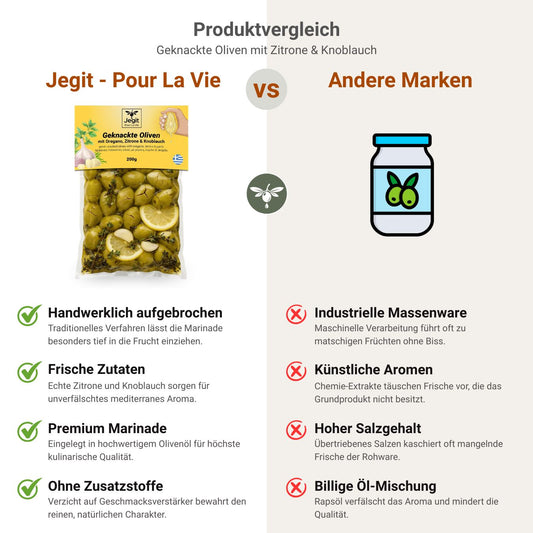
The fastest, most industrial method, using an alkaline solution to strip bitterness in a day or two. It is efficient and common in mass production, but it is a world away from the slow, natural approach, and it tends to flatten the flavour. This is precisely the sort of shortcut a traditional producer avoids.
Green vs Black: It's About Ripeness, Not Just Colour
One of the most common misunderstandings is that green and black olives are different fruits. They are not — in most cases they are the same olive at different stages of ripeness. Green olives are harvested earlier, while still firm and unripe, giving a crisp bite and a brighter, more herbaceous flavour. As an olive ripens on the tree it darkens, softening in both texture and taste. Fully ripe, naturally dark olives such as black Kalamata olives are richer, rounder and more mellow.
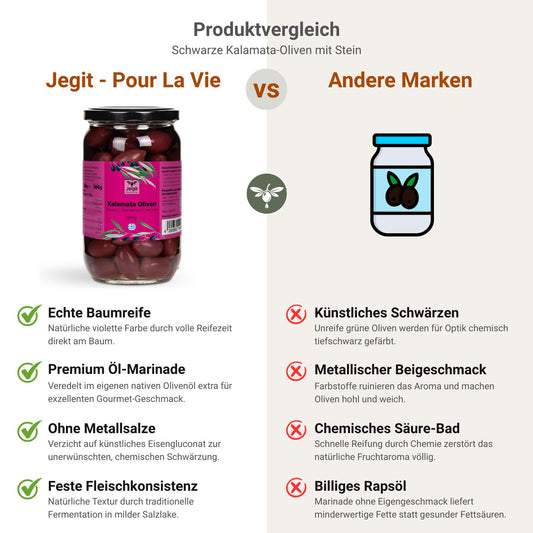
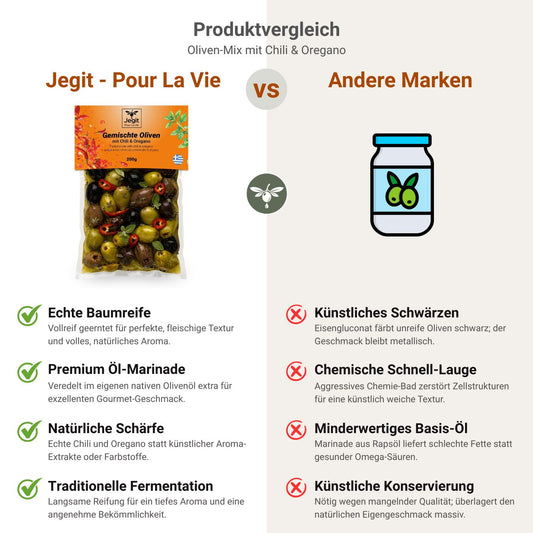
A word of caution when shopping: some very cheap, uniformly jet-black canned olives owe their colour not to ripeness but to a treatment that darkens under-ripe fruit artificially. Naturally cured olives, by contrast, vary in shade and shape, because nature is never perfectly uniform.
How Long Does Curing Take?
It depends entirely on the method. Lye curing can be over in a day or two. Water curing takes one to three weeks. Traditional brine fermentation, the method behind the best table olives, can take anywhere from a couple of months to the better part of a year. That patience is not wasted time — it is where the depth of flavour comes from.
How to Tell Naturally Cured Olives From Fast-Processed Ones
A few simple signs point to olives cured the slow, honest way. Look for olives sold with their stone still in, which protects texture and flavour. Check the ingredients: naturally cured olives need little more than olives, water, salt and perhaps vinegar or a splash of olive oil — no colour stabilisers, no long list of additives. And trust variation: naturally cured olives differ slightly in size and shade from one to the next. At Jegit, our olives are naturally harvested and cured without artificial additives, exactly as tradition intends.
How to Store and Serve Cured Olives
Keep opened olives submerged in their brine in the fridge, where they will stay in good condition for several weeks; the brine is their natural preservative, so do not pour it away. Before serving, lift them out and, if you like, dress them with a little extra virgin olive oil, lemon zest, oregano or garlic to bring them to life. Serve them as part of a meze spread, alongside cheese and bread, tossed through a salad, or simply on their own with a glass of something cold.
Our Product Tip
Black Kalamata Olives with Pit
Naturally harvested and cured without additives — rich, mellow and full of authentic Greek flavour.
Shop the Kalamata olivesFrequently Asked Questions
Can you eat olives raw, straight from the tree?
Not pleasantly. Raw olives contain oleuropein, a naturally bitter compound that makes them practically inedible. They must be cured — in water, salt or brine — before they become the savoury olives we enjoy.
Are green and black olives different types?
Usually not. In most cases they are the same fruit picked at different stages of ripeness: green olives are harvested young and firm, while black olives are left to ripen and mellow on the tree. Ripeness, not species, is the main difference.
Why are some olives sold with the stone left in?
Leaving the stone in helps protect the olive's texture and flavour during curing and storage, and many people feel stone-in olives simply taste better. It is often a sign of a more traditional, less heavily processed product.
Pour La Vie
An olive is a small lesson in patience. From a bitter, inedible fruit, time and a little salt create something savoury, complex and endlessly enjoyable — but only if the process is respected rather than rushed. That is the difference we care about at Jegit: olives cured naturally, without additives, the way the Mediterranean has always done it. Natural, honest and made to be enjoyed Pour La Vie.