What Is Aleppo Soap Made Of? The Ingredients Explained
Aleppo soap has been made in more or less the same way for centuries, and part of its appeal is how little goes into it. While a modern supermarket soap can list twenty or more ingredients, a genuine bar of Aleppo soap is built from just a handful of natural components. If you have ever turned a bar over looking for an ingredient list and found almost nothing, that is not an oversight — it is the whole idea.
So what is Aleppo soap actually made of? Below we break down each ingredient, explain the famous laurel-to-olive ratio, and show you what should — and should not — be in an authentic bar.
What Is Aleppo Soap Made Of? The Short Answer
Traditional Aleppo soap is made from four things: olive oil, laurel berry oil, water and a natural alkali (lye). That is it. There are no synthetic fragrances, no artificial colours, no preservatives and no palm oil. The olive oil forms the gentle, cleansing base, the laurel oil gives the soap its character, and the water and lye are what turn those oils into solid soap through a process called saponification. By the time the soap has cured, no active lye remains — only soap and the natural glycerine created along the way.
The Ingredients Explained
Olive oil — the gentle base
Olive oil makes up the largest share of an Aleppo bar, typically between 60% and 80%. It is what makes the soap so mild and why it is often chosen for dry or sensitive skin. Olive oil produces a soft, low, creamy lather rather than the big bubbles you get from harsher cleansers, and it helps the soap cleanse without stripping the skin of its own natural oils. The same peppery Mediterranean olive oil that belongs in your kitchen is, in essence, the heart of this soap.
Laurel berry oil — the signature
Laurel berry oil (from the bay laurel tree) is what sets Aleppo soap apart from a plain olive-oil soap. It gives the bar its distinctive earthy, woody, slightly herbal aroma and its greenish tint just beneath the surface. Laurel oil is prized for its rich, conditioning feel. The more laurel oil a bar contains, the more intense its scent and the more "active" it feels — which is exactly why the ratio matters so much (more on that below).
Water
Water is the medium that allows the lye to react with the oils. It is mixed with the alkali and the warm oils during production, then gradually evaporates over the long curing period, leaving a hard, long-lasting bar. This is why a well-cured Aleppo soap feels dense and dry rather than soft.
Natural lye — and why none is left in the finished bar
To turn oil into soap you need an alkali, traditionally derived from natural sources. When the lye meets the oils it triggers saponification, the chemical reaction that creates soap. This step understandably worries some people, but it is worth knowing that no lye remains in a properly made, cured bar. It is entirely consumed in the reaction, leaving behind soap and skin-loving glycerine. Every real soap on earth — natural or synthetic — is made this way.
What Is the Laurel-to-Olive Ratio?
Aleppo soap is usually described by its percentage of laurel oil, for example "40% laurel". This simply tells you how much of the oil content is laurel berry oil versus olive oil. A bar with a higher laurel percentage has a stronger aroma and a richer feel, and is often preferred for oily or blemish-prone skin and for hair. A lower-laurel bar is milder and gentler, which many people like for the face or for young or very sensitive skin. A balanced 40% laurel / 60% olive oil bar is a popular all-rounder: aromatic and characterful, yet still mild enough for daily use on the whole body.
What You Won't Find in Genuine Aleppo Soap
Part of understanding what Aleppo soap is made of is understanding what it is made without. A truly authentic bar contains no synthetic fragrance or "parfum", no artificial dyes, no palm oil, no synthetic foaming agents such as SLS, and no preservatives. Its natural olive-green-to-brown colour comes from the oils themselves, and its scent comes only from the laurel. If a bar lists perfume, colourants or a long chain of unpronounceable additives, it is not traditional Aleppo soap.
How the Ingredients Become Soap
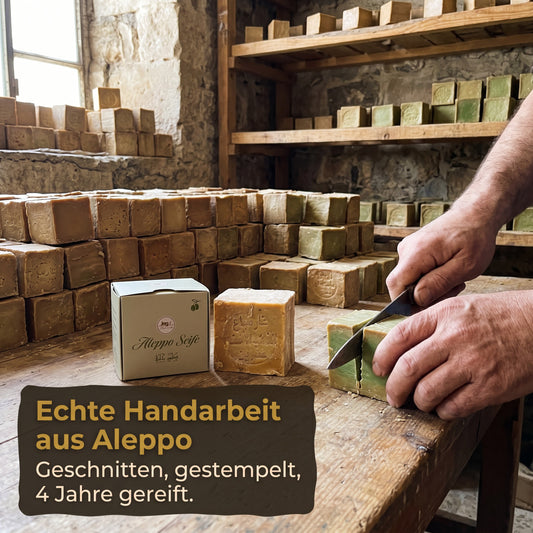
The oils, water and lye are combined and heated in large vats, then the hot liquid soap is poured out to set. Once firm, it is cut by hand into the familiar cube shapes and stamped, then stacked so air can circulate around every bar. The soap is left to cure and age — often for many months and sometimes for years. During this time the surface oxidises to its characteristic golden-brown, while the inside stays green, and the bar hardens into the mild, long-lasting soap Aleppo is famous for. Our own bars are matured for at least four years before they reach you.
How to Tell Genuine Aleppo Soap from Imitations
A real bar is olive-green to golden-brown on the outside and distinctly green when cut open. It should smell earthy and natural from the laurel oil, not perfumed. It feels hard and dry, floats or sits heavy in the hand, and lists only oils, water and lye — nothing else. If you see a short, honest ingredient list and a hand-cut, slightly irregular shape, you are almost certainly holding the real thing.
Frequently Asked Questions
Is there lye in the finished Aleppo soap?
No. Lye (an alkali) is needed to turn the oils into soap, but it is completely used up during saponification and curing. A properly made, aged bar contains no active lye — only soap and the natural glycerine produced in the process.
Does Aleppo soap contain palm oil or synthetic fragrance?
Authentic Aleppo soap contains neither. It is made only from olive oil, laurel berry oil, water and a natural alkali. Its colour and scent come entirely from the oils, with no added palm oil, dyes or perfume.
Which laurel percentage should I choose?
A higher laurel content (for example 40%) gives a stronger aroma and a richer feel, often preferred for oily skin and hair, while a lower percentage is milder for the face and sensitive skin. A 40% laurel / 60% olive oil bar is a well-balanced choice for everyday use on the whole body.
Our Product Tip
Aleppo Soap — 40% Laurel Oil & 60% Olive Oil
Just four natural ingredients, hand-cut and matured for at least four years — for head, body and even shaving.
Discover our Aleppo soapOnce you know that Aleppo soap is nothing more than olive oil, laurel oil, water and time, it is easy to see why so many people return to it. It is skincare stripped back to the essentials — pure, natural and honest. Pour La Vie.