Olive Varieties: A Guide to the Most Popular Types of Olives
Stand in front of a well-stocked deli counter and the sheer range of olives can be bewildering. Some are tiny and wrinkled, others large and glossy; some a deep, almost black purple, others a vivid spring green. Each of these olive varieties has its own story, its own texture and its own place at the table. Understanding the differences makes shopping easier and your Mediterranean cooking far more rewarding.
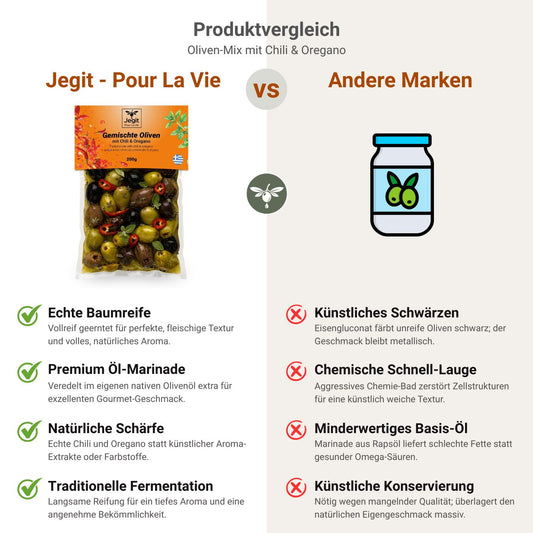
This guide walks through the most popular types of olives, how they taste, and how to choose the right ones, whether you are building a meze platter, baking a loaf of olive bread, or simply looking for a wholesome snack. If you would like to taste several at once, our Greek mixed olives tasting box is an easy way to explore the range.
Green Olives vs Black Olives: It Is About Ripeness
The first thing to understand is that green and black olives are not necessarily different varieties. In most cases they are simply the same fruit picked at different stages of ripeness. Green olives are harvested early, before they fully mature, which gives them a firm bite and a bright, slightly tangy flavour. Left on the tree, those same olives darken through shades of purple to a deep brown-black and develop a softer texture and a rounder, mellower taste.
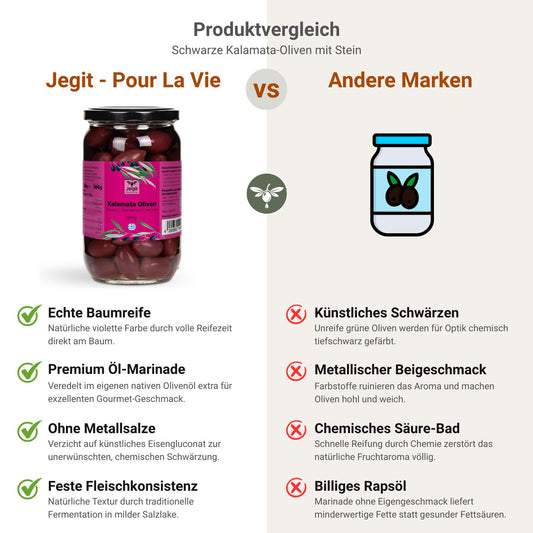
Be wary of uniformly jet-black olives with no variation in colour. These are often unripe green olives that have been chemically darkened and oxidised. Naturally ripened olives, by contrast, show subtle differences in tone from fruit to fruit – a reassuring sign of an authentic, additive-free product.
Kalamata Olives
Perhaps the most famous of all Greek olives, the Kalamata olive takes its name from the city in the southern Peloponnese. Almond-shaped and a deep aubergine-purple, Kalamata olives are prized for their rich, fruity, almost wine-like flavour and meaty flesh. They are naturally cured in brine and red wine vinegar, which gives them their characteristic tang.
Kalamata olives are wonderfully versatile. They are the classic choice for a Greek salad, an essential ingredient in olive tapenade, and the traditional fruit folded into rustic olive bread. Their robust flavour also stands up well to slow-cooked dishes such as chicken or lamb with tomatoes and herbs.
Chalkidiki (Green Halkidiki) Olives
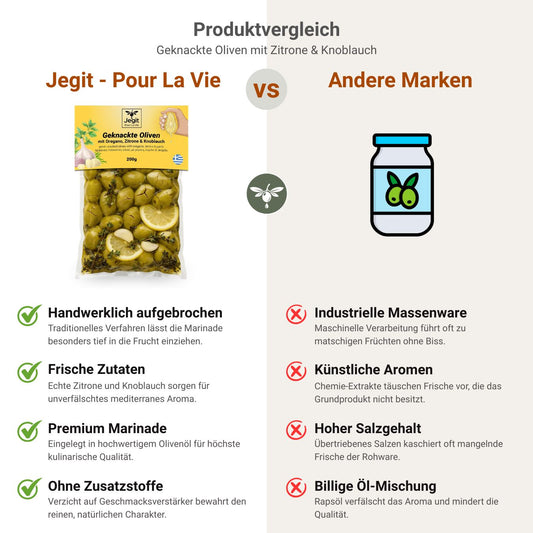
Grown in the Halkidiki region of northern Greece, green Chalkidiki olives are large, firm and a beautiful pale green. They have a mild, fresh and gently fruity flavour with a satisfying crunch, which makes them a favourite for snacking and for marinating with herbs, garlic and citrus.
Because of their size and firm flesh, Chalkidiki olives are also ideal for stuffing, and they hold their shape well on an antipasti board. If you find some olive varieties too intense, the mellow character of a good Chalkidiki olive is often the perfect place to start.
Other Olives Worth Knowing
Beyond these Greek classics, several other varieties appear regularly on shop shelves. Manzanilla olives from Spain are small, green and slightly smoky, and are the type most often stuffed with pimento. Castelvetrano olives from Sicily are bright green, buttery and remarkably mild, almost sweet. Nicoise olives from southern France are tiny, herbal and a key part of the famous salad of the same name. Each reflects the soil, climate and traditions of its home region.
Cured Olives and How They Are Prepared
Fresh olives straight from the tree are intensely bitter and inedible. Every olive you eat has been cured to remove that bitterness, and the curing method shapes the final flavour. Brine curing, in salt water, is the most traditional and gentle approach, preserving the fruit while allowing a slow, natural fermentation. Dry salt curing produces the wrinkled, concentrated olives often seen in North African cooking. The simplest, purest olives are those cured with nothing more than salt, water and time.
How to Choose the Right Olives
Start with how you plan to use them. For a punchy salad or a rich bread, reach for Kalamata. For relaxed snacking and marinating, choose a firm green olive such as Chalkidiki. For a generous meze or charcuterie board, a selection of several varieties offers the most interest. Look for olives sold in brine rather than heavily processed tins, check that the colour looks natural, and favour producers who keep their ingredients list short and honest.
Frequently Asked Questions
Are green and black olives from the same tree?
Very often, yes. The colour usually reflects ripeness rather than variety: green olives are picked early and firm, while black olives are left to ripen fully and turn soft and mellow. Some varieties are traditionally harvested green and others black, but the same tree can yield both.
Which olives are best for a Greek salad?
Kalamata olives are the authentic and most popular choice. Their rich, fruity flavour and meaty texture complement feta, tomatoes and cucumber perfectly. For a milder salad you could use a green Chalkidiki olive instead.
Are olives healthy?
Olives are a cornerstone of the Mediterranean diet and a source of heart-friendly monounsaturated fats and natural antioxidants. They are naturally salty because of the curing brine, so they are best enjoyed as part of a balanced diet. Choosing naturally cured olives without artificial additives is always the better option.
Our Product Tip
Greek Mixed Olives Tasting Box
A curated selection of five marinated Greek olive varieties – the easiest way to discover your favourite.
Shop the Tasting BoxOnce you learn to read the differences between olive varieties, a whole world of Mediterranean flavour opens up. Choose naturally cured fruit, taste widely, and let the orchard speak for itself – Pour La Vie.