Olive Oil for Skin and Face: How to Use It in Your Natural Routine
Long before serums came in glass droppers, Mediterranean women were reaching for the same bottle of olive oil they cooked with. Around the olive-growing regions of Greece and the Levant, a few drops of good oil have smoothed skin, softened hands and conditioned hair for thousands of years. Today, as more of us look for simple, additive-free skincare, olive oil is quietly having a comeback — and for good reason.
This guide explains what makes extra virgin olive oil such a useful skincare ingredient, exactly how to use it on your face and body, and how to tell whether a raw oil or a formulated olive-based cream is the better fit for your skin. No miracle promises — just an honest, practical look at one of nature's oldest beauty staples.
Why olive oil is good for your skin
Extra virgin olive oil is rich in things skin loves: monounsaturated fatty acids that help soften and smooth, naturally occurring squalene that is remarkably similar to the skin's own oils, and antioxidants such as vitamin E and polyphenols. Together they make olive oil a wonderfully cushioning, comforting oil that leaves skin feeling supple rather than tight.
Because it is an occlusive and emollient oil, it works by helping skin hold on to moisture and feel smoother to the touch. That makes it especially pleasant for dry, mature or weather-exposed skin during cold months. It is worth being clear about what olive oil is not: it is a cosmetic care ingredient, not a medicine, and it will not treat a skin condition. Think of it as nourishment and comfort rather than a cure.
Which olive oil should you use?
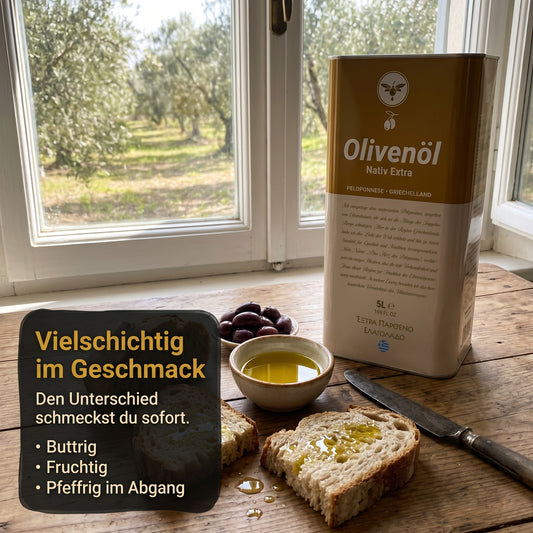
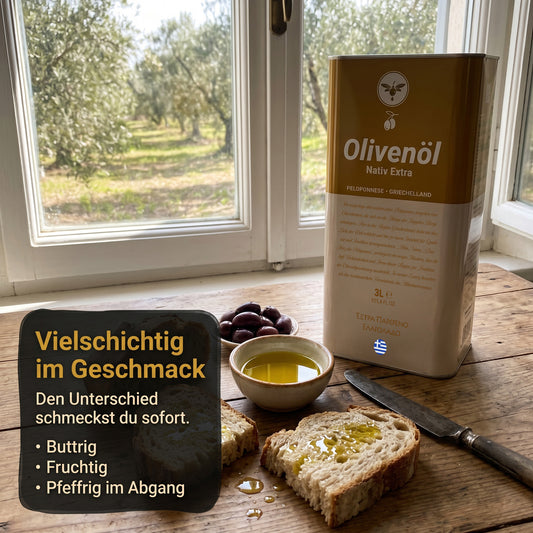
For skin, quality matters even more than it does in the kitchen. Choose a genuine extra virgin olive oil — cold-extracted, unfiltered if possible, and low in acidity — because these carry the most antioxidants and the fewest processing residues. A fresh, single-origin oil like our extra virgin olive oil from the Peloponnese is ideal: the same bottle earns its place on your table and your bathroom shelf. Avoid heavily refined “light” olive oils, which lose much of what makes the oil worthwhile for skin.
How to use olive oil on your face
As a gentle oil cleanser
Olive oil is a natural fit for the “oil cleansing” method. Massage a teaspoon of oil onto dry skin for a minute to loosen makeup, sunscreen and the day's grime, then lay a warm, damp cloth over your face for a few seconds and gently wipe away. It dissolves even stubborn eye make-up without the sting of harsh removers, leaving skin clean but never squeaky.
As an overnight moisturiser
After cleansing, warm two or three drops between your palms and press — don't rub — them onto slightly damp skin. Applying oil over a little water or toner helps trap moisture. A tiny amount is plenty; olive oil is rich, and more will simply sit on the surface. Used at night, it gives dry patches time to drink it in while you sleep.
As a targeted balm
A single drop worked into cuticles, dry elbows, lips or the ends of your hair is an easy way to use up the last of a bottle. Many people also love it as a soothing after-sun feel-good treatment once skin has cooled.
Olive oil for body, hands and hair
Straight from the bottle, olive oil makes a rich body oil — smooth it onto damp skin after a shower to seal in water. A few drops massaged into hands and nails overnight is a classic winter fix for rough skin, and a small amount smoothed through mid-lengths to ends tames frizz and adds shine. For a weekly treat, warm a tablespoon and comb it through dry hair half an hour before washing.
A quick word on oily and blemish-prone skin
Olive oil is a fairly rich, heavier oil, so if your skin is very oily or prone to congestion you may prefer to keep it to your body, or use only the tiniest amount on your face. Everyone's skin is different, so it is always sensible to patch-test a new oil on your inner arm for a day before applying it more widely. If your skin tends to react, a lighter, purpose-made formula may simply feel more comfortable.
Raw oil or a formulated olive cream?
Pure olive oil is beautifully simple, but it has two limitations: it is rich, and on its own it does not absorb quickly. If you want the goodness of the olive with a lighter, faster-absorbing feel — especially for daytime or for oilier skin — a formulated cream is often the more practical choice. Our Soft Antioxidant Cream with Olive Leaf is made for exactly this: it pairs the antioxidant power of olive-leaf extract with a weightless texture designed for oily and sensitive skin, so it hydrates without feeling greasy. Many people use both — the cream by day, a drop of oil by night.
Frequently asked questions
Can I put cooking olive oil on my face?
Yes, as long as it is a good-quality extra virgin olive oil with no additives — the same bottle you cook with is fine for skin. What matters is that it is pure and fresh. Highly refined or blended oils are less suitable because they contain fewer of the antioxidants that make olive oil worthwhile.
Will olive oil clog my pores?
Olive oil is a rich, heavier oil, so on very oily or congestion-prone skin it can feel like too much. It is better tolerated on drier skin and on the body. Patch-test first, use only a few drops, and if your face prefers something lighter, choose a formulated cream instead.
How often should I use it?
For most people a few times a week at night is plenty, and dry skin may enjoy it daily through winter. As a body or hair treatment it can be used as often as you like. Listen to your skin and adjust.
Our product tip
Soft Antioxidant Cream with Olive Leaf
A featherlight, olive-leaf moisturiser for oily and sensitive skin — the antioxidant power of the olive without the heaviness of oil.
Discover the creamOlive oil has cared for Mediterranean skin for centuries, and it asks for so little in return: choose a pure, fresh oil, use it sparingly, and let it do its quiet work. Whether you reach for the bottle or a featherlight olive-leaf cream, that is skincare the way nature intended. Pour La Vie.