Naturally Cloudy Olive Oil: Why Unfiltered Extra Virgin Is Worth It
You pour a good extra virgin olive oil into a glass and notice it is not crystal clear. It looks hazy, a little green-gold, perhaps with a faint sediment settling at the bottom. Your first instinct might be that something is wrong. In fact, the opposite is usually true: that gentle cloudiness is often a sign that the oil in your hand is closer to its natural state than the polished, transparent bottles lined up on supermarket shelves.
Naturally cloudy, unfiltered olive oil is how olive oil looked for most of its history, long before industrial filtration became standard. This guide explains what the haze actually is, why many producers and cooks prize it, how it affects flavour and storage, and how to decide whether filtered or unfiltered olive oil belongs in your kitchen.
What "Unfiltered" Actually Means
When olives are pressed, the liquid that comes out is a mixture of oil, water and tiny fragments of olive fruit and pulp. Producers then decide how much of that natural material to remove. Filtered oil is passed through fine filters or left to settle and racked repeatedly until it runs bright and clear. Unfiltered oil — often labelled naturally cloudy, non-filtré or naturtrüb — skips that final polishing, so it keeps a suspension of microscopic olive particles and a trace of moisture.
Those particles are exactly what scatter the light and give the oil its characteristic haze. In other words, the cloudiness is not dirt or a fault; it is finely dispersed olive, still carried in the oil rather than stripped out of it. Our extra virgin olive oil from the Peloponnese is left naturally cloudy and unfiltered for precisely this reason — to keep the oil as whole and close to the fruit as possible.
Why the Haze Is Often a Good Sign
For many olive oil lovers, cloudiness signals freshness and minimal processing. A young, unfiltered oil pressed from a recent harvest tends to taste vivid and green, full of the grassy, peppery, almost bitter notes that mark a genuinely fresh extra virgin oil. The tiny fruit particles left in suspension carry flavour compounds and aromatic molecules that contribute to that intensity.
There is also the matter of authenticity. A naturally cloudy oil is difficult to fake and hard to stretch, because its character comes directly from real, freshly pressed olives rather than from blending and heavy refining. When you see that haze in a bottle of cold-pressed extra virgin oil, you are usually looking at an oil that has been handled gently and bottled young.
Does cloudiness affect quality grade?
It is worth clearing up a common misconception: whether an oil is filtered or unfiltered has nothing to do with its official grade. "Extra virgin" is defined by chemistry and taste — low free acidity, no sensory defects, cold extraction — not by clarity. An oil can be extra virgin and crystal clear, or extra virgin and pleasantly hazy. Filtration is a stylistic and practical choice made after the oil already qualifies.
The Case for Filtered Oil
To be fair to the clear bottle, filtration exists for good reasons. Removing the last traces of water and fruit particles makes an oil more stable over long storage, because that residual moisture and pulp can, over many months, encourage the oil to turn stale or develop off-flavours if the bottle is kept badly. Filtered oil also looks uniform and bright, which is why large retailers favour it for a long, predictable shelf life.
So the honest summary is this: unfiltered oil tends to taste more vivid and fresh in its first months, while filtered oil trades a little of that immediacy for steadiness over time. Neither is automatically superior. What matters far more than the filter is how fresh the oil is, how it was extracted, and how you store it once it is open.
How to Store Naturally Cloudy Olive Oil
Because unfiltered oil keeps a little natural sediment, treat it as a fresh product and enjoy it while it is young — ideally within a year of harvest and within a couple of months of opening. The enemies of any olive oil are light, heat, air and time, so a few simple habits make all the difference.
Keep the bottle tightly closed in a cool, dark cupboard, away from the hob and direct sunlight. Choose dark glass or tin over clear bottles left on a bright shelf. You may notice a little sediment settle at the bottom over time — that is entirely normal for an unfiltered oil; simply give the bottle a gentle swirl before pouring. Buying a size you will actually finish, rather than a giant bottle that lingers half-used, is one of the easiest ways to keep every pour tasting fresh.
How to Taste and Use It
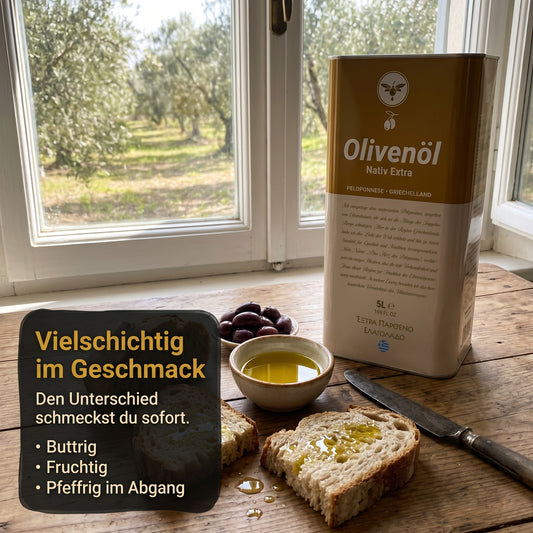
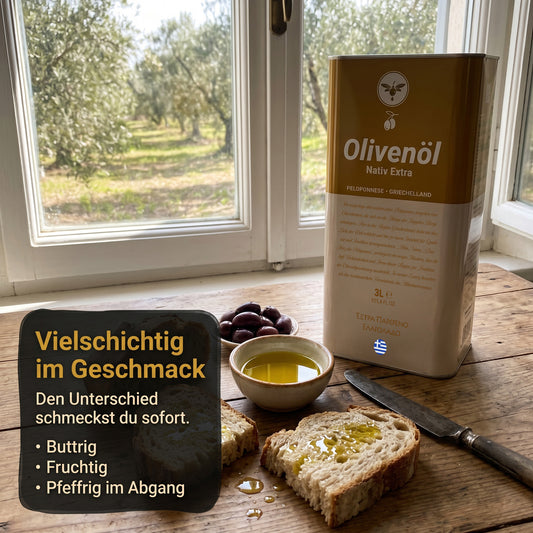
A fresh, naturally cloudy extra virgin oil rewards being tasted on its own. Pour a little into a small glass, warm it in your cupped hand, and breathe in — you should find grassy, herbal or green-fruit aromas. On the palate, expect a buttery entry that builds to a peppery, sometimes throat-catching finish; that peppery kick comes from natural antioxidants and is a hallmark of a lively young oil.
Use an oil this good where its flavour can shine: drizzled raw over salads, grilled vegetables, soups, grilled fish or a simple slice of bread. Our Peloponnese extra virgin olive oil is hand-harvested and mechanically cold-extracted, with a spicy, buttery, peppery profile that stands up beautifully as a finishing oil. It is also robust enough for everyday cooking up to moderate heat, so a single naturally cloudy bottle can do double duty from the salad bowl to the pan. If you cook Mediterranean food often, the five-litre tin from the same Peloponnese harvest is a practical way to keep good oil on hand without paying for glass every time.
Frequently Asked Questions
Is cloudy olive oil safe to eat?
Yes. Natural cloudiness in an unfiltered extra virgin olive oil comes from finely suspended olive particles and a trace of moisture, not from spoilage. It is perfectly safe and, for many, a sign of a fresh, minimally processed oil. Only a genuinely rancid smell — waxy, musty or like old crayons — signals an oil past its best, and that can happen to filtered oil too.
Why is there sediment at the bottom of my olive oil?
Those fine particles are simply olive fruit solids that were left in the oil rather than filtered out. They settle over time, which is normal for unfiltered oil. Swirl the bottle gently before use, and try to finish an unfiltered oil while it is young rather than storing it for years.
Is unfiltered olive oil better than filtered?
Not universally. Unfiltered oil often tastes fresher and more vibrant in its first months and shows minimal processing, while filtered oil generally stores more steadily over long periods. Freshness, extraction method and storage matter more to quality than clarity alone. Choose unfiltered when you want the liveliest flavour and plan to use it within the year.
Our Product Tip
Extra Virgin Olive Oil 500ml from the Peloponnese
Hand-harvested, naturally cloudy and unfiltered — spicy, buttery and peppery, exactly as fresh olive oil should taste.
Shop Olive OilSo the next time you see that soft haze in your glass, do not reach for a clearer bottle out of habit. Naturally cloudy, unfiltered olive oil is a return to how this ancient ingredient was always meant to be: honest, fresh and full of the character of the fruit it came from. Taste it young, store it well, and enjoy olive oil the way generations of Mediterranean cooks have. Pour La Vie.